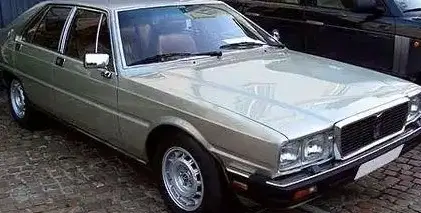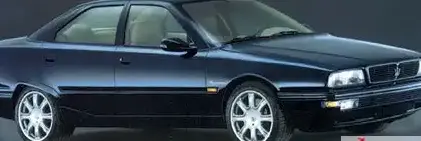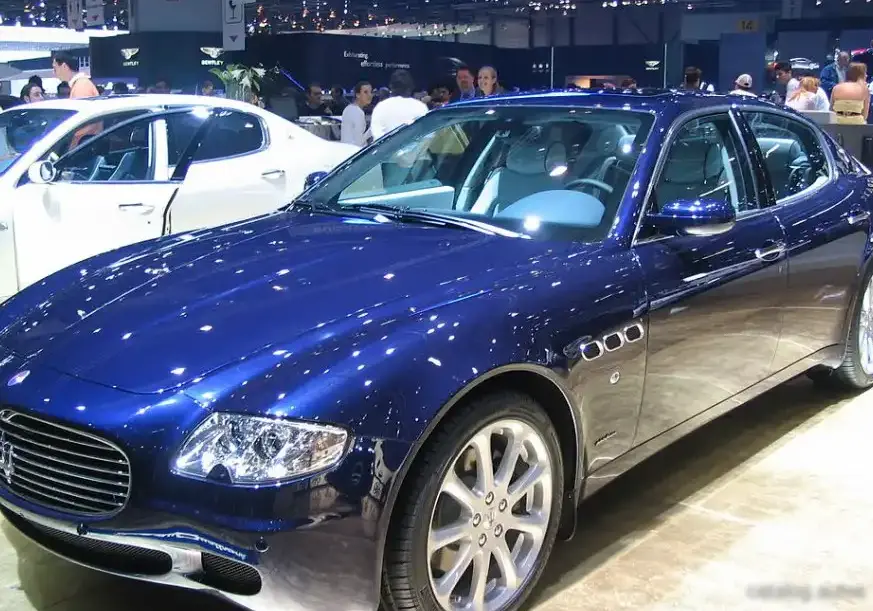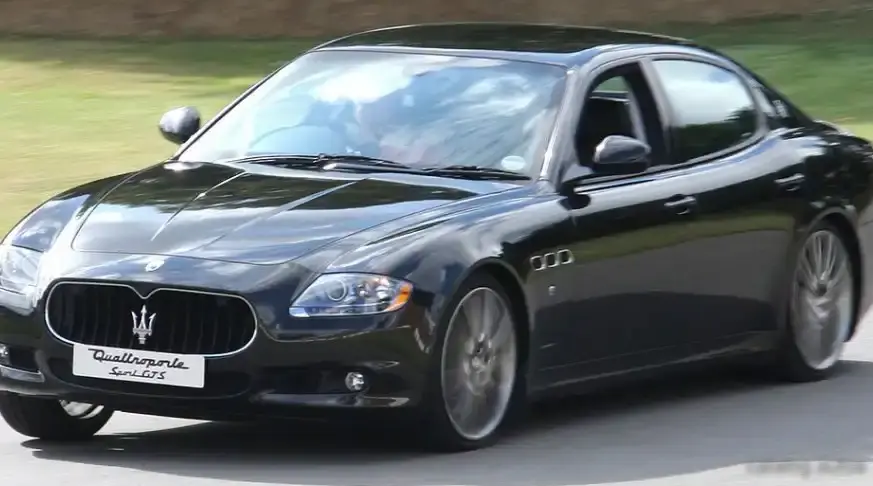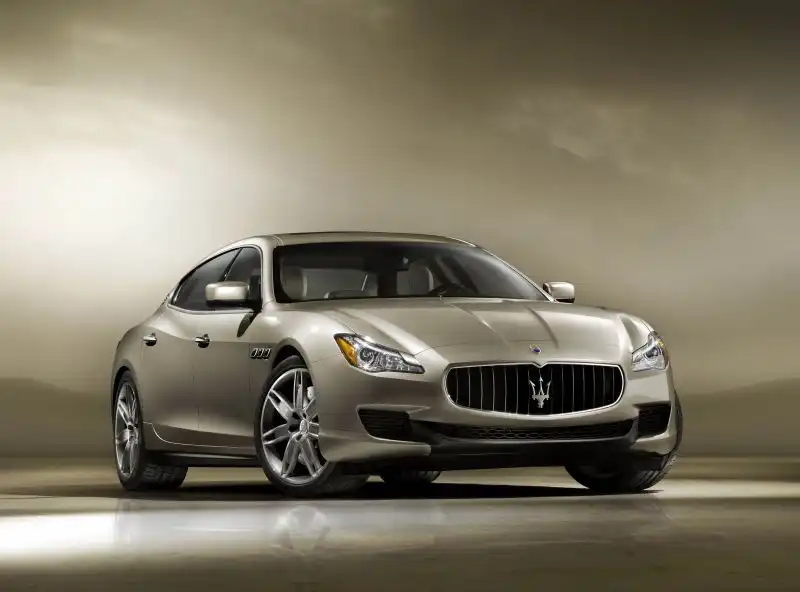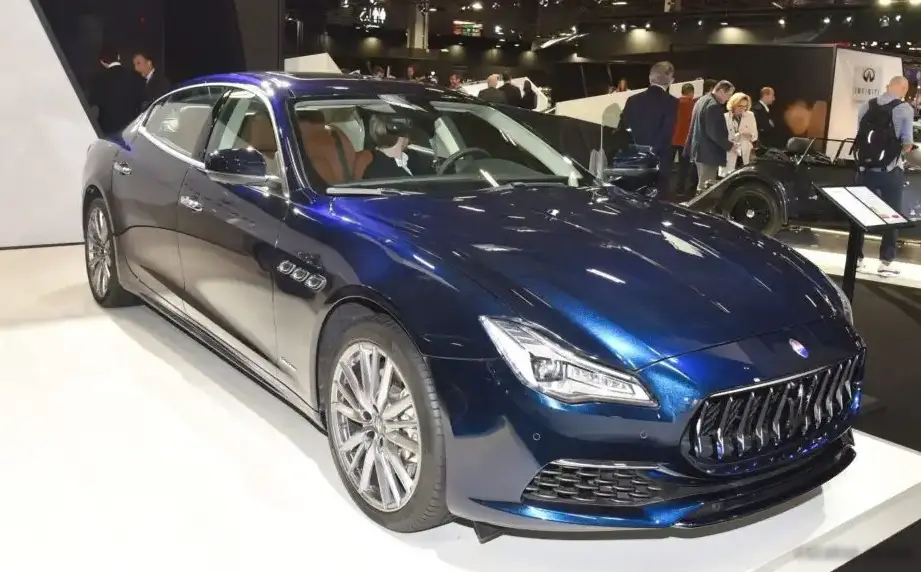
The Maserati Quattroporte VI GTS, produced from 2016 to 2017, represents a significant refresh of the M156 generation Quattroporte. This iteration, often referred to as the facelift model, continued Maserati’s tradition of blending Italian luxury with high performance. Positioned as the top-tier performance variant within the sixth-generation Quattroporte lineup, the GTS featured a potent 3.8-liter twin-turbocharged V8 engine paired exclusively with an eight-speed automatic transmission. It aimed to deliver a more engaging driving experience than the lower-trim models while maintaining the comfort and refinement expected of a flagship Maserati sedan.
Technical Specifications
| Brand | Maserati |
| Model | Quattroporte |
| Generation | Quattroporte VI (M156, facelift 2016) |
| Type (Engine) | GTS 3.8 GDI V8 (530 Hp) Automatic |
| Start of production | 2016 |
| End of production | 2017 |
| Powertrain Architecture | Internal Combustion engine |
| Body type | Sedan |
| Seats | 5 |
| Doors | 4 |
| Fuel consumption (urban) | 15.6 l/100 km (15.1 US mpg, 18.1 UK mpg, 6.4 km/l) |
| Fuel consumption (extra urban) | 7.9 l/100 km (29.8 US mpg, 35.8 UK mpg, 12.7 km/l) |
| Fuel consumption (combined) | 10.7 l/100 km (22 US mpg, 26.4 UK mpg, 9.3 km/l) |
| CO2 emissions | 250 g/km |
| Fuel Type | Petrol (Gasoline) |
| Acceleration 0 – 100 km/h | 4.7 sec |
| Acceleration 0 – 62 mph | 4.7 sec |
| Acceleration 0 – 60 mph | 4.5 sec |
| Maximum speed | 310 km/h (192.63 mph) |
| Power | 530 Hp @ 6800 rpm |
| Torque | 650 Nm @ 2000-4000 rpm (479.42 lb.-ft. @ 2000-4000 rpm) |
| Engine layout | Front, Longitudinal |
| Engine Model/Code | M156A |
| Engine displacement | 3799 cm3 (231.83 cu. in.) |
| Number of cylinders | 8 |
| Engine configuration | V-engine |
| Cylinder Bore | 86.5 mm (3.41 in.) |
| Piston Stroke | 80.8 mm (3.18 in.) |
| Compression ratio | 9.5:1 |
| Number of valves per cylinder | 4 |
| Fuel injection system | Direct injection |
| Engine aspiration | Twin-Turbo, Intercooler |
| Engine oil capacity | 8.3 l (8.77 US qt, 7.3 UK qt) |
| Coolant capacity | 14.2 l (15 US qt, 12.49 UK qt) |
| Trunk (boot) space (minimum) | 530 l (18.72 cu. ft.) |
| Fuel tank capacity | 70 l (18.49 US gal, 15.4 UK gal) |
| Length | 5262 mm (207.17 in.) |
| Width | 1948 mm (76.69 in.) |
| Width including mirrors | 2100 mm (82.68 in.) |
| Height | 1481 mm (58.31 in.) |
| Wheelbase | 3171 mm (124.84 in.) |
| Front track | 1634 mm (64.33 in.) |
| Rear track | 1647 mm (64.84 in.) |
| Drivetrain | Rear wheel drive |
| Number of gears | 8 |
| Gearbox type | Automatic transmission |
| Front suspension | Double wishbone |
| Rear suspension | Independent multi-link suspension |
| Front brakes | Ventilated discs |
| Rear brakes | Ventilated discs |
| Steering type | Steering rack and pinion |
| Power steering | Electric |
| Tires size | 245/40 R20; 285/35 R20 |
| Wheel rims size | 20 |
Powertrain & Engine Architecture
At the heart of the Quattroporte GTS lies the M156A 3.8-liter V8 engine. This engine is a significant departure from the older naturally aspirated M156 V8, incorporating twin turbochargers and direct fuel injection to dramatically increase power and efficiency. The engine utilizes a 90-degree V8 configuration, known for its inherent balance and smooth operation. Direct injection allows for precise fuel delivery, optimizing combustion and reducing emissions. The twin-turbocharger setup employs two BorgWarner turbochargers, providing a broad torque curve and minimizing turbo lag. The eight-speed automatic transmission, sourced from ZF, is a crucial component of the GTS’s performance. It features a wide gear ratio spread, allowing for both spirited acceleration and relaxed highway cruising. The transmission offers both automatic and manual shift modes, providing the driver with greater control.
Driving Characteristics
The combination of the 530 horsepower V8 and the eight-speed automatic transmission delivers a compelling driving experience. Acceleration from 0 to 60 mph is achieved in approximately 4.5 seconds, making the GTS a genuinely quick sedan. The automatic transmission shifts smoothly and responsively in automatic mode, while the manual shift mode allows for precise gear selection. Compared to the lower-powered Quattroporte variants, the GTS offers significantly more performance, particularly in mid-range acceleration. While not as raw or engaging as a manual transmission, the ZF eight-speed provides a refined and efficient driving experience. The weight distribution, though front-heavy, is well-managed by the sophisticated suspension system.
Equipment & Trim Levels
The GTS trim level came standard with a generous array of luxury features. Interior appointments included premium leather upholstery, wood trim, and aluminum pedals. Standard equipment also included a touchscreen infotainment system, navigation, a premium sound system, and a suite of driver-assistance features such as adaptive cruise control and blind-spot monitoring. Optional extras included a panoramic sunroof, upgraded leather options, and a rear-seat entertainment system. The exterior styling of the GTS was subtly differentiated from other Quattroporte models with unique front and rear fascias, larger wheels, and quad exhaust outlets.
Chassis & Braking
The Quattroporte GTS utilizes a double wishbone front suspension and an independent multi-link rear suspension, providing a comfortable ride and precise handling. The suspension is electronically controlled, allowing the driver to adjust the damping settings to suit their preferences. Braking duties are handled by ventilated discs on all four wheels, providing ample stopping power. The GTS also features ABS, electronic stability control, and traction control as standard equipment. The steering is electrically assisted, offering a responsive and precise feel.
Market Reception & Comparison
The Quattroporte GTS was generally well-received by automotive critics. It was praised for its powerful engine, luxurious interior, and refined driving experience. However, some critics noted that the car’s size and weight could make it feel cumbersome in tight corners. Compared to the Quattroporte S Q4 (with its all-wheel drive and slightly less powerful V6 engine), the GTS offered a more focused performance experience. The GTS also offered a significant performance advantage over the diesel-powered Quattroporte variants. Fuel economy, while respectable for a V8-powered luxury sedan, was not a strong point, with combined fuel consumption around 22 US mpg.
Legacy
The M156-based Quattroporte GTS represents a high point in Maserati’s modern history. The 3.8-liter twin-turbo V8 proved to be a reliable and potent engine, and the ZF eight-speed automatic transmission is known for its durability. On the used car market, the GTS commands a premium price compared to the lower-trim Quattroporte models. Maintenance costs can be higher than those of its competitors due to the Maserati’s Italian heritage and the complexity of its powertrain. However, for enthusiasts seeking a luxurious and high-performance Italian sedan, the Quattroporte GTS remains a compelling choice.