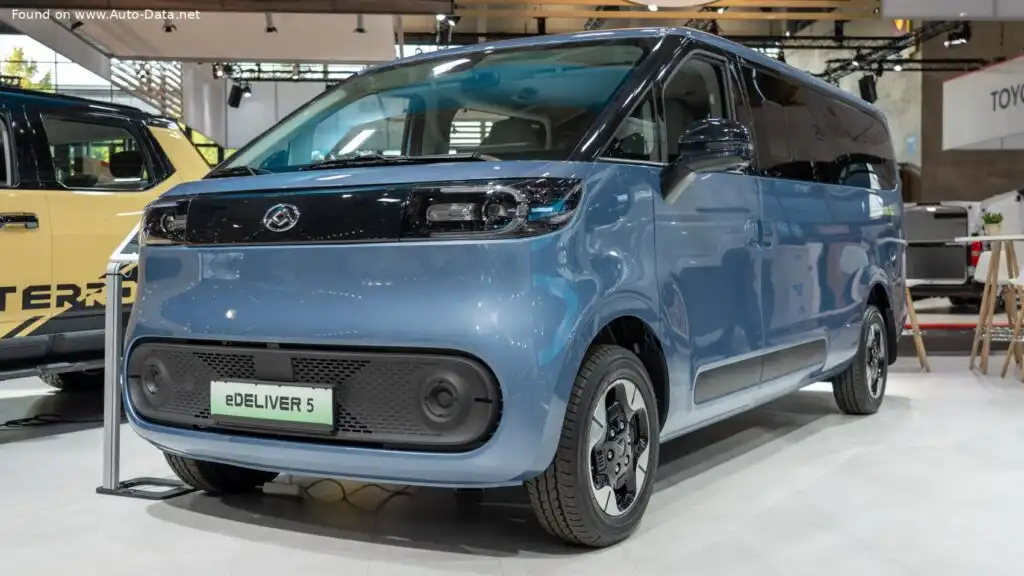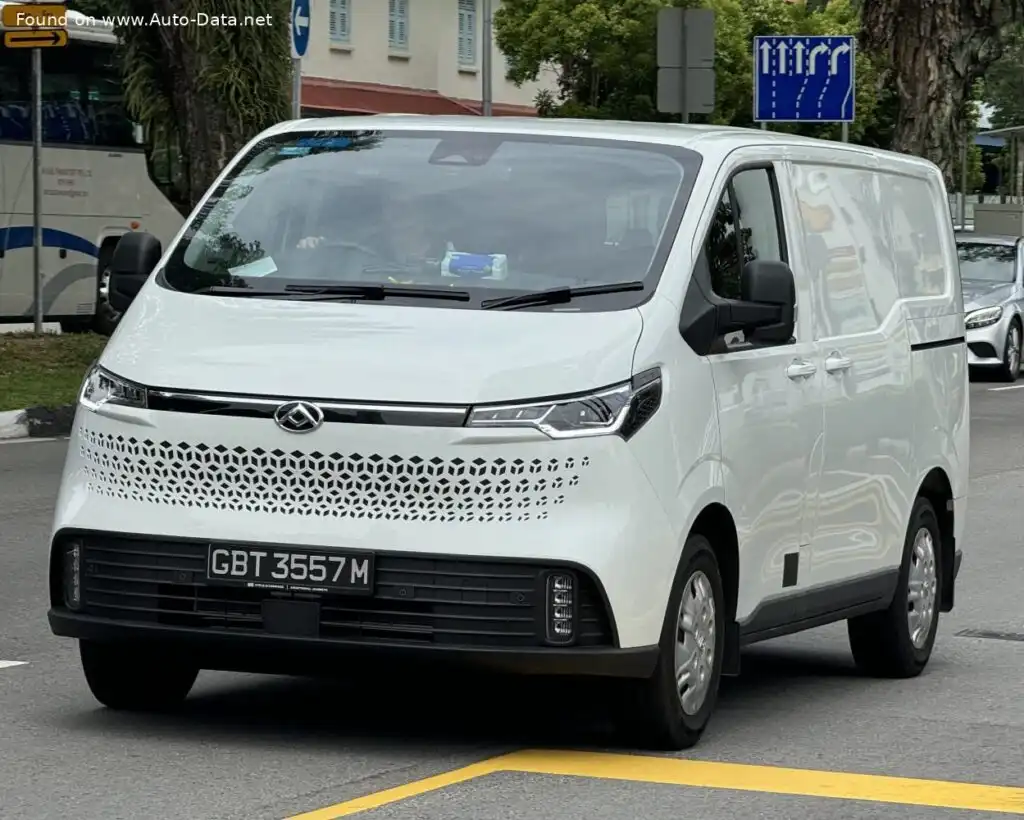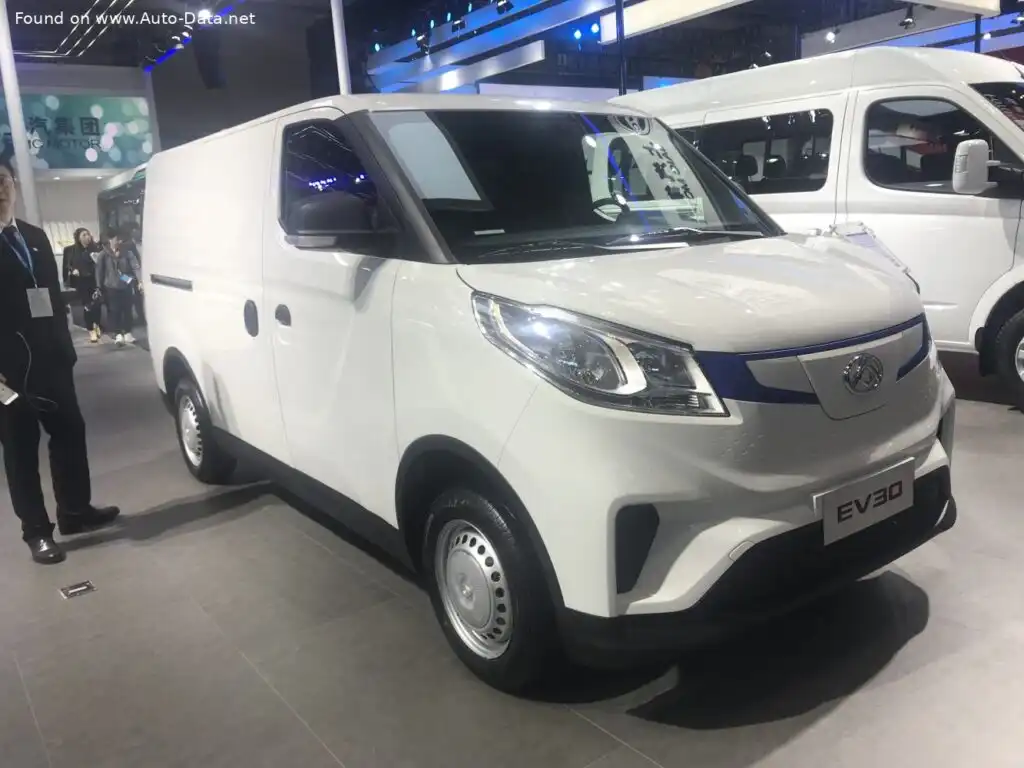
The Maxus eDeliver 3 L1, produced from 2020 to 2023, represents a significant entry by SAIC Motor, under the Maxus brand, into the burgeoning electric commercial vehicle market. Specifically designed as a compact cargo van, the eDeliver 3 L1 with the 50.23 kWh battery and 122 horsepower electric motor, was primarily targeted at urban delivery services and businesses requiring a zero-emission solution for short to medium-range transport. It quickly became a popular choice in Europe and other markets seeking to reduce their carbon footprint and comply with increasingly stringent emissions regulations. This variant occupied the entry-level position within the eDeliver 3 lineup, offering a balance of affordability, practicality, and environmental responsibility.
Technical Specifications
| Brand | Maxus |
| Model | Deliver 3 |
| Generation | eDeliver 3 L1 |
| Type (Engine) | 50.23 kWh (122 Hp) Electric |
| Start of production | 2020 |
| End of production | 2023 |
| Powertrain Architecture | BEV (Electric Vehicle) |
| Body type | Van |
| Seats | 2 |
| Doors | 4 |
| Fuel Type | Electricity |
| Acceleration 0 – 100 km/h | 12 sec |
| Acceleration 0 – 62 mph | 12 sec |
| Acceleration 0 – 60 mph | 11.4 sec |
| Maximum speed | 120 km/h (74.56 mph) |
| Weight-to-power ratio | 11.7 kg/Hp, 85.6 Hp/tonne |
| Weight-to-torque ratio | 5.6 kg/Nm, 178.9 Nm/tonne |
| Gross battery capacity | 50.23 kWh |
| Battery technology | Lithium iron phosphate (LiFePO4) |
| Battery location | Below the floor |
| All-electric range (WLTP) | 243 km (150.99 mi) |
| Average Energy consumption (WLTP) | 23.63 kWh/100 km (38.03 kWh/100 mi) |
| Average Energy consumption (WLTP) | 89 MPGe, 4.2 km/kWh (2.6 mi/kWh) |
| Electric motor power | 122 Hp |
| Electric motor Torque | 255 Nm (188.08 lb.-ft.) |
| Electric motor model/code | TZ204XS85K05 |
| Electric motor location | Front axle, Transverse |
| Electric motor type | Synchronous |
| System power | 122 Hp |
| System torque | 255 Nm (188.08 lb.-ft.) |
| Kerb Weight | 1425 kg (3141.59 lbs.) |
| Max. weight | 2500 kg (5511.56 lbs.) |
| Max load | 1075 kg (2369.97 lbs.) |
| Trunk (boot) space – maximum | 4800 l (169.51 cu. ft.) |
| Max. roof load | 75 kg (165.35 lbs.) |
| Permitted trailer load with brakes (12%) | 1090 kg (2403.04 lbs.) |
| Permitted trailer load without brakes | 750 kg (1653.47 lbs.) |
| Length | 4555 mm (179.33 in.) |
| Width | 1780 mm (70.08 in.) |
| Height | 1895 mm (74.61 in.) |
| Wheelbase | 2910 mm (114.57 in.) |
| Minimum turning circle | 11.74 m (38.52 ft.) |
| Drivetrain Architecture | One electric motor drives the front wheels. |
| Drive wheel | Front wheel drive |
| Number of gears | 1 |
| Gearbox type | Automatic transmission |
| Front brakes | Disc |
| Rear brakes | Disc |
| Assisting systems | ABS (Anti-lock braking system) |
| Steering type | Steering rack and pinion |
| Power steering | Electric |
| Tires size | 185/65 R15C |
| Wheel rims size | 15 |
Powertrain & Engine Architecture
The eDeliver 3 L1 utilizes a fully electric powertrain, centered around a synchronous electric motor producing 122 horsepower and 255 Nm (188.08 lb.-ft.) of torque. The motor, designated TZ204XS85K05, is transversely mounted on the front axle, driving the front wheels. Power is derived from a 50.23 kWh Lithium Iron Phosphate (LiFePO4) battery pack positioned under the vehicle floor, contributing to a lower center of gravity and improved stability. LiFePO4 chemistry is favored for its inherent safety and longer cycle life compared to other lithium-ion variants, although it typically offers slightly lower energy density. The single-speed automatic transmission provides seamless acceleration, optimized for urban driving conditions. The vehicle lacks a traditional multi-gear gearbox, relying on the electric motor’s broad torque curve to deliver power efficiently.
Driving Characteristics
The 122 hp electric motor provides adequate, though not exhilarating, performance for typical urban delivery tasks. Acceleration from 0-60 mph takes approximately 11.4 seconds, and the top speed is limited to 74.56 mph. The immediate torque delivery characteristic of electric motors provides brisk acceleration from a standstill, making it well-suited for stop-and-go traffic. Compared to potential higher-powered variants (which were not widely available in the L1 configuration), this version prioritizes efficiency and range over outright speed. The single-speed transmission simplifies operation, but can feel less engaging than a manual gearbox. The low center of gravity, thanks to the underfloor battery pack, contributes to stable handling, even when fully loaded.
Equipment & Trim Levels
The eDeliver 3 L1, as the entry-level model, typically came equipped with a functional, rather than luxurious, interior. Standard features included air conditioning, a basic infotainment system with Bluetooth connectivity, power windows, and central locking. The interior upholstery was typically durable and easy-to-clean plastic or cloth. Safety features included ABS, electronic brake-force distribution, and driver and passenger airbags. Optional extras, depending on the market, could include a rearview camera, parking sensors, and upgraded infotainment systems. The focus was on providing a practical and cost-effective solution for commercial users.
Chassis & Braking
The eDeliver 3 L1 features a conventional front-wheel-drive layout with a MacPherson strut front suspension and a twist-beam rear suspension. Disc brakes are fitted on all four wheels, providing adequate stopping power. The suspension is tuned for comfort and load-carrying capacity, rather than sporty handling. The steering is electrically assisted, providing light and easy maneuverability in urban environments. The vehicle’s relatively low weight, thanks to the efficient electric powertrain, contributes to its nimble handling characteristics.
Market Reception & Comparison
The Maxus eDeliver 3 L1 was generally well-received by critics and commercial operators alike. Its competitive price point, combined with its zero-emission credentials and practical cargo capacity, made it an attractive alternative to traditional internal combustion engine vans. Fuel economy, expressed as energy consumption, is rated at 23.63 kWh/100 km (38.03 kWh/100 mi), translating to approximately 89 MPGe. Compared to other electric vans in its class, the eDeliver 3 L1 offered a good balance of range, payload, and affordability. While some competitors offered longer ranges or more sophisticated features, the eDeliver 3 L1 provided a compelling value proposition for businesses seeking a cost-effective electric van solution.
Legacy
The Maxus eDeliver 3 L1 played a crucial role in establishing Maxus as a significant player in the electric commercial vehicle market. The powertrain, while not groundbreaking in terms of technology, proved to be reliable and durable in real-world applications. On the used car market, these vans continue to be sought after by businesses looking for affordable and environmentally friendly transport solutions. The LiFePO4 battery technology contributes to the long-term reliability of the powertrain, and the relatively simple design makes maintenance straightforward. The eDeliver 3 L1 paved the way for subsequent Maxus electric vehicle models, solidifying the brand’s commitment to sustainable transportation.