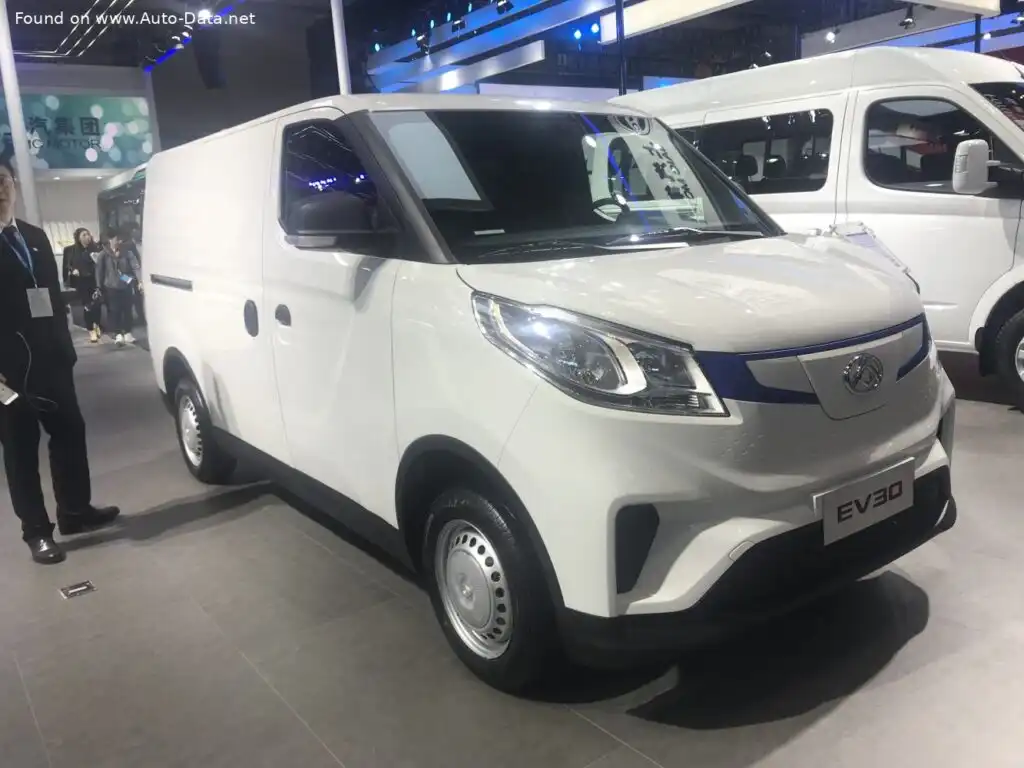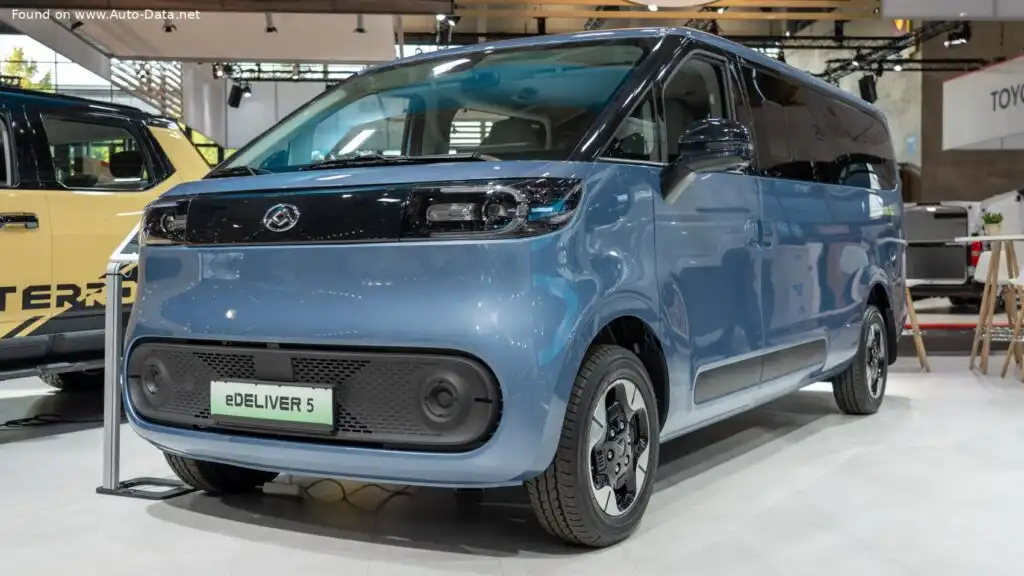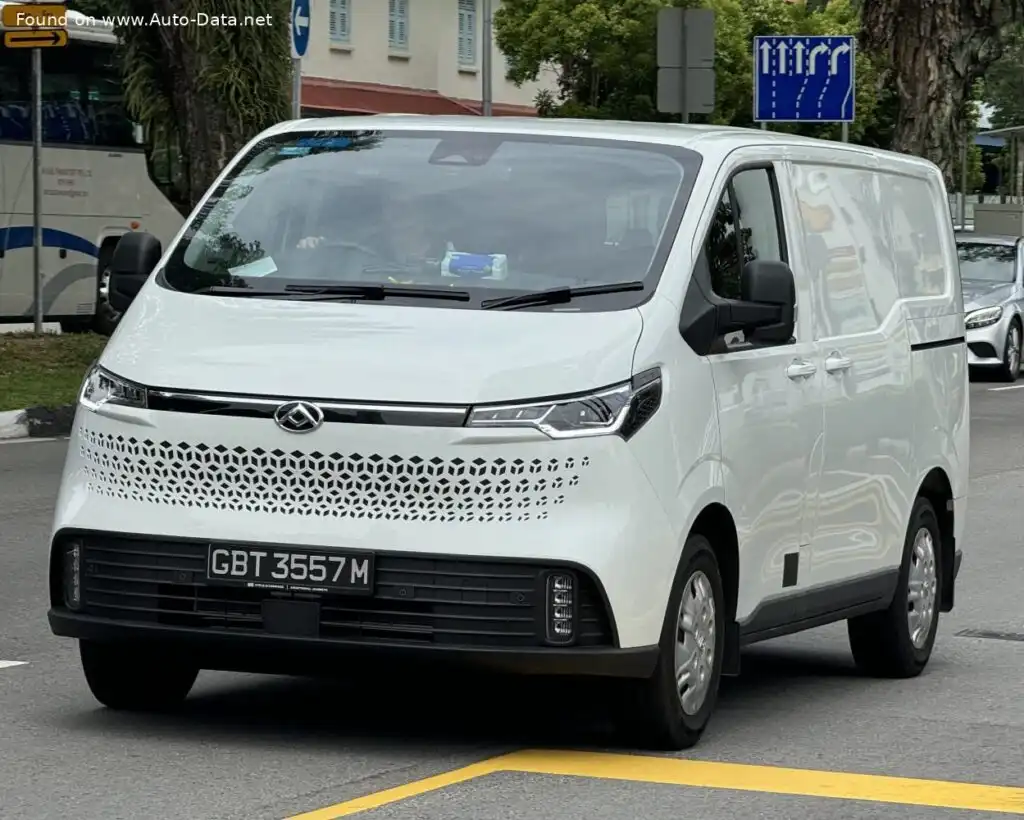
The Maxus eDeliver 7 L1 77 kWh is an all-electric light commercial van that debuted in September 2023. It marks Maxus’s entry into the burgeoning electric van market, designed primarily for European and Asian commercial transport needs, offering a zero-emission solution for urban deliveries. Positioned as a mid-range offering within the Maxus lineup, the eDeliver 7 bridges the gap between smaller city vans and larger, more specialized electric commercial vehicles. The “L1” designation indicates a shorter wheelbase version within the eDeliver 7 series, prioritizing maneuverability.
Technical Specifications
| Brand | Maxus |
| Model | Deliver 7 |
| Generation | eDeliver 7 L1 |
| Type (Engine) | 77 kWh (204 Hp) Electric |
| Start of production | September, 2023 |
| Powertrain Architecture | BEV (Electric Vehicle) |
| Body type | Van |
| Seats | 3 |
| Doors | 4 |
| Fuel Type | Electricity |
| Acceleration 0 – 100 km/h | 11.4 sec |
| Acceleration 0 – 62 mph | 11.4 sec |
| Acceleration 0 – 60 mph | 10.8 sec |
| Maximum speed | 120 km/h (74.56 mph) |
| Weight-to-power ratio | 11.3 kg/Hp, 88.7 Hp/tonne |
| Weight-to-torque ratio | 7 kg/Nm, 143.5 Nm/tonne |
| Gross battery capacity | 77 kWh |
| Battery technology | Lithium iron phosphate (LiFePO4) |
| Battery location | Below the floor |
| All-electric range (WLTP) | 318 km (197.6 mi) |
| Average Energy consumption (WLTP) | 27.5 kWh/100 km (44.26 kWh/100 mi) |
| MPGe | 76 |
| km/kWh | 3.6 |
| mi/kWh | 2.3 |
| Electric motor power | 204 Hp |
| Electric motor Torque | 330 Nm (243.4 lb.-ft.) |
| Electric motor model/code | TZ202XSSQC |
| Electric motor location | Front axle, Transverse |
| Electric motor type | Synchronous |
| System power | 204 Hp |
| System torque | 330 Nm (243.4 lb.-ft.) |
| Kerb Weight | 2300 kg (5070.63 lbs.) |
| Max. weight | 3500 kg (7716.18 lbs.) |
| Max load | 1200 kg (2645.55 lbs.) |
| Trunk (boot) space – maximum | 5900 l (208.36 cu. ft.) |
| Permitted trailer load with brakes (12%) | 1500 kg (3306.93 lbs.) |
| Permitted trailer load without brakes | 750 kg (1653.47 lbs.) |
| Length | 4998 mm (196.77 in.) |
| Width | 2030 mm (79.92 in.) |
| Width with mirrors folded | 2118 mm (83.39 in.) |
| Width including mirrors | 2323 mm (91.46 in.) |
| Height | 1990 mm (78.35 in.) |
| Wheelbase | 3000 mm (118.11 in.) |
| Front overhang | 1010 mm (39.76 in.) |
| Rear overhang | 988 mm (38.9 in.) |
| Ride height (ground clearance) | 150 mm (5.91 in.) |
| Minimum turning circle | 12.1 m (39.7 ft.) |
| Drivetrain Architecture | One electric motor drives the front wheels. |
| Drive wheel | Front wheel drive |
| Number of gears | 1 |
| Gearbox type | Automatic transmission |
| Front suspension | Independent type McPherson |
| Front brakes | Disc |
| Rear brakes | Disc |
| Assisting systems | ABS (Anti-lock braking system) |
| Steering type | Steering rack and pinion |
| Power steering | Electric Steering |
| Tires size | 215/65 R16C |
| Wheel rims size | 16 |
Powertrain & Engine Architecture
The eDeliver 7 L1 employs a fully electric powertrain, built around a 77 kWh Lithium Iron Phosphate (LiFePO4) battery pack. The choice of LiFePO4 chemistry prioritizes thermal stability and longevity over the higher energy density of Nickel Manganese Cobalt (NMC) batteries. This battery pack is strategically mounted under the floor, lowering the vehicle’s center of gravity and maximizing usable cargo space. Power is delivered by a single synchronous electric motor, identified as TZ202XSSQC, generating 204 horsepower and 330 Nm (243.4 lb.-ft.) of torque. The motor is transversely mounted on the front axle, powering the front wheels. A single-speed automatic transmission is utilized, simplifying operation and providing the instant torque delivery characteristic of electric motors – a conventional multi-gear transmission is not required.
Driving Characteristics
The eDeliver 7 L1, with its 204 hp and immediate torque, provides sufficient performance for typical urban and suburban delivery tasks. Acceleration from 0-60 mph is achieved in roughly 10.8 seconds, with a top speed electronically limited to 120 km/h (74.56 mph). While not geared towards high-speed highway travel, the electric motor delivers responsive acceleration at lower speeds, making it ideal for stop-and-go traffic conditions. The single-speed transmission ensures a smooth, linear power delivery. Compared to potential future variants with higher output, this configuration emphasizes efficiency and range over outright speed. The front-wheel-drive layout offers predictable handling, though some torque steer may be noticeable during aggressive acceleration.
Equipment & Trim Levels
The eDeliver 7 L1 generally comes standard with features tailored for commercial applications. These typically include air conditioning, a basic infotainment system with Bluetooth connectivity, and a driver’s seat with adjustable lumbar support. Safety features are comprehensive, encompassing ABS, electronic stability control, and multiple airbags. Interior upholstery is designed for durability and ease of cleaning. Optional extras often include an upgraded infotainment system with navigation, parking sensors, a rearview camera, and enhanced interior trim options. The L1 variant, with its shorter wheelbase, is specifically designed for enhanced maneuverability in congested urban environments.
Chassis & Braking
The eDeliver 7 L1 utilizes an independent McPherson strut suspension at the front, providing a comfortable ride and responsive handling. The rear suspension employs a multi-link setup, optimized for handling varying load weights. Disc brakes are fitted on all four wheels, delivering adequate stopping power. Electric power steering provides light and precise steering control. The low center of gravity, thanks to the underfloor battery pack, contributes to improved vehicle stability. The standard tires are 215/65 R16C, designed for commercial vehicle use, balancing durability with grip.
Market Reception & Comparison
The Maxus eDeliver 7 L1 has been generally well-received as a practical and competitively priced electric van. Reviewers have consistently praised its spacious cargo area, comfortable ride quality, and respectable range. When compared to other electric vans in its segment, such as the Ford E-Transit and Mercedes-Benz eSprinter, the eDeliver 7 L1 presents a compelling value proposition. Its energy consumption of 27.5 kWh/100 km (44.26 kWh/100 mi) is competitive, and its range of 318 km (197.6 mi) is sufficient for many urban delivery routes. While long-term reliability data is still developing, the use of LiFePO4 battery technology suggests a potentially longer lifespan compared to vans utilizing NMC battery chemistries.
Legacy
The Maxus eDeliver 7 L1 represents a significant advancement in the electrification of commercial vehicles. Its adoption of LiFePO4 battery technology, coupled with its focus on practicality and affordability, positions it as a viable option for businesses looking to transition to electric fleets. The long-term reliability of the powertrain remains to be fully assessed, but the robust design and use of proven components suggest a durable and dependable vehicle. As the demand for zero-emission delivery solutions continues to grow, the eDeliver 7 L1 is poised to play an increasingly important role in the future of urban logistics.