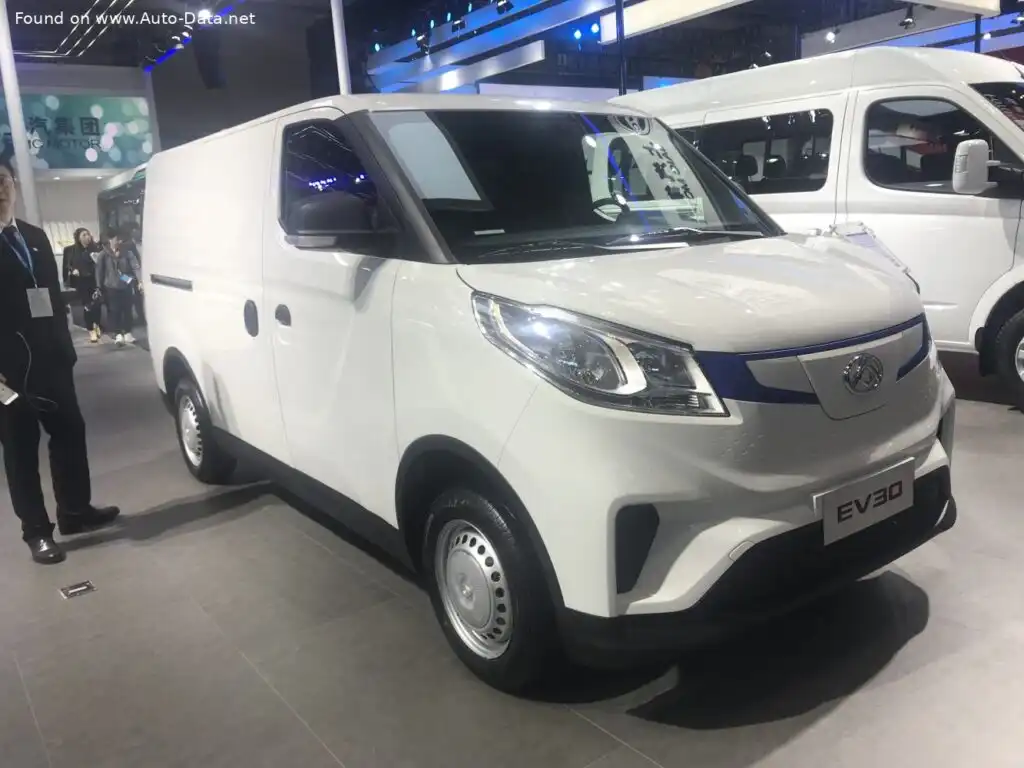
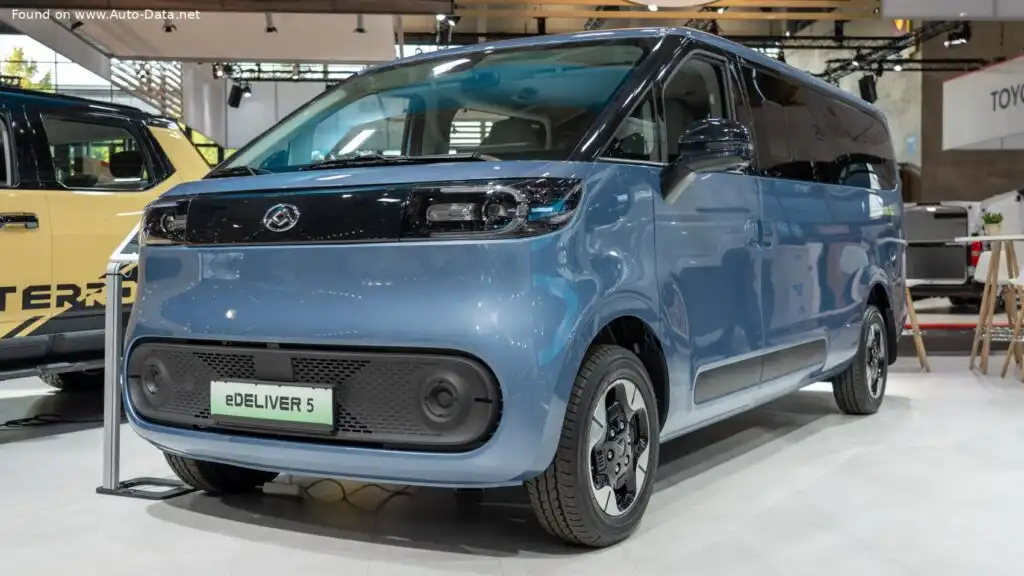
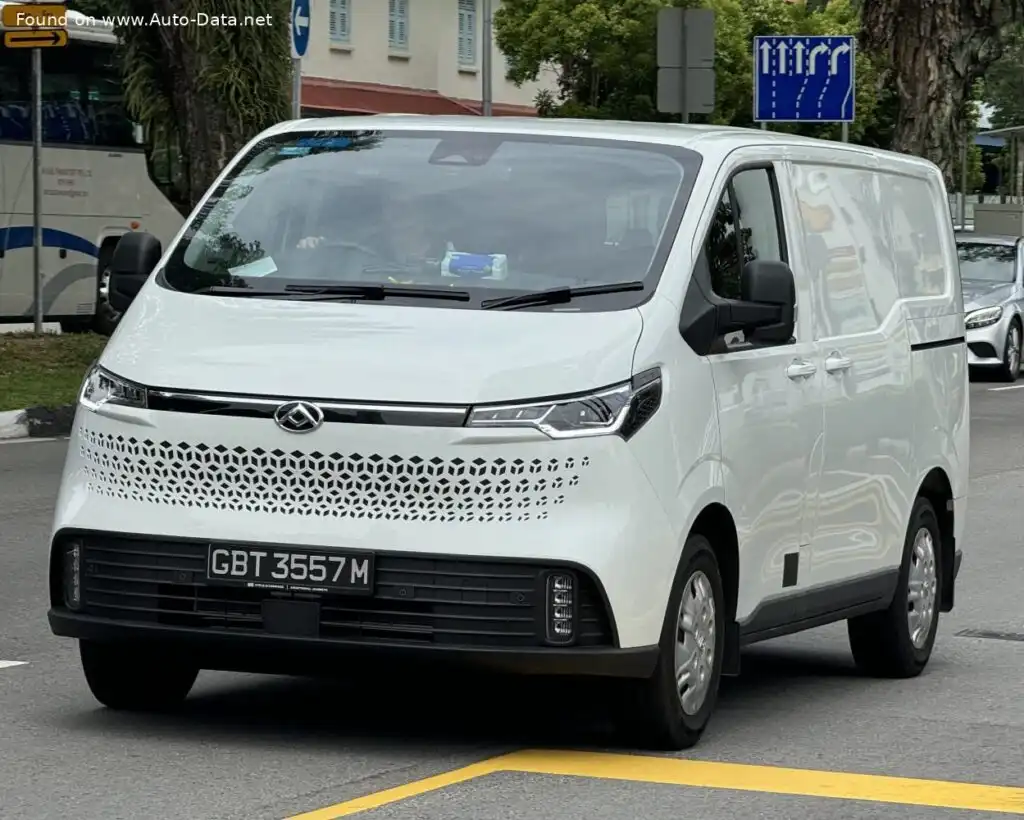
The Maxus eDeliver 9 L3H3 88 kWh is a fully electric large van introduced in November 2024, representing Maxus’s entry into the rapidly expanding electric commercial vehicle market. Positioned as a practical and efficient solution for businesses requiring substantial cargo capacity and zero-emission operation, the eDeliver 9 L3H3 is a key component of Maxus’s strategy to offer a comprehensive range of electric vans. It falls into the larger end of the light commercial vehicle segment, competing with established players like the Ford E-Transit and Mercedes-Benz eSprinter. This specific L3H3 configuration, with its extended wheelbase and high roof, maximizes interior volume, making it suitable for a wide array of applications from delivery services to mobile workshops.
Technical Specifications
| Brand | Maxus |
| Model | Deliver 9 |
| Generation | eDeliver 9 L3H3 |
| Type (Engine) | 88 kWh (204 Hp) Electric |
| Start of production | November, 2024 |
| Powertrain Architecture | BEV (Electric Vehicle) |
| Body type | Van |
| Seats | 3 |
| Doors | 4-5 |
| Fuel Type | Electricity |
| Acceleration 0 – 100 km/h | 16.5 sec |
| Acceleration 0 – 62 mph | 16.5 sec |
| Acceleration 0 – 60 mph | 15.7 sec |
| Maximum speed | 100 km/h (62.14 mph) |
| Weight-to-power ratio | 13 kg/Hp, 77 Hp/tonne |
| Weight-to-torque ratio | 8 kg/Nm, 124.5 Nm/tonne |
| Gross battery capacity | 88 kWh |
| Battery technology | Lithium iron phosphate (LiFePO4) |
| Battery location | Below the floor |
| All-electric range (WLTP) | 317-358 km (196.97 – 222.45 mi) |
| Average Energy consumption (WLTP) | 26.6-29.4 kWh/100 km (42.81 – 47.31 kWh/100 mi) |
| Average Energy consumption (MPGe) | 79 – 71 |
| Average Energy consumption (km/kWh) | 3.8 – 3.4 |
| Average Energy consumption (mi/kWh) | 2.3 – 2.1 |
| Electric motor power | 204 Hp |
| Electric motor Torque | 330 Nm (243.4 lb.-ft.) |
| Electric motor model/code | TZ202XSSQC |
| Electric motor location | Front axle, Transverse |
| Electric motor type | Synchronous |
| System power | 204 Hp |
| System torque | 330 Nm (243.4 lb.-ft.) |
| Kerb Weight | 2650-2670 kg (5842.25 – 5886.34 lbs.) |
| Max. weight | 3500 kg (7716.18 lbs.) |
| Max load | 830-850 kg (1829.84 – 1873.93 lbs.) |
| Trunk (boot) space – maximum | 12500 l (441.43 cu. ft.) |
| Permitted trailer load with brakes (12%) | 1400 kg (3086.47 lbs.) |
| Permitted trailer load without brakes | 750 kg (1653.47 lbs.) |
| Length | 5940 mm (233.86 in.) |
| Width | 2062 mm (81.18 in.) |
| Height | 2730 mm (107.48 in.) |
| Wheelbase | 3760 mm (148.03 in.) |
| Ride height (ground clearance) | 190 mm (7.48 in.) |
| Minimum turning circle | 14.8 m (48.56 ft.) |
| Front brakes | Disc |
| Rear brakes | Disc |
| Drive wheel | Front wheel drive |
| Number of gears | 1 |
| Gearbox type | Automatic transmission |
Powertrain & Engine Architecture
The eDeliver 9 L3H3 utilizes a fully electric powertrain centered around an 88 kWh Lithium Iron Phosphate (LiFePO4) battery pack. LiFePO4 chemistry is favored for its enhanced thermal stability and longer lifespan compared to traditional Nickel Manganese Cobalt (NMC) batteries, although it typically offers slightly lower energy density. The battery is mounted under the floor, contributing to a lower center of gravity and maximizing cargo space. A single synchronous electric motor, designated TZ202XSSQC, drives the front wheels, producing 204 horsepower and 330 Nm (243.4 lb-ft) of torque. The powertrain employs a single-speed automatic transmission, typical of electric vehicles, providing seamless acceleration. The electric motor’s transverse mounting optimizes packaging within the front-wheel-drive configuration.
Driving Characteristics
The eDeliver 9 L3H3, with its 204 hp and single-speed automatic transmission, prioritizes usability and efficiency over outright performance. Acceleration from 0-60 mph takes approximately 15.7 seconds, and top speed is limited to 100 km/h (62 mph). The instant torque delivery characteristic of electric motors provides adequate responsiveness for urban and suburban driving conditions. The single-gear ratio simplifies operation, eliminating the need for gear changes. Compared to potential diesel or gasoline counterparts, the eDeliver 9 offers a quieter and smoother driving experience. While not designed for high-speed highway cruising, it excels in stop-and-go traffic and delivery routes where its zero-emission capability is most beneficial.
Equipment & Trim Levels
The eDeliver 9 L3H3 is generally offered with a functional and practical equipment level geared towards commercial use. Standard features typically include air conditioning, a driver’s seat with basic adjustments, power windows, and a central locking system. An infotainment system with a touchscreen display is usually included, offering connectivity options such as Bluetooth and USB ports. Safety features such as ABS (Anti-lock Braking System) and electronic stability control are standard. Optional extras may include a rearview camera, parking sensors, upgraded infotainment systems with navigation, and additional driver-assistance features. Interior upholstery is typically durable and easy to clean, reflecting the van’s commercial purpose.
Chassis & Braking
The eDeliver 9 L3H3 features a front-wheel-drive layout with a robust chassis designed to handle substantial payloads. The suspension system consists of independent suspension at the front and a leaf spring setup at the rear, optimized for load-carrying capacity. Disc brakes are fitted on all four wheels, providing adequate stopping power. The electric power steering system offers a comfortable and precise steering feel. The van’s relatively low center of gravity, due to the underfloor battery pack, contributes to improved stability. Ride height is approximately 190 mm (7.48 in), providing sufficient ground clearance for typical delivery routes.
Market Reception & Comparison
The Maxus eDeliver 9 L3H3 has been generally well-received in the commercial vehicle market, particularly in Europe, where demand for electric vans is growing rapidly. Critics have praised its spacious interior, competitive pricing, and zero-emission operation. Compared to other electric vans in its class, such as the Ford E-Transit and Mercedes-Benz eSprinter, the eDeliver 9 offers a compelling value proposition. Its range of 317-358 km (196.97 – 222.45 mi) is competitive, although some rivals offer slightly longer ranges. Fuel economy, expressed as kWh/100km, is comparable to other electric vans, and the LiFePO4 battery chemistry is seen as a positive attribute for long-term reliability.
Legacy
The Maxus eDeliver 9 L3H3 represents a significant step forward in the electrification of commercial vehicles. The use of LiFePO4 battery technology suggests a focus on longevity and safety. As the electric van market matures, the eDeliver 9 is expected to become a common sight in urban delivery fleets. Its long-term reliability will depend on factors such as battery degradation and the durability of the electric motor and drivetrain components. However, the van’s robust construction and the inherent simplicity of electric powertrains suggest that it has the potential to become a reliable and cost-effective workhorse for businesses seeking to reduce their carbon footprint.