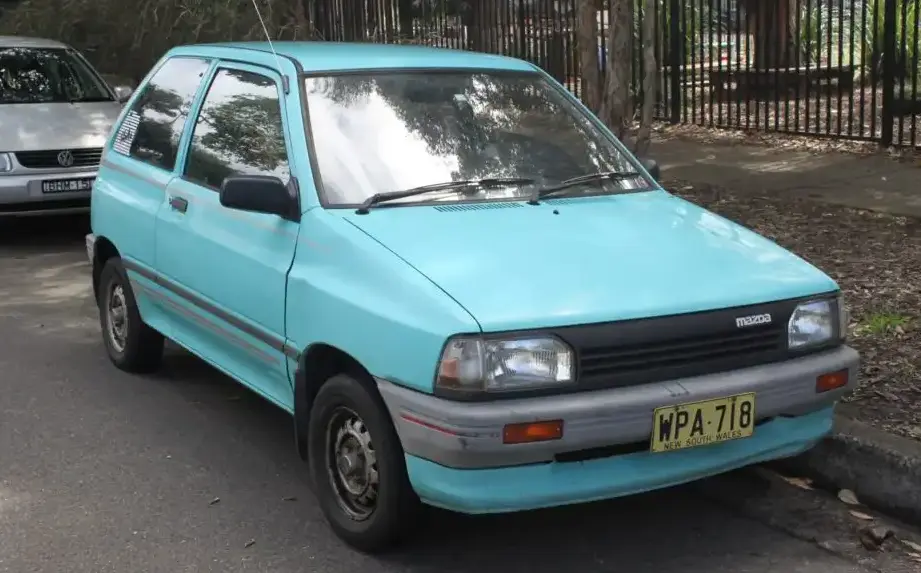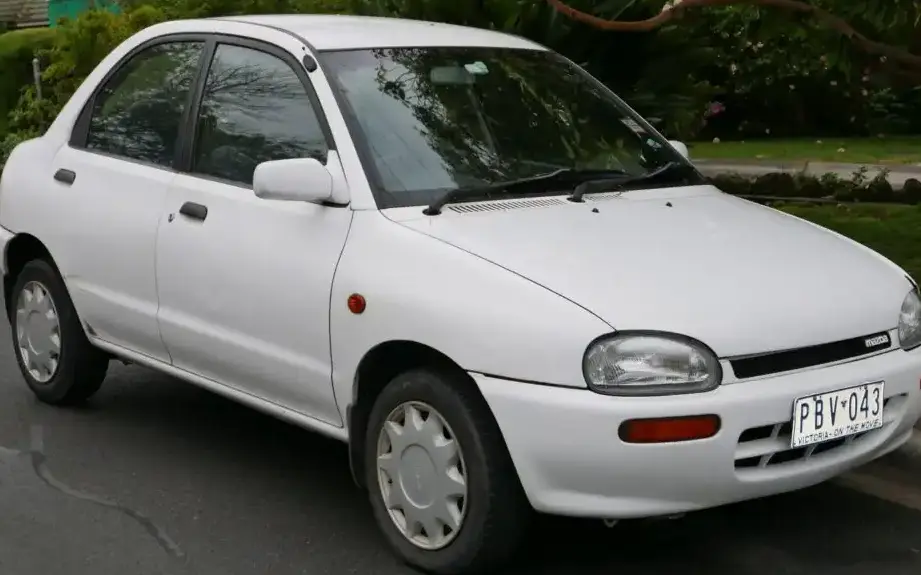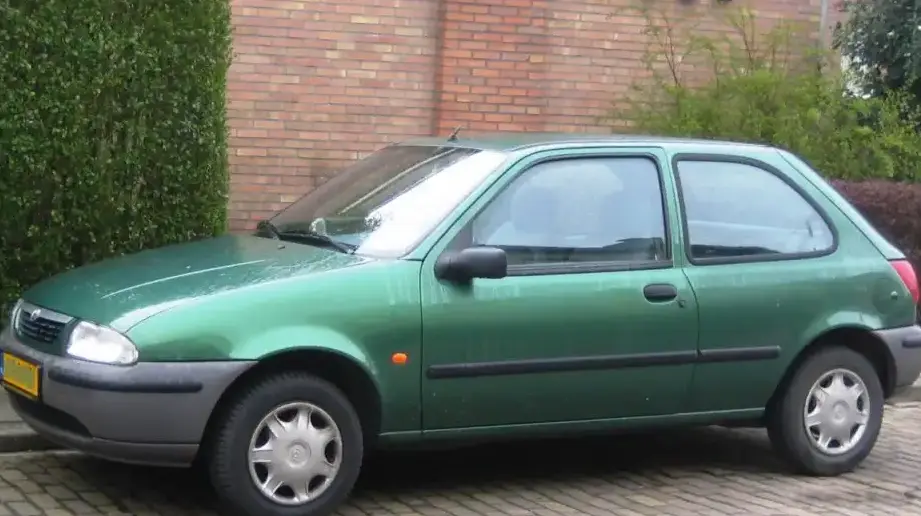
The Mazda 121 III, known as the Mazda Metro in some markets, was a supermini produced by Mazda between 1996 and 2000. Representing the third generation of the 121, the JASM and JBSM chassis codes denote variations primarily related to body style (3-door and 5-door respectively). This generation was a significant departure from its predecessors, adopting a more rounded and contemporary design. The 1.8 D variant, equipped with a 1.8-liter diesel engine producing 60 horsepower, occupied the lower end of the 121 III lineup, focusing on fuel efficiency and affordability. It was primarily sold in European and Asian markets, where small, economical cars were in high demand.
Technical Specifications
| Brand | Mazda |
| Model | 121 |
| Generation | 121 III (JASM, JBSM) |
| Type (Engine) | 1.8 D (60 Hp) |
| Start of production | 1996 |
| End of production | 2000 |
| Powertrain Architecture | Internal Combustion engine |
| Body type | Hatchback |
| Seats | 5 |
| Doors | 3/5 |
| Fuel consumption (urban) | 6.4 l/100 km (36.8 US mpg, 44.1 UK mpg, 15.6 km/l) |
| Fuel consumption (extra urban) | 4.5 l/100 km (52.3 US mpg, 62.8 UK mpg, 22.2 km/l) |
| Fuel consumption (combined) | 6.2 l/100 km (37.9 US mpg, 45.6 UK mpg, 16.1 km/l) |
| Fuel Type | Diesel |
| Acceleration 0 – 100 km/h | 17.4 sec |
| Acceleration 0 – 62 mph | 17.4 sec |
| Acceleration 0 – 60 mph | 16.5 sec |
| Maximum speed | 155 km/h (96.31 mph) |
| Weight-to-power ratio | 16.9 kg/Hp, 59.1 Hp/tonne |
| Weight-to-torque ratio | 9.7 kg/Nm, 103.4 Nm/tonne |
| Power | 60 Hp @ 4800 rpm |
| Power per litre | 34.2 Hp/l |
| Torque | 105 Nm @ 2500 rpm (77.44 lb.-ft. @ 2500 rpm) |
| Engine layout | Front, Transverse |
| Engine displacement | 1753 cm3 (106.97 cu. in.) |
| Number of cylinders | 4 |
| Engine configuration | Inline |
| Cylinder Bore | 82.5 mm (3.25 in.) |
| Piston Stroke | 82 mm (3.23 in.) |
| Compression ratio | 21.5:1 |
| Number of valves per cylinder | 2 |
| Fuel injection system | Precombustion chamber injection |
| Engine aspiration | Naturally aspirated |
| Valvetrain | OHC |
| Kerb Weight | 1015 kg (2237.69 lbs.) |
| Max. weight | 1510 kg (3328.98 lbs.) |
| Max load | 495 kg (1091.29 lbs.) |
| Trunk (boot) space – minimum | 250 l (8.83 cu. ft.) |
| Fuel tank capacity | 42 l (11.1 US gal | 9.24 UK gal) |
| Length | 3828 mm (150.71 in.) |
| Width | 1634 mm (64.33 in.) |
| Height | 1330 mm (52.36 in.) |
| Wheelbase | 2446 mm (96.3 in.) |
| Front track | 1429 mm (56.26 in.) |
| Rear (Back) track | 1384 mm (54.49 in.) |
| Drivetrain Architecture | The Internal combustion engine (ICE) drives the front wheels of the vehicle. |
| Drive wheel | Front wheel drive |
| Number of gears and type of gearbox | 5 gears, manual transmission |
| Front suspension | Spring Strut |
| Rear suspension | Coil spring |
| Front brakes | Disc |
| Rear brakes | Drum |
| Assisting systems | ABS (Anti-lock braking system) |
| Steering type | Steering rack and pinion |
| Power steering | Hydraulic Steering |
| Tires size | 165/70 R13 |
| Wheel rims size | 13 |
Introduction
The Mazda 121 III 1.8 D, produced between 1996 and 2000, was a key offering in Mazda’s supermini range. Built on the JASM/JBSM platform, it aimed to provide economical transportation for budget-conscious buyers. This variant represented the entry-level diesel option, positioned below the gasoline-powered models in terms of performance but offering superior fuel economy. The 121 III was intended to compete with other popular European and Asian superminis like the Peugeot 206, Renault Clio, and Toyota Yaris.
Powertrain & Engine Architecture
The heart of the 121 III 1.8 D is a 1.8-liter (1753cc) inline-four cylinder diesel engine. This engine, often identified by codes like RF or similar depending on specific market variations, utilizes a precombustion chamber injection system. This older technology, while less refined than direct injection, was known for its robustness and relatively simple maintenance. The engine features an overhead camshaft (OHC) valvetrain with two valves per cylinder. The 60 horsepower output at 4800 rpm and 105 Nm (77.44 lb-ft) of torque at 2500 rpm were modest, but sufficient for urban driving and moderate highway speeds. The engine’s design prioritized fuel efficiency over outright performance. The 121 III 1.8 D was exclusively offered with a five-speed manual transmission, designed to maximize the engine’s limited power band.
Driving Characteristics
The driving experience in the 121 III 1.8 D is characterized by its economy-focused nature. Acceleration is slow, with a 0-60 mph time of around 16.5 seconds. The engine feels strained when pushed hard, and highway overtaking requires careful planning. The five-speed manual transmission is well-matched to the engine, with gear ratios designed to keep the engine within its optimal torque range. Compared to the gasoline-powered 121 III variants, the 1.8 D offers significantly less power but noticeably better fuel economy. The manual transmission provides more driver engagement than an automatic would, but also requires more effort in stop-and-go traffic. The suspension is tuned for comfort, providing a reasonably smooth ride on most road surfaces, though body roll is noticeable during cornering.
Equipment & Trim Levels
The 1.8 D trim level of the Mazda 121 III was typically the base model, focusing on essential features. Standard equipment generally included power steering, central locking, and basic instrumentation. Interior upholstery was typically cloth, with a simple dashboard layout. Options were limited, but could include power windows, a radio/cassette player, and upgraded interior trim. The overall interior ambiance was functional rather than luxurious, reflecting the car’s affordable price point. Safety features were also basic, typically including a driver’s airbag and ABS (Anti-lock Braking System) as standard equipment.
Chassis & Braking
The 121 III utilized a front-wheel-drive layout with a relatively simple chassis design. Front suspension consisted of MacPherson strut springs, while the rear employed a coil spring setup. The braking system featured disc brakes on the front wheels and drum brakes on the rear, a common configuration for cars in this class at the time. ABS was standard, providing improved braking performance in emergency situations. The relatively lightweight construction of the 121 III (around 1015 kg or 2237.69 lbs) helped to offset the engine’s limited power, contributing to reasonable handling characteristics.
Market Reception & Comparison
The Mazda 121 III 1.8 D was generally well-received as an economical and reliable city car. Critics praised its fuel efficiency and low running costs, but noted its lack of performance. Compared to the gasoline-powered versions of the 121 III, the 1.8 D offered significantly better fuel economy (around 38-46 mpg combined) but considerably slower acceleration. It competed directly with other small diesel hatchbacks like the Peugeot 206 HDi and Renault Clio dCi, which offered similar levels of economy and practicality. The 121 III 1.8 D often represented a more affordable option, but lacked the refinement and features of some of its rivals.
Legacy
The Mazda 121 III 1.8 D has developed a reputation for being a durable and reliable vehicle, particularly its diesel engine. While not known for its performance or luxury, it remains a popular choice for budget-conscious buyers and those seeking a simple, economical runabout. Parts availability is generally good, and maintenance costs are relatively low. On the used car market, these models are typically found at very affordable prices, making them an attractive option for first-time car owners or those needing a dependable second vehicle. The 1.8 D engine, while aging, is known to be robust if properly maintained, and examples with reasonable mileage can still provide years of reliable service.