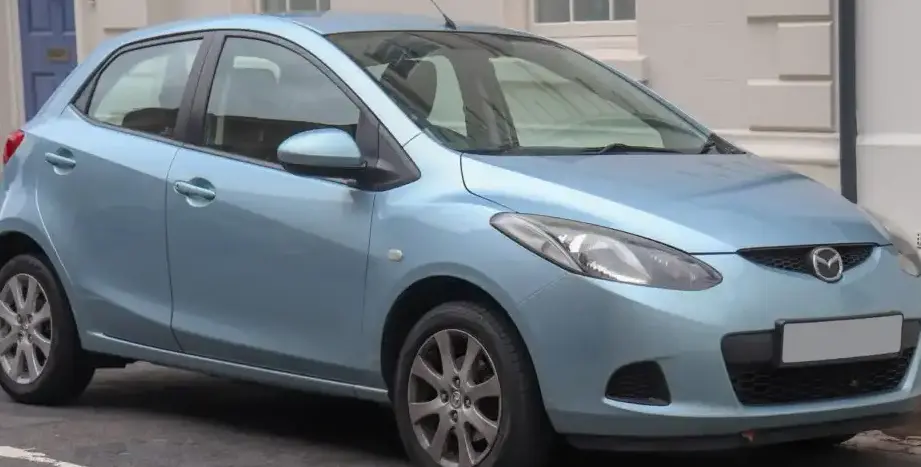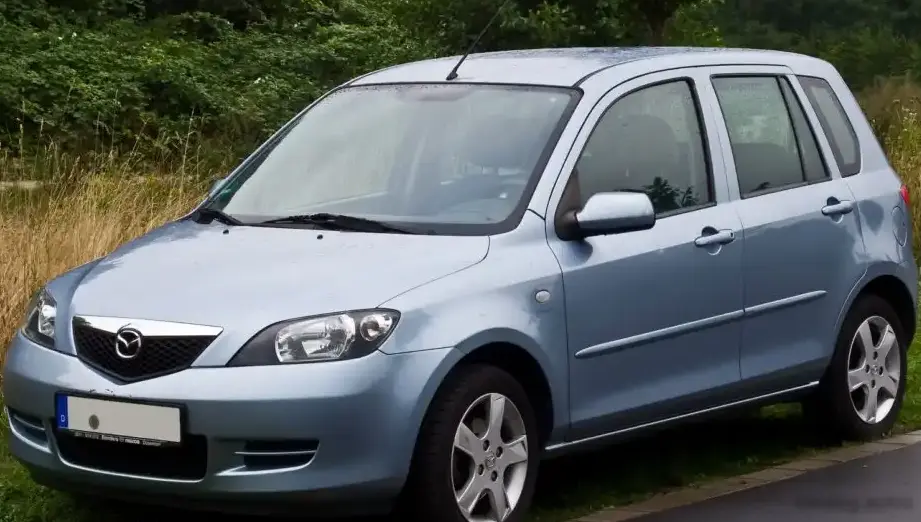
The Mazda2 I (DY) 1.4i 16V, produced between 2003 and 2007, represented Mazda’s entry into the burgeoning European subcompact car market. Positioned as a stylish and affordable alternative to established players like the Ford Fiesta and Volkswagen Polo, the DY series Mazda2 aimed to attract younger buyers with its contemporary design and nimble handling. This specific 1.4i 16V variant, producing 80 horsepower, served as the base engine option in many European markets, offering a balance between fuel efficiency and acceptable performance for urban driving. It was a key component of Mazda’s strategy to broaden its appeal beyond its traditional sports car image.
Technical Specifications
| Brand | Mazda |
| Model | 2 |
| Generation | I (DY) |
| Type (Engine) | 1.4i 16V (80 Hp) |
| Start of production | 2003 |
| End of production | 2007 |
| Powertrain Architecture | Internal Combustion engine |
| Body type | Hatchback |
| Seats | 5 |
| Doors | 5 |
| Fuel consumption (urban) | 9 l/100 km (26.1 US mpg) |
| Fuel consumption (extra urban) | 5.5 l/100 km (42.8 US mpg) |
| Fuel consumption (combined) | 6.8 l/100 km (34.6 US mpg) |
| CO2 emissions | 161 g/km |
| Fuel Type | Petrol (Gasoline) |
| Acceleration 0 – 100 km/h | 13.9 sec |
| Acceleration 0 – 62 mph | 13.9 sec |
| Acceleration 0 – 60 mph | 13.2 sec |
| Maximum speed | 164 km/h (101.9 mph) |
| Emission standard | Euro 4 |
| Weight-to-power ratio | 13.1 kg/Hp |
| Weight-to-torque ratio | 8.5 kg/Nm |
| Power | 80 Hp @ 5700 rpm |
| Torque | 124 Nm @ 3500 rpm (91.46 lb.-ft. @ 3500 rpm) |
| Engine layout | Front, Transverse |
| Engine Model/Code | FXJA |
| Engine displacement | 1388 cm3 (84.7 cu. in.) |
| Number of cylinders | 4 |
| Engine configuration | Inline |
| Cylinder Bore | 76 mm (2.99 in.) |
| Piston Stroke | 76.5 mm (3.01 in.) |
| Compression ratio | 11:1 |
| Number of valves per cylinder | 4 |
| Fuel injection system | Multi-port manifold injection |
| Engine aspiration | Naturally aspirated |
| Valvetrain | DOHC |
| Engine oil capacity | 3.8 l (4.02 US qt | 3.34 UK qt) |
| Coolant capacity | 5 l (5.28 US qt | 4.4 UK qt) |
| Kerb Weight | 1050 kg (2314.85 lbs.) |
| Max. weight | 1495 kg (3295.91 lbs.) |
| Max load | 445 kg (981.06 lbs.) |
| Trunk (boot) space – minimum | 267 l (9.43 cu. ft.) |
| Trunk (boot) space – maximum | 1044 l (36.87 cu. ft.) |
| Fuel tank capacity | 45 l (11.89 US gal | 9.9 UK gal) |
| Length | 3925 mm (154.53 in.) |
| Width | 1680 mm (66.14 in.) |
| Height | 1545 mm (60.83 in.) |
| Wheelbase | 2490 mm (98.03 in.) |
| Front track | 1470 mm (57.87 in.) |
| Rear track | 1445 mm (56.89 in.) |
| Drag coefficient (Cd) | 0.34 |
| Minimum turning circle | 9.8 m (32.15 ft.) |
| Drivetrain | Front wheel drive |
| Number of gears | 5 |
| Gearbox type | Manual transmission |
| Front suspension | Spring Strut |
| Rear suspension | Coil spring |
| Front brakes | Ventilated discs |
| Rear brakes | Drum |
| Assisting systems | ABS (Anti-lock braking system) |
| Steering type | Steering rack and pinion |
| Tires size | 195/50 R15 |
| Wheel rims size | 15 |
Powertrain & Engine Architecture
The heart of the Mazda2 1.4i 16V is the FXJA engine, a 1.388-liter inline-four cylinder gasoline engine. This engine utilizes a multi-port fuel injection system, delivering fuel directly into the intake ports just before the intake valves. The engine features a double overhead camshaft (DOHC) valvetrain, operating 16 valves (four per cylinder) to optimize airflow and improve volumetric efficiency. The 11:1 compression ratio was relatively high for the time, contributing to the engine’s modest power output. Paired with this engine was a five-speed manual transmission, which was the most common configuration. The transmission was chosen for its affordability and reliability, prioritizing fuel economy over outright performance. The engine’s design emphasized durability and ease of maintenance, typical of Japanese engineering philosophy.
Driving Characteristics
The 1.4i 16V Mazda2 offered a predictable, if not exhilarating, driving experience. With 80 horsepower and 91 lb-ft of torque, acceleration was adequate for city driving and merging onto highways, but it lacked the punch of higher-spec models like the 1.6-liter variants. The five-speed manual transmission provided reasonable control, but the gear ratios were spaced to favor fuel efficiency rather than spirited driving. Compared to the more powerful engines in the Mazda2 lineup, the 1.4i felt noticeably slower, particularly when fully loaded with passengers or cargo. However, the light weight of the vehicle (around 2300 lbs) helped to mitigate the power deficit, making it feel more nimble and responsive than its horsepower figure might suggest. The steering was light and accurate, contributing to a pleasant urban driving experience.
Equipment & Trim Levels
The 1.4i 16V typically represented the entry-level trim in the Mazda2 range. Standard equipment generally included power steering, central locking, electric front windows, and an AM/FM radio. Safety features included driver and passenger airbags and ABS brakes. Interior upholstery was typically a basic cloth material. Optional extras, depending on the market, could include air conditioning, alloy wheels, a CD player, and metallic paint. The interior design was functional and straightforward, prioritizing practicality over luxury. Higher trim levels, such as the 1.6 Sport, added features like sport seats, a leather-wrapped steering wheel, and upgraded audio systems.
Chassis & Braking
The Mazda2 DY utilized a relatively simple chassis design. Front suspension consisted of MacPherson strut coil springs, while the rear employed a torsion beam setup. This configuration provided a good balance between ride comfort and handling. The front brakes were ventilated discs, offering adequate stopping power, while the rear brakes were drums, a cost-saving measure common in this segment. The steering system was a rack and pinion setup, providing precise and responsive steering feel. The relatively light weight of the vehicle contributed to its nimble handling characteristics.
Market Reception & Comparison
The Mazda2 1.4i 16V was generally well-received by automotive critics as a practical and affordable city car. It was praised for its stylish design, nimble handling, and fuel efficiency. However, some critics noted its lack of power and relatively basic interior. Compared to rivals like the Ford Fiesta and Volkswagen Polo, the Mazda2 offered a more engaging driving experience but lacked the refinement and brand prestige of the German competitor. Fuel economy was competitive, averaging around 35 mpg in combined driving. Reliability was generally good, with few reported issues with the engine or transmission.
Legacy
The Mazda2 DY 1.4i 16V remains a popular choice in the used car market, particularly for first-time buyers or those seeking an affordable and reliable city car. The FXJA engine is known for its durability and relatively low maintenance costs. While not a performance powerhouse, the 1.4i offers a dependable and economical transportation solution. Parts availability is generally good, and the car’s simple design makes it relatively easy to repair. Today, these cars are often found with higher mileage, but well-maintained examples can still provide years of reliable service.