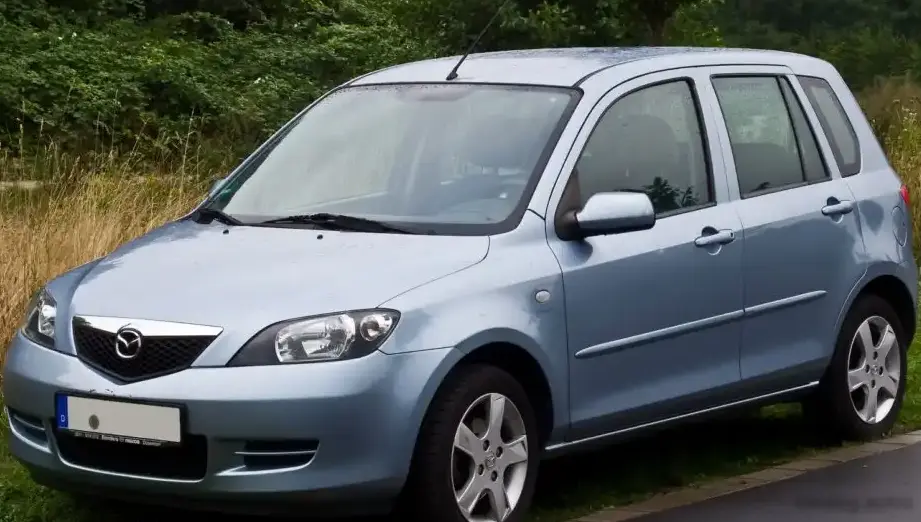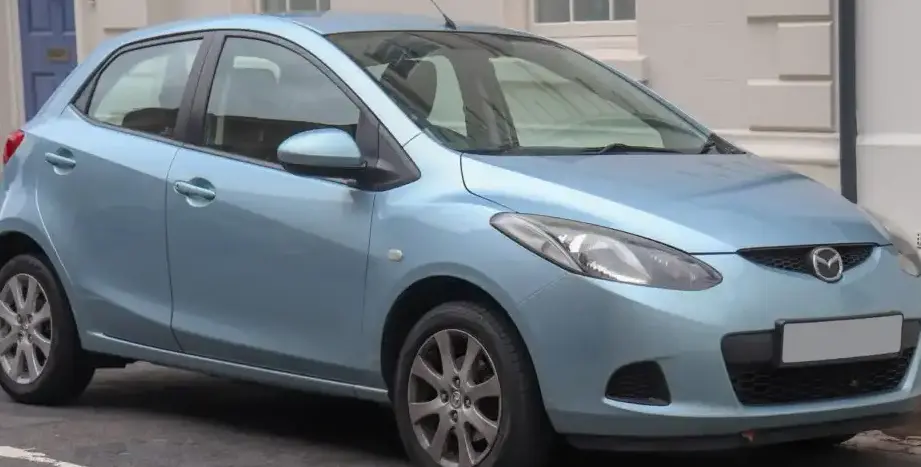
The Mazda 2 II (DE, facelift) 1.3i, producing 84 horsepower, was a key variant of Mazda’s subcompact offering sold primarily in Europe and other international markets between 2010 and 2014. This version represented an entry point into the second generation Mazda 2 lineup, known internally as the DE platform, and followed a mid-cycle refresh that brought styling and equipment updates. Positioned as an economical and practical choice, it catered to buyers prioritizing fuel efficiency and affordability over outright performance. The facelift brought subtle changes to the front fascia, interior trim, and safety equipment, enhancing the car’s appeal in a competitive segment.
Technical Specifications
| Brand | Mazda |
| Model | 2 |
| Generation | 2 II (DE, facelift 2010) |
| Type (Engine) | 1.3i (84 Hp) |
| Start of production | 2010 |
| End of production | 2014 |
| Powertrain Architecture | Internal Combustion engine |
| Body type | Hatchback |
| Seats | 5 |
| Doors | 5 |
| Fuel consumption (urban) | 6.4 l/100 km (36.8 US mpg, 44.1 UK mpg, 15.6 km/l) |
| Fuel consumption (extra urban) | 4.3 l/100 km (54.7 US mpg, 65.7 UK mpg, 23.3 km/l) |
| Fuel consumption (combined) | 5.1 l/100 km (46.1 US mpg, 55.4 UK mpg, 19.6 km/l) |
| CO2 emissions | 119 g/km |
| Fuel Type | Petrol (Gasoline) |
| Acceleration 0 – 100 km/h | 13.6 sec |
| Acceleration 0 – 62 mph | 13.6 sec |
| Acceleration 0 – 60 mph | 12.9 sec |
| Maximum speed | 172 km/h (106.88 mph) |
| Emission standard | Euro 5 |
| Weight-to-power ratio | 11.4 kg/Hp, 87.5 Hp/tonne |
| Weight-to-torque ratio | 7.9 kg/Nm, 126 Nm/tonne |
| Power | 84 Hp @ 6000 rpm |
| Power per litre | 62.3 Hp/l |
| Torque | 121 Nm @ 3500 rpm (89.25 lb.-ft. @ 3500 rpm) |
| Engine layout | Front, Transverse |
| Engine displacement | 1349 cm3 (82.32 cu. in.) |
| Number of cylinders | 4 |
| Engine configuration | Inline |
| Cylinder Bore | 74 mm (2.91 in.) |
| Piston Stroke | 78.4 mm (3.09 in.) |
| Compression ratio | 10:1 |
| Number of valves per cylinder | 4 |
| Fuel injection system | Multi-port manifold injection |
| Engine aspiration | Naturally aspirated engine |
| Valvetrain | DOHC |
| Engine oil capacity | 3.9 l (4.12 US qt | 3.43 UK qt) |
| Coolant | 5.3 l (5.6 US qt | 4.66 UK qt) |
| Kerb Weight | 960 kg (2116.44 lbs.) |
| Max. weight | 1485 kg (3273.86 lbs.) |
| Max load | 525 kg (1157.43 lbs.) |
| Trunk (boot) space – minimum | 250 l (8.83 cu. ft.) |
| Trunk (boot) space – maximum | 787 l (27.79 cu. ft.) |
| Fuel tank capacity | 43 l (11.36 US gal | 9.46 UK gal) |
| Permitted trailer load with brakes (12%) | 900 kg (1984.16 lbs.) |
| Permitted trailer load without brakes | 500 kg (1102.31 lbs.) |
| Length | 3920 mm (154.33 in.) |
| Width | 1695 mm (66.73 in.) |
| Width including mirrors | 1958 mm (77.09 in.) |
| Height | 1475 mm (58.07 in.) |
| Wheelbase | 2490 mm (98.03 in.) |
| Front track | 1475 mm (58.07 in.) |
| Rear (Back) track | 1465 mm (57.68 in.) |
| Ride height (ground clearance) | 150 mm (5.91 in.) |
| Drag coefficient (Cd) | 0.31 |
| Minimum turning circle (turning diameter) | 9.8 m (32.15 ft.) |
| Drivetrain Architecture | The Internal combustion engine (ICE) drives the front wheels of the vehicle. |
| Drive wheel | Front wheel drive |
| Number of gears and type of gearbox | 5 gears, manual transmission |
| Front brakes | Ventilated discs |
| Rear brakes | Drum |
| Assisting systems | ABS (Anti-lock braking system) |
| Steering type | Steering rack and pinion |
| Power steering | Electric Steering |
| Tires size | 185/55 R15 |
| Wheel rims size | 15 |
Powertrain & Engine Architecture
The 1.3i variant of the Mazda 2 II utilized the Mazda M2 engine family, specifically the M2-DE. This 1349cc inline-four cylinder engine featured a double overhead camshaft (DOHC) valvetrain with four valves per cylinder. It employed multi-point fuel injection to deliver fuel into the intake ports. The engine was designed with a focus on efficiency and refinement, rather than outright power. The 84 horsepower output at 6000 rpm and 121 Nm (89.25 lb-ft) of torque at 3500 rpm were typical for this displacement and class of vehicle. The engine’s relatively high compression ratio of 10:1 contributed to its fuel efficiency. The engine was transversely mounted in the front of the vehicle, driving the front wheels. The standard transmission was a five-speed manual, although a four-speed automatic transmission was also offered as an option, impacting performance and fuel economy.
Driving Characteristics
The 1.3i with the manual transmission offered adequate performance for urban driving and shorter trips. Acceleration was modest, taking around 13.6 seconds to reach 62 mph (100 km/h). The automatic transmission version further reduced acceleration times. The engine felt somewhat strained at higher speeds or when carrying a full load. The gear ratios were optimized for fuel economy, resulting in a relatively relaxed driving experience. While not sporty, the Mazda 2 II 1.3i provided predictable handling and a comfortable ride, making it well-suited for everyday commuting. Compared to the more powerful 1.5-liter engine option, the 1.3i felt noticeably slower, but it offered a significant advantage in fuel efficiency.
Equipment & Trim Levels
The 1.3i typically served as the base trim level for the Mazda 2 II. Standard equipment generally included air conditioning, power steering, electric front windows, a basic audio system with CD player, and ABS brakes. Safety features included dual front airbags. Higher trim levels added features such as alloy wheels, a more sophisticated audio system, remote central locking, and electric rear windows. Interior upholstery was typically cloth, with a simple and functional dashboard layout. Optional extras included metallic paint, a sunroof, and a navigation system.
Chassis & Braking
The Mazda 2 II utilized a MacPherson strut front suspension and a torsion beam rear suspension. This setup provided a good balance between ride comfort and handling. The front brakes were ventilated discs, while the rear brakes were drums. This configuration was common for vehicles in this weight class and price range. The electric power steering provided light and easy steering, making it ideal for maneuvering in tight spaces. The 185/55 R15 tires offered adequate grip for everyday driving conditions.
Market Reception & Comparison
The Mazda 2 II 1.3i was generally well-received by automotive critics as a practical and economical city car. It was praised for its fuel efficiency, comfortable ride, and relatively spacious interior for its size. However, some critics noted its lack of power and somewhat basic interior trim. Compared to competitors such as the Toyota Yaris, Volkswagen Polo, and Ford Fiesta, the Mazda 2 II 1.3i offered a competitive combination of features and price. The automatic transmission version, while convenient, suffered from reduced fuel economy and slower acceleration compared to the manual.
Legacy
The Mazda 2 II 1.3i has proven to be a reliable and durable vehicle. The M2-DE engine is known for its longevity, provided it is properly maintained. In the used car market, these models are often sought after by buyers looking for an affordable and fuel-efficient runabout. While not a performance icon, the 1.3i variant played a significant role in establishing the Mazda 2 as a popular choice in the subcompact segment, offering a compelling blend of practicality, economy, and Mazda’s signature driving dynamics.