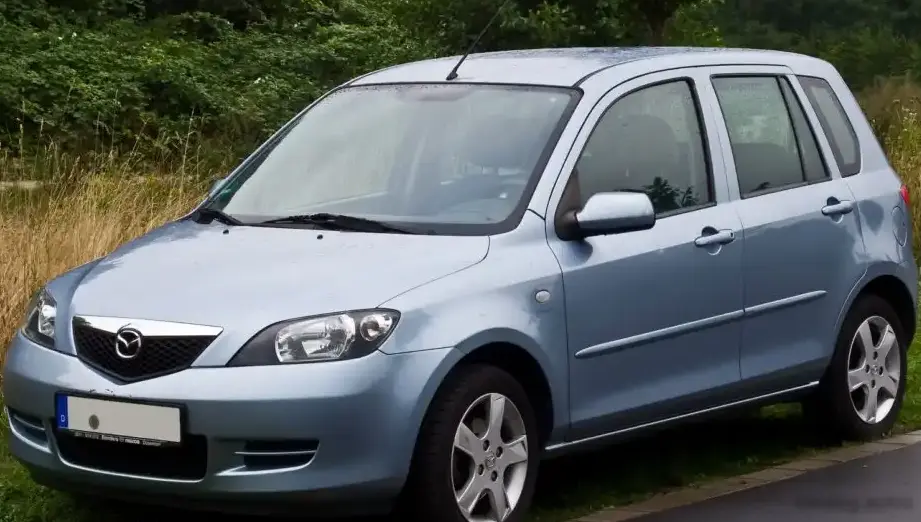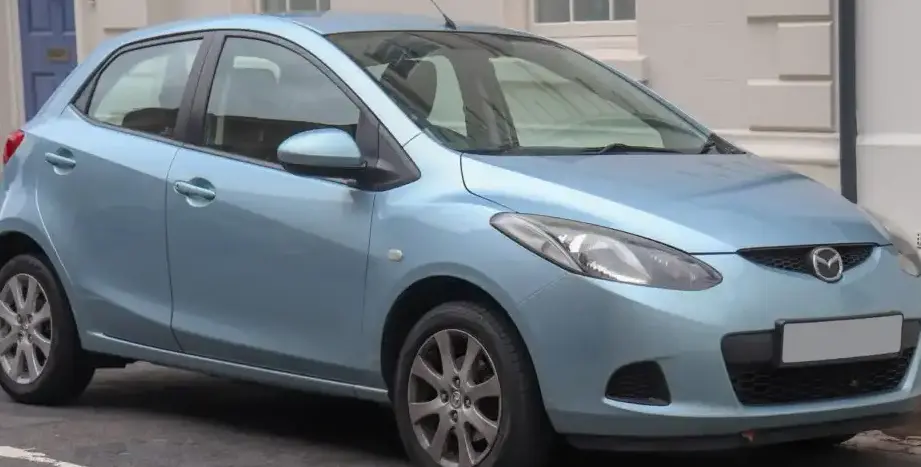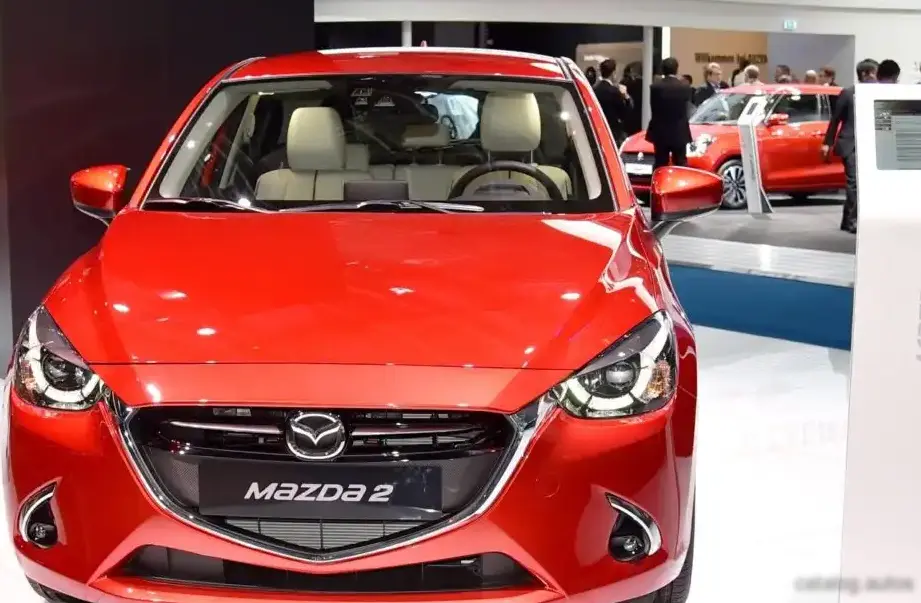
The Mazda 2 III (DJ) 1.5 SkyActiv-D, producing 105 horsepower, was a key variant in Mazda’s third-generation subcompact hatchback lineup, produced from November 2014 to May 2018. Positioned as a fuel-efficient and practical option, it represented a significant step forward in diesel technology for the Mazda 2, appealing to European and Asian markets where smaller, economical cars are highly valued. This model was part of the DJ platform generation, known for its improved handling and refined interior compared to its predecessors. The 1.5 SkyActiv-D offered a balance between performance and economy, making it a popular choice for urban commuters and those seeking a versatile everyday vehicle.
Technical Specifications
| Brand | Mazda |
| Model | 2 |
| Generation | III (DJ) |
| Type (Engine) | 1.5 SkyActiv-D (105 Hp) |
| Start of production | November, 2014 |
| End of production | May, 2018 |
| Powertrain Architecture | Internal Combustion engine |
| Body type | Hatchback |
| Seats | 5 |
| Doors | 5 |
| Fuel consumption (urban) | 3.8 l/100 km (61.9 US mpg, 74.3 UK mpg, 26.3 km/l) |
| Fuel consumption (extra urban) | 3.2 l/100 km (73.5 US mpg, 88.3 UK mpg, 31.3 km/l) |
| Fuel consumption (combined) | 3.4 l/100 km (69.2 US mpg, 83.1 UK mpg, 29.4 km/l) |
| CO2 emissions | 89 g/km |
| Fuel Type | Diesel |
| Acceleration 0 – 100 km/h | 10.1 sec |
| Acceleration 0 – 62 mph | 10.1 sec |
| Acceleration 0 – 60 mph | 9.6 sec |
| Maximum speed | 178 km/h (110.6 mph) |
| Emission standard | Euro 6 |
| Weight-to-power ratio | 9.9 kg/Hp, 101 Hp/tonne |
| Weight-to-torque ratio | 4.7 kg/Nm, 211.5 Nm/tonne |
| Power | 105 Hp @ 4000 rpm |
| Power per litre | 70 Hp/l |
| Torque | 220 Nm @ 1400-3200 rpm (162.26 lb.-ft. @ 1400-3200 rpm) |
| Engine layout | Front, Transverse |
| Engine Model/Code | S5Y5, S5Y2 |
| Engine displacement | 1499 cm3 (91.47 cu. in.) |
| Number of cylinders | 4 |
| Engine configuration | Inline |
| Cylinder Bore | 76 mm (2.99 in.) |
| Piston Stroke | 82.6 mm (3.25 in.) |
| Compression ratio | 14.8:1 |
| Number of valves per cylinder | 4 |
| Fuel injection system | Diesel Commonrail |
| Engine aspiration | Turbocharger, Intercooler |
| Valvetrain | DOHC |
| Engine oil capacity | 5.1 l (5.39 US qt | 4.49 UK qt) |
| Coolant | 6.6 l (6.97 US qt | 5.81 UK qt) |
| Kerb Weight | 1040 kg (2292.81 lbs.) |
| Max. weight | 1575 kg (3472.28 lbs.) |
| Max load | 535 kg (1179.47 lbs.) |
| Trunk (boot) space – minimum | 280 l (9.89 cu. ft.) |
| Trunk (boot) space – maximum | 950 l (33.55 cu. ft.) |
| Fuel tank capacity | 44 l (11.62 US gal | 9.68 UK gal) |
| Length | 4060 mm (159.84 in.) |
| Width | 1695 mm (66.73 in.) |
| Width including mirrors | 1983 mm (78.07 in.) |
| Height | 1495 mm (58.86 in.) |
| Wheelbase | 2570 mm (101.18 in.) |
| Front track | 1495 mm (58.86 in.) |
| Rear (Back) track | 1485 mm (58.46 in.) |
| Ride height (ground clearance) | 143 mm (5.63 in.) |
| Drag coefficient (Cd) | 0.29 |
| Minimum turning circle | 9.4 m (30.84 ft.) |
| Drivetrain Architecture | ICE, Front wheel drive |
| Drive wheel | Front wheel drive |
| Number of gears | 6 gears, manual transmission |
| Front brakes | Ventilated discs |
| Rear brakes | Drum |
| Assisting systems | ABS (Anti-lock braking system) |
| Steering type | Steering rack and pinion |
| Power steering | Electric Steering |
| Tires size | 185/65 R15 |
| Wheel rims size | 15 |
INTRODUCTION
The Mazda 2 III (DJ) 1.5 SkyActiv-D 105 hp model, launched in late 2014, was a significant offering within Mazda’s revamped subcompact range. Built on the 1HX0/DJ platform, this generation of the Mazda 2 prioritized driving dynamics and fuel efficiency. The 1.5 SkyActiv-D variant specifically targeted buyers seeking a diesel engine for its superior fuel economy and torque characteristics, particularly in Europe and Asia where diesel remained a popular choice. It sat in the middle of the engine lineup, offering a step up in economy from the petrol engines but a more affordable entry point than the higher-powered diesel options.
Powertrain & Engine Architecture
At the heart of this Mazda 2 variant lies the 1.499-liter S5Y5 or S5Y2 SkyActiv-D inline-four cylinder diesel engine. This engine is a cornerstone of Mazda’s SkyActiv technology, designed to maximize combustion efficiency and reduce emissions. It features a high compression ratio of 14.8:1, achieved through advanced materials and engineering. The engine utilizes a common-rail direct injection system, delivering fuel at extremely high pressure for optimal atomization and combustion. A turbocharger with an intercooler is employed to boost power and torque, providing 220 Nm (162.26 lb.-ft.) between 1400 and 3200 rpm. The engine is paired with a six-speed manual transmission, optimized for fuel efficiency and smooth gear changes. The SkyActiv-D engines were known for their relatively quiet operation compared to older diesel designs, thanks to careful attention to noise, vibration, and harshness (NVH) reduction.
Driving Characteristics
The 1.5 SkyActiv-D 105 hp version of the Mazda 2 offered a surprisingly refined driving experience. While not overtly sporty, it provided ample torque for everyday driving situations, making it easy to navigate city streets and maintain comfortable cruising speeds on the highway. Acceleration from 0-60 mph took around 9.6 seconds, and top speed was 110.6 mph. The six-speed manual transmission was well-matched to the engine’s powerband, allowing drivers to keep the engine in its optimal torque range. Compared to the 1.5-liter petrol engine, the diesel offered significantly more low-end torque, making it feel more responsive in everyday driving. However, it lacked the higher-revving enthusiasm of the petrol engine. Compared to the more powerful 1.5 SkyActiv-D 115 hp variant, the 105 hp version offered a slightly more relaxed driving experience, prioritizing fuel economy over outright performance.
Equipment & Trim Levels
The 1.5 SkyActiv-D 105 hp model was typically offered in mid-range trim levels, often designated as ‘Sport’ or ‘Comfort’ depending on the market. Standard equipment generally included air conditioning, power windows, power door locks, a basic audio system with USB connectivity, and alloy wheels. Safety features such as ABS, electronic stability control, and multiple airbags were also standard. Optional extras included a touchscreen infotainment system with navigation, automatic climate control, rear parking sensors, and a panoramic sunroof. Interior upholstery was typically cloth, with a focus on durability and practicality. The dashboard layout was clean and functional, with a driver-focused design.
Chassis & Braking
The Mazda 2 DJ featured a lightweight chassis designed to enhance handling and agility. The front suspension utilized MacPherson struts, while the rear suspension employed a torsion beam setup. This configuration provided a good balance between ride comfort and handling precision. Braking duties were handled by ventilated discs on the front wheels and drum brakes on the rear. ABS (Anti-lock Braking System) was standard, providing enhanced stopping power and control in emergency situations. The relatively low weight of the vehicle, around 1040 kg (2292.81 lbs), contributed to its nimble handling characteristics. Stabilizer bars were fitted to both the front and rear axles to reduce body roll during cornering.
Market Reception & Comparison
The Mazda 2 III 1.5 SkyActiv-D 105 hp received generally positive reviews from automotive critics. It was praised for its fuel efficiency, refined engine, and engaging driving dynamics. Critics noted that the diesel engine offered a significant improvement in fuel economy compared to the petrol alternatives, making it an attractive option for high-mileage drivers. However, some reviewers pointed out that the engine could be slightly noisy at higher revs. Compared to other subcompact diesels on the market, the Mazda 2 stood out for its superior handling and more premium interior. Its fuel economy figures of around 3.4 l/100 km (69.2 US mpg) were competitive with other diesel-powered rivals.
Legacy
The 1.5 SkyActiv-D engine proved to be a reliable and durable powertrain, with many examples still on the road today. While diesel engines have faced increasing scrutiny in recent years due to emissions concerns, the SkyActiv-D engines were designed to meet stringent Euro 6 emission standards. In the used car market, the Mazda 2 III 1.5 SkyActiv-D 105 hp remains a popular choice for buyers seeking a fuel-efficient and reliable subcompact hatchback. Maintenance costs are generally reasonable, and parts availability is good. The engine’s longevity and relatively simple design contribute to its continued appeal.