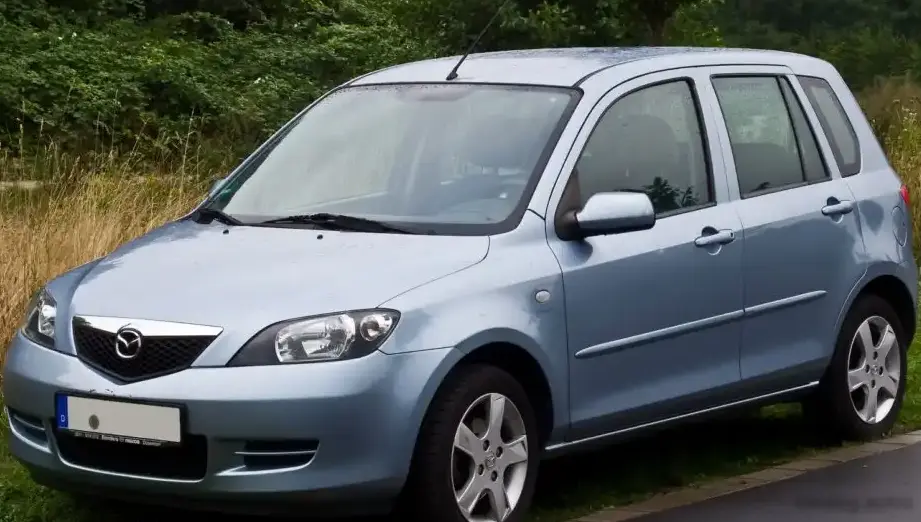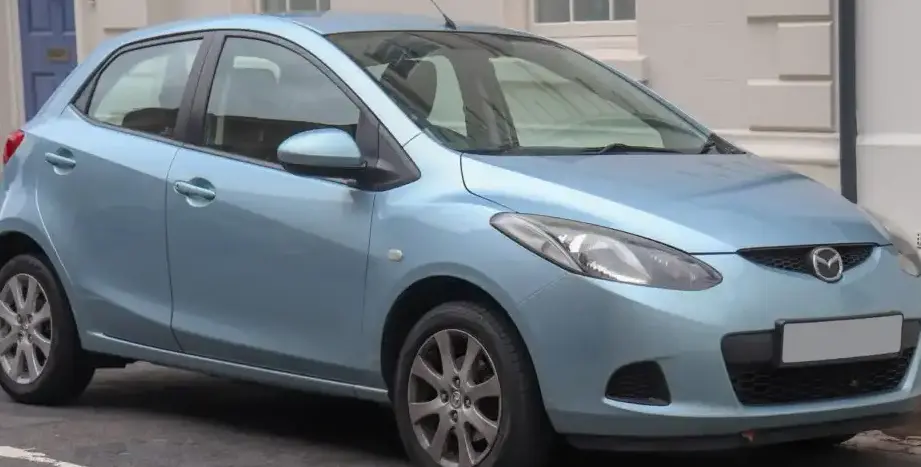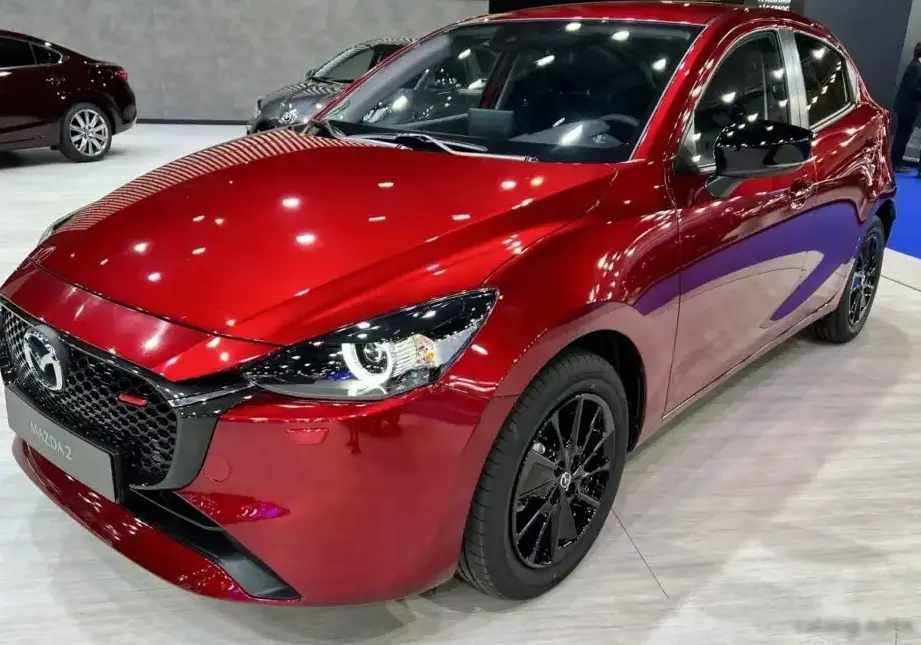
The Mazda 2 III (DJ), particularly the facelifted version introduced in 2019, represented Mazda’s continued refinement of the subcompact hatchback segment. The 1.3 Skyactiv-G (93 hp) Activematic variant, produced from 2019 through March 2022, served as an entry point into the third-generation Mazda 2 lineup, offering a balance of fuel efficiency and affordability. This model was primarily aimed at the European and Asian markets, where smaller, economical vehicles are highly sought after. It occupied a position below the more powerful 1.5-liter variants and those equipped with manual transmissions, targeting buyers prioritizing ease of use and lower running costs.
Technical Specifications
| Brand | Mazda |
| Model | 2 |
| Generation | 2 III (DJ, facelift 2019) |
| Type (Engine) | 1.3 Skyactiv-G (93 Hp) Activematic |
| Start of production | 2019 |
| End of production | March, 2022 |
| Powertrain Architecture | Internal Combustion engine |
| Body type | Hatchback |
| Seats | 5 |
| Doors | 5 |
| Fuel Type | Petrol (Gasoline) |
| Weight-to-power ratio | 11.3 kg/Hp, 88.5 Hp/tonne |
| Weight-to-torque ratio | 8.5 kg/Nm, 117 Nm/tonne |
| Power | 93 Hp @ 5800 rpm |
| Power per litre | 71.6 Hp/l |
| Torque | 123 Nm @ 4000 rpm, 90.72 lb.-ft. @ 4000 rpm |
| Engine layout | Front, Transverse |
| Engine displacement | 1299 cm3, 79.27 cu. in. |
| Number of cylinders | 4 |
| Engine configuration | Inline |
| Cylinder Bore | 71 mm, 2.8 in. |
| Piston Stroke | 82 mm, 3.23 in. |
| Compression ratio | 12:1 |
| Number of valves per cylinder | 4 |
| Fuel injection system | Direct injection |
| Engine oil capacity | 4.2 l, 4.44 US qt | 3.7 UK qt |
| Coolant | 5.2 l, 5.49 US qt | 4.58 UK qt |
| Kerb Weight | 1051 kg, 2317.06 lbs |
| Fuel tank capacity | 35 l, 9.25 US gal | 7.7 UK gal |
| Length | 4065 mm, 160.04 in |
| Width | 1695 mm, 66.73 in |
| Height | 1495 mm, 58.86 in |
| Wheelbase | 2570 mm, 101.18 in |
| Front track | 1495 mm, 58.86 in |
| Rear (Back) track | 1485 mm, 58.46 in |
| Ride height (ground clearance) | 143 mm, 5.63 in |
| Minimum turning circle (turning diameter) | 9.4 m, 30.84 ft |
| Drivetrain Architecture | The Internal combustion engine (ICE) drives the front wheels of the vehicle. |
| Drive wheel | Front wheel drive |
| Number of gears and type of gearbox | 6 gears, automatic transmission Activematic |
| Front suspension | Independent, type McPherson with coil spring and anti-roll bar |
| Rear suspension | Torsion |
| Front brakes | Ventilated discs |
| Rear brakes | Drum |
| Assisting systems | ABS (Anti-lock braking system) |
| Steering type | Steering rack and pinion |
| Power steering | Electric Steering |
| Tires size | 185/65 R15 |
| Wheel rims size | 5.5J x 15 |
Powertrain & Engine Architecture
At the heart of the Mazda 2 1.3 Activematic lies the PE-VPH engine, a 1.299-liter inline-four cylinder gasoline engine belonging to Mazda’s Skyactiv-G family. This engine is characterized by its high compression ratio of 12:1, achieved through advanced combustion control and optimized piston design. Direct fuel injection is employed to precisely meter fuel into the cylinders, enhancing efficiency and reducing emissions. The engine utilizes a dual overhead camshaft (DOHC) valvetrain with four valves per cylinder, contributing to its responsive nature. The ‘Activematic’ transmission is a six-speed automatic, a torque-converter type unit designed for smooth shifts and fuel efficiency. It’s not a continuously variable transmission (CVT), but a conventional automatic with well-defined gear steps.
Driving Characteristics
The 93 horsepower and 90.72 lb-ft of torque produced by the 1.3-liter engine, coupled with the six-speed automatic transmission, resulted in a driving experience geared towards urban commuting and relaxed highway cruising. Acceleration was adequate but not brisk, with a 0-60 mph time estimated around 12-13 seconds. The automatic transmission was programmed for fuel economy, meaning it would upshift quickly to maintain lower engine speeds. This could sometimes result in the engine feeling strained during overtaking maneuvers or when climbing hills. Compared to the more powerful 1.5-liter versions, the 1.3 Activematic offered a noticeably less engaging driving experience, but its lighter weight and efficient transmission contributed to better fuel economy.
Equipment & Trim Levels
The 1.3 Skyactiv-G Activematic trim typically included standard features such as air conditioning, power windows, power door locks, and a basic audio system with USB connectivity. Safety features like ABS, stability control, and multiple airbags were also standard. Higher trim levels, available as options, could add features like alloy wheels, a touchscreen infotainment system with Apple CarPlay and Android Auto integration, a rearview camera, and automatic climate control. Interior upholstery was generally cloth, with options for upgraded materials on higher trims. The dashboard layout was functional and driver-focused, with a clear instrument cluster and logically placed controls.
Chassis & Braking
The Mazda 2’s chassis featured a McPherson strut front suspension and a torsion beam rear suspension. This setup provided a good balance of ride comfort and handling. The front brakes were ventilated discs, offering adequate stopping power, while the rear brakes were drums, a cost-saving measure common in this segment. Electric power steering provided light and precise steering feel. The relatively lightweight nature of the 1.3-liter variant contributed to its nimble handling characteristics, making it easy to maneuver in tight urban environments.
Market Reception & Comparison
Critics generally praised the Mazda 2 for its stylish design, well-appointed interior, and engaging driving dynamics, even in the base 1.3 Activematic trim. However, the 1.3-liter engine was often criticized for feeling underpowered, particularly when paired with the automatic transmission. Compared to competitors like the Volkswagen Polo, Ford Fiesta, and Toyota Yaris, the Mazda 2 offered a more premium feel and a more enjoyable driving experience, but its fuel economy was generally comparable. The 1.3 Activematic variant was often seen as a sensible choice for buyers prioritizing affordability and ease of use over outright performance.
Legacy
The 1.3 Skyactiv-G Activematic variant of the Mazda 2 has proven to be a relatively reliable powertrain. The Skyactiv-G engine is known for its durability and fuel efficiency. Common issues are relatively minor, often related to routine maintenance items like spark plugs, air filters, and oil changes. On the used car market, these models represent a good value proposition, offering a well-equipped and stylish subcompact hatchback at an affordable price. However, potential buyers should be aware of the engine’s limited power output and the potential for the automatic transmission to feel sluggish in certain situations. Overall, the Mazda 2 1.3 Activematic remains a popular choice for those seeking a dependable and economical city car.