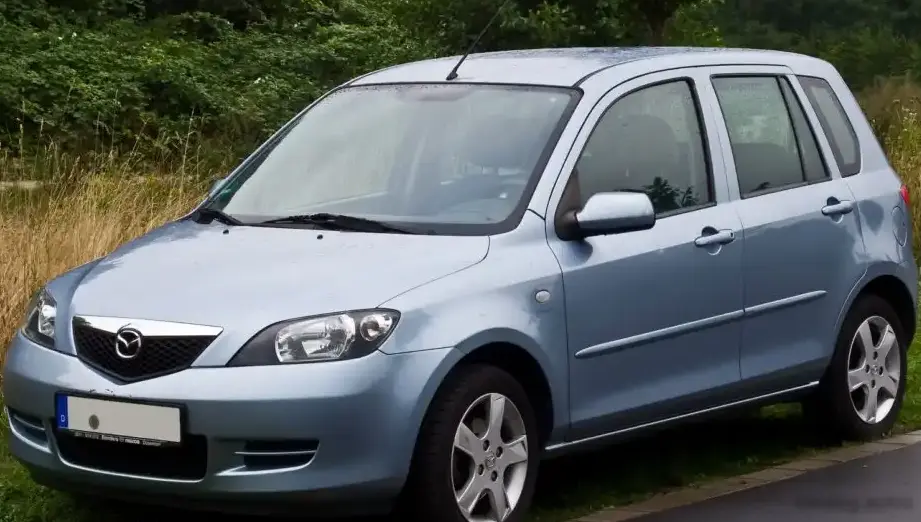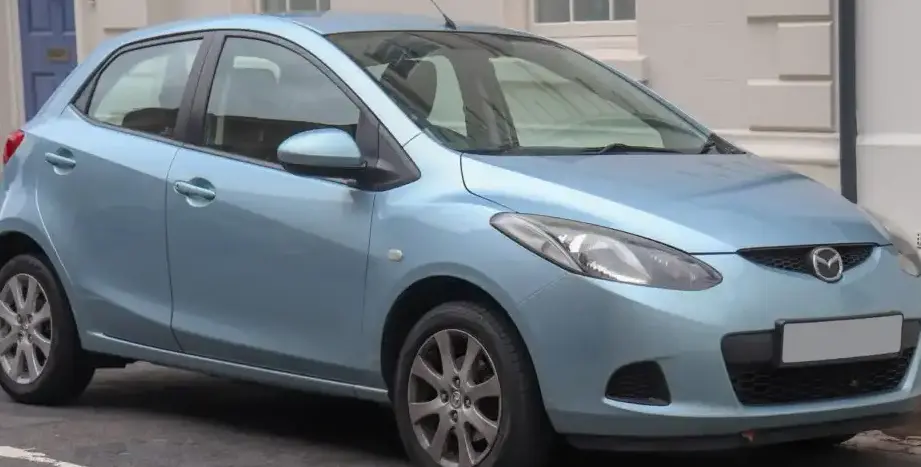
The Mazda 2 III (DJ), specifically the facelifted model produced from 2019 to March 2022, represented Mazda’s continued refinement of the subcompact hatchback segment. This generation, built on the DF platform, aimed to balance fuel efficiency, nimble handling, and a surprisingly upscale interior for its class. The 1.5 Skyactiv-G variant, producing 109 horsepower, served as a key offering in many markets, positioned as a sweet spot between affordability and acceptable performance. It was a popular choice for urban commuters and drivers prioritizing economy without sacrificing Mazda’s signature driving dynamics.
Technical Specifications
| Brand | Mazda |
| Model | 2 |
| Generation | III (DJ, facelift 2019) |
| Type (Engine) | 1.5 Skyactiv-G (109 Hp) |
| Start of production | 2019 |
| End of production | March, 2022 |
| Powertrain Architecture | Internal Combustion engine |
| Body type | Hatchback |
| Seats | 5 |
| Doors | 5 |
| Fuel consumption (combined) | 5.1 l/100 km (46.1 US mpg, 55.4 UK mpg, 19.6 km/l) |
| CO2 emissions | 120.4 g/km |
| Fuel Type | Petrol (Gasoline) |
| Weight-to-power ratio | 9.9 kg/Hp, 101.2 Hp/tonne |
| Weight-to-torque ratio | 7.6 kg/Nm, 130.9 Nm/tonne |
| Power | 109 Hp @ 6000 rpm |
| Power per litre | 72.9 Hp/l |
| Torque | 141 Nm @ 4000 rpm (104 lb.-ft. @ 4000 rpm) |
| Engine layout | Front, Transverse |
| Engine displacement | 1496 cm3 (91.29 cu. in.) |
| Number of cylinders | 4 |
| Engine configuration | Inline |
| Number of valves per cylinder | 4 |
| Fuel injection system | Direct injection |
| Engine oil capacity | 4.2 l (4.44 US qt | 3.7 UK qt) |
| Coolant capacity | 5.4 l (5.71 US qt | 4.75 UK qt) |
| Kerb Weight | 1077 kg (2374.38 lbs.) |
| Max. weight | 1501 kg (3309.14 lbs.) |
| Max load | 424 kg (934.76 lbs.) |
| Trunk (boot) space – minimum | 220 l (7.77 cu. ft.) |
| Fuel tank capacity | 44 l (11.62 US gal | 9.68 UK gal) |
| Length | 4065 mm (160.04 in.) |
| Width including mirrors | 1983 mm (78.07 in.) |
| Height | 1515 mm (59.65 in.) |
| Drivetrain Architecture | Front wheel drive, Internal Combustion engine (ICE) |
| Number of gears and type of gearbox | 6 gears, manual transmission |
| Front suspension | Independent, type McPherson with coil spring and anti-roll bar |
| Rear suspension | Torsion |
| Front brakes | Ventilated discs |
| Rear brakes | Drum |
| Assisting systems | ABS (Anti-lock braking system), Electric Power Steering |
| Tires size | 185/65 R15 |
| Wheel rims size | 15 |
Powertrain & Engine Architecture
The heart of this Mazda 2 variant is the 1.5-liter Skyactiv-G inline-four cylinder engine. This engine, designated as part of Mazda’s Skyactiv technology suite, prioritizes efficiency through a combination of high compression (typically around 14:1) and precise fuel injection. The direct injection system, coupled with optimized intake and exhaust porting, contributes to improved combustion efficiency and reduced emissions. The engine utilizes a dual overhead camshaft (DOHC) valvetrain with four valves per cylinder, enhancing breathing and power delivery. The 1.5L engine is known for its relatively smooth operation and willingness to rev, despite its modest displacement. The engine is paired with a six-speed manual transmission, offering precise shifts and contributing to the car’s engaging driving experience.
Driving Characteristics
The 109 horsepower and 141 Nm (104 lb-ft) of torque produced by the 1.5L engine provide adequate, though not exhilarating, performance. Acceleration from 0 to 60 mph takes around 9-10 seconds, making it suitable for city driving and highway merging with careful planning. The six-speed manual transmission allows drivers to keep the engine in its optimal power band, maximizing responsiveness. Compared to higher-output variants, such as those with larger engines, this 1.5L version feels less stressed at higher speeds and offers a more relaxed driving experience. The gear ratios are well-matched for everyday driving, providing sufficient torque in each gear. While not a sports car, the Mazda 2’s light weight and well-tuned chassis contribute to a surprisingly nimble and enjoyable driving experience.
Equipment & Trim Levels
The 1.5 Skyactiv-G variant typically served as a mid-range trim level in many markets. Standard equipment often included air conditioning, power windows and locks, a basic audio system with USB connectivity, and alloy wheels. Safety features such as ABS, stability control, and multiple airbags were also standard. Higher trim levels added features like a touchscreen infotainment system with Apple CarPlay and Android Auto integration, automatic climate control, a rearview camera, and advanced safety technologies like lane departure warning and automatic emergency braking. Interior upholstery was typically cloth, with options for upgraded materials in higher trims. The dashboard layout was clean and functional, prioritizing ease of use.
Chassis & Braking
The Mazda 2 III utilizes a front-wheel-drive layout with an independent McPherson strut suspension in the front and a torsion beam suspension in the rear. This setup provides a good balance of ride comfort and handling precision. The front suspension incorporates a stabilizer bar to reduce body roll during cornering. Braking duties are handled by ventilated discs in the front and drum brakes in the rear. While the drum brakes in the rear are a cost-saving measure, they provide adequate stopping power for the car’s weight and performance. Electric power steering provides light and precise steering feel, making it easy to maneuver in tight spaces.
Market Reception & Comparison
The 1.5 Skyactiv-G variant of the Mazda 2 III was generally well-received by automotive critics. It was praised for its fuel efficiency, engaging driving dynamics, and surprisingly upscale interior for its price point. Compared to competitors like the Volkswagen Polo or Ford Fiesta, the Mazda 2 often stood out for its more refined driving experience and higher-quality interior materials. However, some critics noted that the engine’s performance could feel a bit lacking when fully loaded or on steep inclines. Fuel economy figures consistently hovered around the 5.1 l/100 km mark, making it an attractive option for budget-conscious buyers. Reliability reports generally indicated good long-term reliability, with few major issues reported.
Legacy
The 1.5 Skyactiv-G engine, in this application, has proven to be a relatively reliable powertrain. Common maintenance items, such as oil changes and spark plug replacements, are straightforward and affordable. The engine is not known for any widespread mechanical issues, contributing to its positive reputation in the used car market. Today, used examples of the 2019-2022 Mazda 2 1.5 Skyactiv-G hold their value reasonably well, particularly those with low mileage and a well-maintained service history. It remains a popular choice for buyers seeking a fuel-efficient, reliable, and enjoyable-to-drive subcompact hatchback.