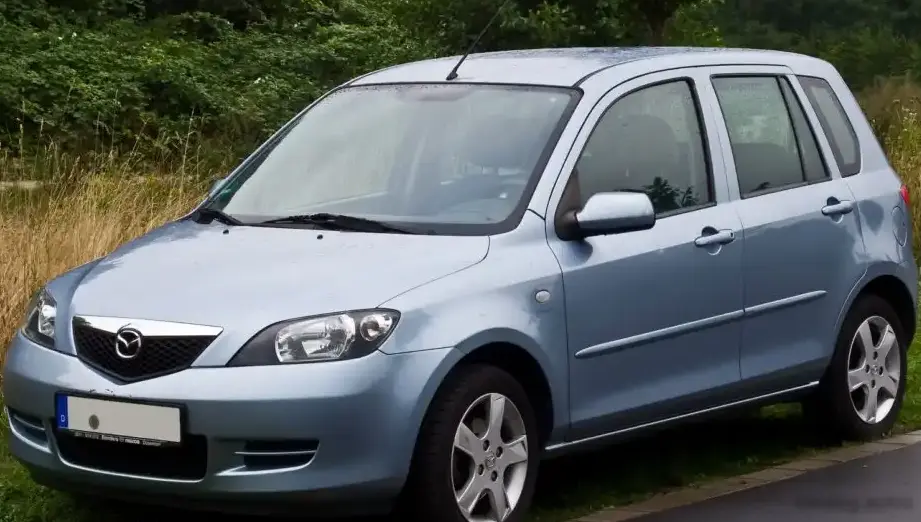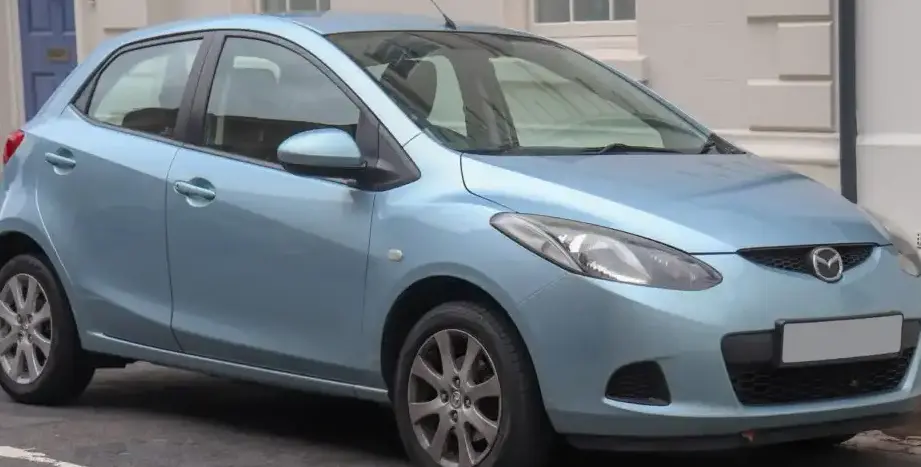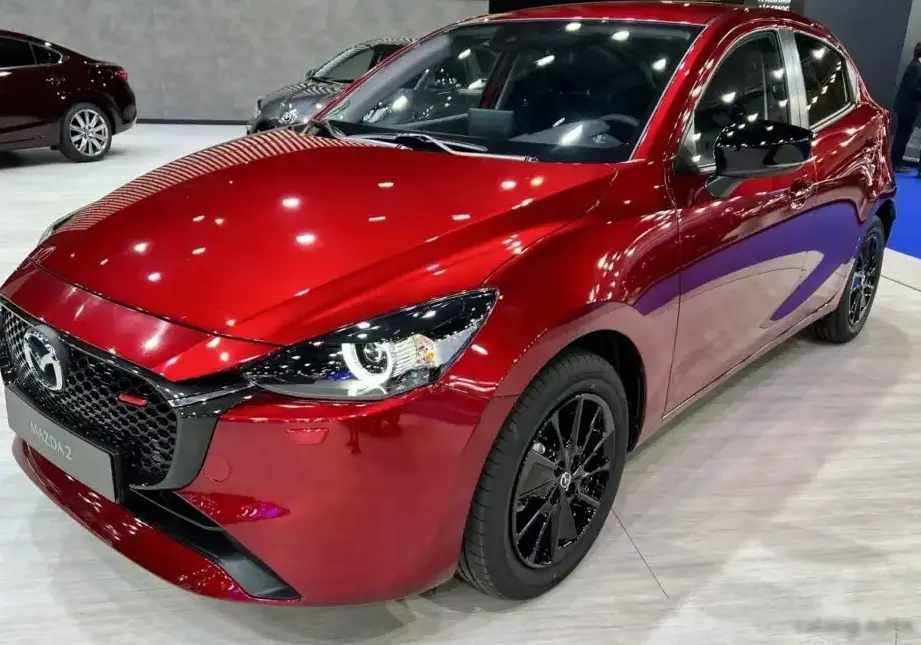
The Mazda 2 III (DJ), specifically the facelifted model produced from July 2019 to March 2022, offered a 1.5-liter Skyactiv-G engine producing 90 horsepower paired with a six-speed automatic transmission. This variant occupied the entry to mid-level position within the third-generation Mazda 2 lineup, appealing to buyers prioritizing fuel efficiency and ease of use over outright performance. It was primarily marketed in Europe and Asia, where smaller, economical hatchbacks are highly popular. The DJ generation represented a significant step forward for the Mazda 2, moving it towards a more sophisticated and refined driving experience while maintaining its reputation for reliability.
Technical Specifications
| Brand | Mazda |
| Model | 2 |
| Generation | 2 III (DJ, facelift 2019) |
| Type (Engine) | 1.5 Skyactiv-G (90 Hp) Automatic |
| Start of production | July, 2019 |
| End of production | March, 2022 |
| Powertrain Architecture | Internal Combustion engine |
| Body type | Hatchback |
| Seats | 5 |
| Doors | 5 |
| Fuel consumption (combined) | 5.9 l/100 km (39.9 US mpg, 47.9 UK mpg, 16.9 km/l) |
| CO2 emissions | 118 g/km |
| Fuel Type | Petrol (Gasoline) |
| Acceleration 0 – 100 km/h | 12 sec |
| Acceleration 0 – 62 mph | 12 sec |
| Acceleration 0 – 60 mph | 11.4 sec |
| Maximum speed | 177 km/h (109.98 mph) |
| Emission standard | Euro 6d |
| Weight-to-power ratio | 11.9 kg/Hp, 84 Hp/tonne |
| Weight-to-torque ratio | 7.2 kg/Nm, 138.2 Nm/tonne |
| Power | 90 Hp @ 6000 rpm |
| Power per litre | 60.2 Hp/l |
| Torque | 148 Nm @ 4000 rpm (109.16 lb.-ft. @ 4000 rpm) |
| Engine layout | Front, Transverse |
| Engine displacement | 1496 cm3 (91.29 cu. in.) |
| Number of cylinders | 4 |
| Engine configuration | Inline |
| Cylinder Bore | 74.5 mm (2.93 in.) |
| Piston Stroke | 85.8 mm (3.38 in.) |
| Compression ratio | 13:1 |
| Number of valves per cylinder | 4 |
| Fuel injection system | Direct injection |
| Engine aspiration | Naturally aspirated engine |
| Engine oil capacity | 4.2 l (4.44 US qt | 3.7 UK qt) |
| Coolant | 5.6 l (5.92 US qt | 4.93 UK qt) |
| Kerb Weight | 1071 kg (2361.15 lbs.) |
| Max. weight | 1536 kg (3386.3 lbs.) |
| Max load | 465 kg (1025.15 lbs.) |
| Trunk (boot) space – minimum | 280 l (9.89 cu. ft.) |
| Trunk (boot) space – maximum | 950 l (33.55 cu. ft.) |
| Fuel tank capacity | 44 l (11.62 US gal | 9.68 UK gal) |
| Max. roof load | 50 kg (110.23 lbs.) |
| Permitted trailer load with brakes (12%) | 900 kg (1984.16 lbs.) |
| Length | 4070 mm (160.24 in.) |
| Width | 1695 mm (66.73 in.) |
| Height | 1515 mm (59.65 in.) |
| Wheelbase | 2570 mm (101.18 in.) |
| Front track | 1495 mm (58.86 in.) |
| Rear (Back) track | 1485 mm (58.46 in.) |
| Ride height (ground clearance) | 143 mm (5.63 in.) |
| Drivetrain Architecture | The Internal combustion engine (ICE) drives the front wheels of the vehicle. |
| Drive wheel | Front wheel drive |
| Number of gears and type of gearbox | 6 gears, automatic transmission |
| Front suspension | Independent type McPherson |
| Rear suspension | Torsion |
| Assisting systems | ABS (Anti-lock braking system) |
| Steering type | Steering rack and pinion |
| Power steering | Electric Steering |
| Tires size | 185/60 R16 |
| Wheel rims size | 16 |
Powertrain & Engine Architecture
The heart of this Mazda 2 variant is the 1.5-liter Skyactiv-G inline-four cylinder engine. This engine, designated as part of Mazda’s Skyactiv technology suite, prioritizes efficiency and responsiveness. It features direct injection, a high compression ratio of 13:1, and optimized combustion chamber design. The engine code is typically PE-VPS. The direct injection system allows for precise fuel delivery, contributing to improved fuel economy and reduced emissions. The valvetrain utilizes dual overhead camshafts (DOHC) and four valves per cylinder, enhancing breathing and power output. The six-speed automatic transmission, while providing convenience, is a conventional torque-converter type. It’s tuned for smooth shifts and fuel efficiency rather than aggressive performance. The transmission’s gear ratios are optimized to keep the engine within its peak efficiency range during typical driving conditions.
Driving Characteristics
The 90 horsepower and 148 Nm (109 lb-ft) of torque delivered by this powertrain configuration results in a comfortable, but not particularly sporty, driving experience. Acceleration from 0-60 mph takes around 11.4 seconds, and top speed is approximately 109.98 mph. The automatic transmission contributes to a relaxed driving style, particularly in urban environments. Compared to the manual transmission version of the same engine, the automatic offers less driver engagement but greater ease of use. Higher-output versions of the Mazda 2, such as those with more powerful engines, provide significantly quicker acceleration and a more dynamic driving experience. The automatic transmission’s shift points are programmed to prioritize fuel economy, which can sometimes feel slightly sluggish during overtaking maneuvers. However, the engine is generally responsive enough for everyday driving needs.
Equipment & Trim Levels
The 1.5 Skyactiv-G 90 hp Automatic trim typically included standard features such as air conditioning, power windows, power door locks, a basic audio system with USB connectivity, and ABS brakes. Higher trim levels offered additional features like alloy wheels, a touchscreen infotainment system, Bluetooth connectivity, and advanced safety features like lane departure warning and automatic emergency braking. Interior upholstery was typically cloth, with options for upgraded materials on higher trims. Dashboard configuration was relatively simple and functional, prioritizing ease of use over elaborate design. Optional extras included a sunroof, navigation system, and parking sensors.
Chassis & Braking
The Mazda 2’s chassis utilizes an independent McPherson strut suspension in the front and a torsion beam suspension in the rear. This setup provides a good balance between ride comfort and handling. The torsion beam rear suspension is a cost-effective solution that contributes to the vehicle’s overall affordability. Braking systems typically consisted of disc brakes on the front wheels and drum brakes on the rear wheels, although some higher trims may have featured disc brakes all around. The ABS system provides enhanced braking control in emergency situations. Stabilizer bars were included on both axles to reduce body roll during cornering.
Market Reception & Comparison
The 1.5-liter Skyactiv-G 90 hp Automatic variant of the Mazda 2 was generally well-received by critics for its fuel efficiency, reliability, and comfortable ride. However, some reviewers noted its lack of outright performance compared to competitors. Fuel economy figures of around 39.9 US mpg combined were considered competitive for its class. Compared to the higher-output engine options within the Mazda 2 lineup, this variant offered a more affordable entry point but sacrificed performance. The 1.5L automatic was often seen as a sensible choice for urban commuters and drivers prioritizing practicality over driving thrills.
Legacy
The 1.5 Skyactiv-G engine, in general, has proven to be a reliable and durable powertrain. The automatic transmission, while not known for its sportiness, is also generally considered reliable with proper maintenance. In the used car market, this variant of the Mazda 2 represents a good value proposition for buyers seeking an economical and dependable hatchback. Its relatively simple mechanical design and readily available parts contribute to lower maintenance costs. While not a performance icon, the 1.5L automatic Mazda 2 remains a popular choice for those seeking a practical and fuel-efficient city car.