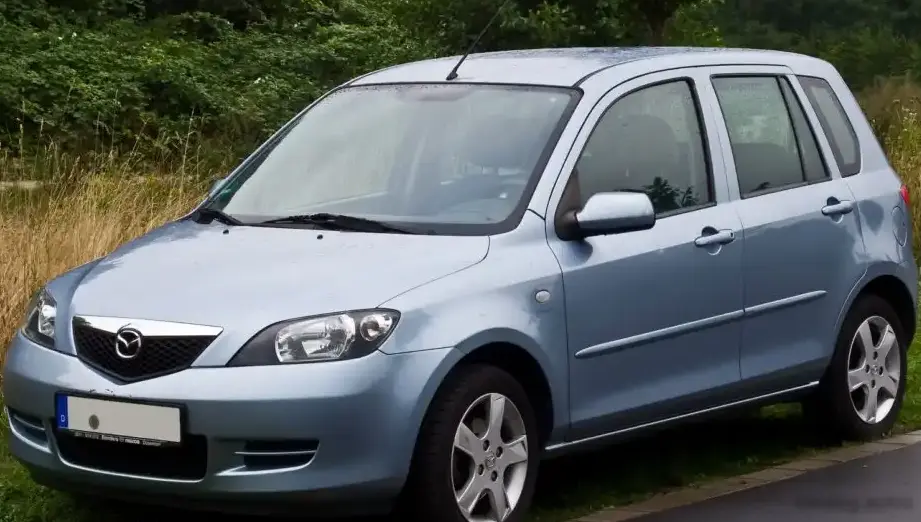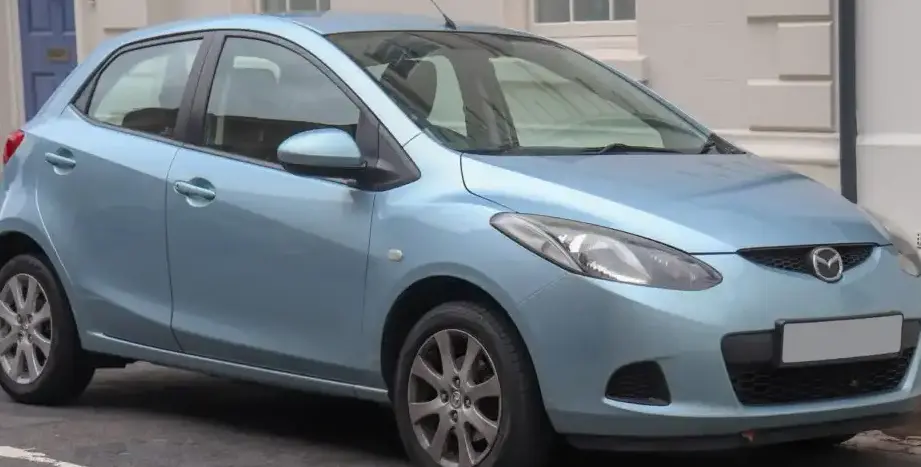
The Mazda 2 III Sedan (DL) 1.5 SkyActiv-G, producing 107 horsepower, was a key variant in Mazda’s global small car lineup from 2014 to 2019. Positioned as a fuel-efficient and practical option, this sedan catered to buyers seeking a balance between affordability and Mazda’s renowned driving dynamics. It formed part of the third generation (DL) of the Mazda 2, which represented a significant step forward in design, technology, and overall refinement compared to its predecessors. This model was particularly important in markets where sedan body styles were preferred, offering a more traditional alternative to the hatchback version.
Technical Specifications
| Brand | Mazda |
| Model | 2 |
| Generation | III Sedan (DL) |
| Type (Engine) | 1.5 SkyActiv-G (107 Hp) |
| Start of production | 2014 |
| End of production | 2019 |
| Powertrain Architecture | Internal Combustion engine |
| Body type | Sedan |
| Seats | 5 |
| Doors | 4 |
| Fuel consumption (urban) | 7.2 l/100 km (32.7 US mpg) |
| Fuel consumption (extra urban) | 4.4 l/100 km (53.5 US mpg) |
| Fuel consumption (combined) | 5.4 l/100 km (43.6 US mpg) |
| Fuel Type | Petrol (Gasoline) |
| Emission standard | Euro stage V |
| Weight-to-power ratio | 9.7 kg/Hp |
| Weight-to-torque ratio | 7.5 kg/Nm |
| Power | 107 Hp @ 6000 rpm |
| Power per litre | 71.5 Hp/l |
| Torque | 139 Nm @ 4000 rpm (102.52 lb.-ft. @ 4000 rpm) |
| Engine layout | Front, Transverse |
| Engine Model/Code | F-P5 |
| Engine displacement | 1496 cm3 (91.29 cu. in.) |
| Number of cylinders | 4 |
| Engine configuration | Inline |
| Cylinder Bore | 74.5 mm (2.93 in.) |
| Piston Stroke | 85.8 mm (3.38 in.) |
| Compression ratio | 12:1 |
| Number of valves per cylinder | 4 |
| Fuel injection system | Direct injection |
| Valvetrain | DOHC |
| Engine oil capacity | 4.2 l (4.44 US qt | 3.7 UK qt) |
| Coolant capacity | 5.4 l (5.71 US qt | 4.75 UK qt) |
| Kerb Weight | 1043 kg (2299.42 lbs.) |
| Trunk (boot) space | 440 l (15.54 cu. ft.) |
| Fuel tank capacity | 44 l (11.62 US gal | 9.68 UK gal) |
| Length | 4320 mm (170.08 in.) |
| Width | 1695 mm (66.73 in.) |
| Height | 1470 mm (57.87 in.) |
| Wheelbase | 2570 mm (101.18 in.) |
| Front track | 1495 mm (58.86 in.) |
| Rear track | 1485 mm (58.46 in.) |
| Ride height (ground clearance) | 140 mm (5.51 in.) |
| Minimum turning circle | 9.4 m (30.84 ft.) |
| Drivetrain Architecture | Front wheel drive |
| Number of gears | 6 |
| Gearbox type | Manual transmission |
| Front suspension | Independent type McPherson |
| Rear suspension | Torsion |
| Front brakes | Ventilated discs, 258 mm |
| Rear brakes | Drum, 200 mm |
| Assisting systems | ABS (Anti-lock braking system) |
| Steering type | Steering rack and pinion |
| Power steering | Electric Steering |
| Tires size | 185/65 R15 88T |
| Wheel rims size | 5.5J x 15 |
Powertrain & Engine Architecture
The heart of this Mazda 2 variant is the 1.5-liter SkyActiv-G inline-four cylinder engine, designated as the F-P5. This engine is a cornerstone of Mazda’s fuel efficiency technology, featuring direct injection, a high compression ratio of 12:1, and a lightweight design. The SkyActiv-G technology focuses on maximizing combustion efficiency, resulting in improved fuel economy and reduced emissions. The engine utilizes a double overhead camshaft (DOHC) valvetrain, optimizing airflow into and out of the cylinders. The 107 horsepower and 139 Nm (102.52 lb-ft) of torque are delivered at 6000 and 4000 rpm respectively. This engine was paired with a six-speed manual transmission, providing drivers with precise control and a more engaging driving experience. The Start & Stop System further enhanced fuel efficiency by automatically shutting off the engine when the vehicle came to a halt.
Driving Characteristics
The 1.5-liter SkyActiv-G engine with the six-speed manual transmission offered a balanced driving experience. While not a performance-oriented setup, it provided adequate power for everyday driving situations. Acceleration was linear, and the engine felt responsive within its operating range. The six-speed gearbox allowed for efficient cruising at highway speeds, while also providing enough gearing to keep the engine in its optimal power band during acceleration. Compared to higher-output versions of the Mazda 2, this variant prioritized fuel economy over outright speed. The manual transmission offered a more connected feel than the optional automatic, allowing drivers to better control the engine’s power delivery. The gear ratios were tuned for efficiency, meaning that while spirited driving was possible, it required more frequent downshifting.
Equipment & Trim Levels
The 1.5 SkyActiv-G variant typically served as the entry-level or mid-range trim in the Mazda 2 Sedan lineup. Standard features generally included air conditioning, power windows, power door locks, and a basic audio system with USB connectivity. Safety features such as ABS (Anti-lock Braking System) and airbags were also standard. Higher trim levels offered additional features like alloy wheels, a more advanced audio system, and optional features like a rearview camera and keyless entry. Interior upholstery was typically cloth, with a functional and durable design. Dashboard configuration was straightforward and user-friendly, prioritizing ease of use over elaborate styling.
Chassis & Braking
The Mazda 2 Sedan utilized a front-engine, front-wheel-drive layout. The front suspension employed an independent McPherson strut design, providing a comfortable ride and responsive handling. The rear suspension featured a torsion beam setup, which was cost-effective and space-efficient. Braking duties were handled by ventilated discs at the front and drum brakes at the rear. While the front discs provided adequate stopping power, the rear drums were a cost-saving measure common in this segment. The electric power steering offered light and precise steering feel, making it easy to maneuver in urban environments. The chassis was designed to be lightweight, contributing to the car’s overall fuel efficiency and agility.
Market Reception & Comparison
The Mazda 2 III Sedan 1.5 SkyActiv-G was generally well-received by automotive critics for its fuel efficiency, comfortable ride, and engaging handling. It was often praised for offering a more premium feel than many of its competitors in the subcompact sedan segment. Compared to other trims in the Mazda 2 lineup, this variant offered the best fuel economy, making it an attractive option for budget-conscious buyers. However, some critics noted that the engine lacked the punch of the higher-output versions. Against competitors like the Honda Fit, Toyota Yaris, and Hyundai Accent, the Mazda 2 stood out for its refined interior and enjoyable driving dynamics.
Legacy
The 1.5 SkyActiv-G engine proved to be a reliable and durable powertrain. The F-P5 engine, when properly maintained, is known for its longevity and relatively low running costs. In the used car market, this variant of the Mazda 2 Sedan remains a popular choice for buyers seeking a fuel-efficient and dependable vehicle. Its reputation for reliability, combined with Mazda’s overall brand image, ensures continued demand for this model. While newer generations of the Mazda 2 have emerged, the DL generation, particularly the 1.5 SkyActiv-G variant, holds a place as a well-rounded and practical small car that offered a compelling blend of efficiency, comfort, and driving enjoyment.