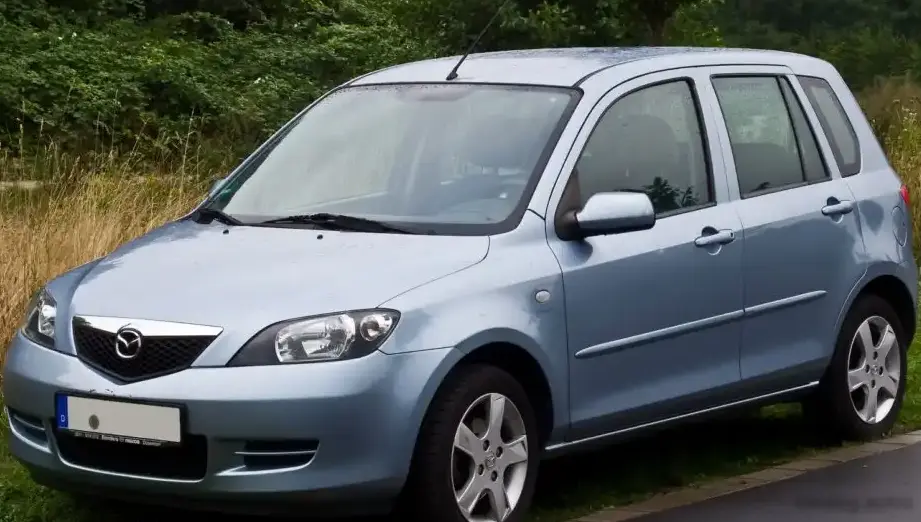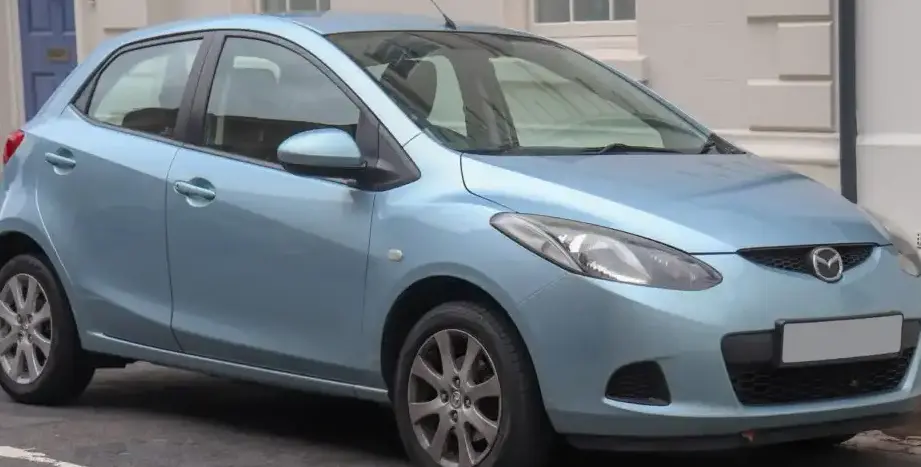
The Mazda 2 III Sedan (DL), specifically the facelift model introduced in 2019 with the 1.5 Skyactiv-G engine producing 109 horsepower, represents a significant iteration of Mazda’s subcompact offering. Produced from 2019 through March 2022, this variant was primarily aimed at markets outside of North America, where the Mazda 2 was offered in a different configuration. The DL facelift brought styling updates and refinements to the third-generation Mazda 2, building upon the platform first introduced in 2014. This particular engine and transmission combination occupied a middle ground within the Mazda 2 lineup, offering a balance between fuel efficiency and acceptable performance for daily commuting.
Technical Specifications
| Brand | Mazda |
| Model | 2 |
| Generation | III Sedan (DL, facelift 2019) |
| Type (Engine) | 1.5 Skyactiv-G (109 Hp) |
| Start of production | 2019 |
| End of production | March, 2022 |
| Powertrain Architecture | Internal Combustion engine |
| Body type | Sedan |
| Seats | 5 |
| Doors | 4 |
| Fuel consumption (combined) | 5.1 l/100 km (46.1 US mpg, 55.4 UK mpg, 19.6 km/l) |
| CO2 emissions | 120.4 g/km |
| Fuel Type | Petrol (Gasoline) |
| Weight-to-power ratio | 10.1 kg/Hp, 98.9 Hp/tonne |
| Weight-to-torque ratio | 7.8 kg/Nm, 127.9 Nm/tonne |
| Power | 109 Hp @ 6000 rpm |
| Power per litre | 72.9 Hp/l |
| Torque | 141 Nm @ 4000 rpm (104 lb.-ft. @ 4000 rpm) |
| Engine layout | Front, Transverse |
| Engine displacement | 1496 cm3 (91.29 cu. in.) |
| Number of cylinders | 4 |
| Engine configuration | Inline |
| Number of valves per cylinder | 4 |
| Fuel injection system | Direct injection |
| Engine oil capacity | 4.2 l (4.44 US qt | 3.7 UK qt) |
| Coolant capacity | 5.4 l (5.71 US qt | 4.75 UK qt) |
| Kerb Weight | 1102 kg (2429.49 lbs.) |
| Max. weight | 1530 kg (3373.07 lbs.) |
| Max load | 428 kg (943.58 lbs.) |
| Trunk (boot) space – minimum | 410 l (14.48 cu. ft.) |
| Fuel tank capacity | 44 l (11.62 US gal | 9.68 UK gal) |
| Length | 4340 mm (170.87 in.) |
| Width including mirrors | 1983 mm (78.07 in.) |
| Height | 1470 mm (57.87 in.) |
| Drivetrain Architecture | Front wheel drive, Internal Combustion engine (ICE) |
| Number of gears and type of gearbox | 6 gears, manual transmission |
| Front suspension | Independent, type McPherson with coil spring and anti-roll bar |
| Rear suspension | Torsion |
| Front brakes | Ventilated discs |
| Rear brakes | Drum |
| Assisting systems | ABS (Anti-lock braking system), Electric Power Steering |
| Tires size | 185/65 R15 |
| Wheel rims size | 15 |
Powertrain & Engine Architecture
The heart of this Mazda 2 variant is the 1.5-liter Skyactiv-G inline-four cylinder engine. This engine is a key component of Mazda’s Skyactiv technology, designed to maximize combustion efficiency. It features direct injection, a high compression ratio (typically around 14:1), and optimized intake and exhaust systems. The engine code is specific to regional markets, but generally falls within the PE-VPH family. The Skyactiv-G engine prioritizes fuel economy and smooth operation over outright power. The 109 hp output is achieved at 6000 rpm, while peak torque of 141 Nm (104 lb-ft) arrives at 4000 rpm. This engine is paired with a 6-speed manual transmission, offering precise shifts and contributing to the car’s overall efficiency. The transmission’s gear ratios are tuned for both city driving and highway cruising, providing adequate acceleration without sacrificing fuel economy.
Driving Characteristics
The 1.5-liter Skyactiv-G engine with the 6-speed manual transmission delivers a driving experience focused on efficiency and ease of use. Acceleration is adequate for typical urban and suburban driving, but it’s not a particularly sporty setup. The engine feels responsive enough in the lower gears, but power begins to taper off as the revs climb. Compared to higher-output versions of the Mazda 2, this variant offers less exhilarating performance. However, the precise manual gearbox and light clutch pedal make it enjoyable to drive. The suspension provides a comfortable ride, absorbing bumps and imperfections in the road well. Steering is accurate and well-weighted, providing a confident feel behind the wheel.
Equipment & Trim Levels
The 1.5 Skyactiv-G variant of the Mazda 2 DL facelift typically came equipped with a reasonable level of standard features. These generally included power windows and locks, air conditioning, a basic audio system with USB connectivity, and ABS brakes. Higher trim levels, available as options, added features such as alloy wheels, a touchscreen infotainment system with smartphone integration (Apple CarPlay and Android Auto), a rearview camera, and advanced safety features like lane departure warning and automatic emergency braking. Interior upholstery was typically cloth, with higher trims offering partial leather options. The dashboard layout was clean and functional, with a focus on ergonomics.
Chassis & Braking
The Mazda 2 DL utilizes a front-wheel-drive chassis with an independent McPherson strut suspension in the front and a torsion beam suspension in the rear. This setup provides a good balance between ride comfort and handling. The front brakes are ventilated discs, offering good stopping power, while the rear brakes are drums, a cost-saving measure common in this segment. Electric power steering is standard, providing light and precise steering feel. The car’s relatively light weight (1102 kg / 2429.49 lbs) contributes to its nimble handling characteristics.
Market Reception & Comparison
The Mazda 2 DL 1.5 Skyactiv-G was generally well-received by automotive critics for its fuel efficiency, comfortable ride, and well-built interior. However, some reviewers noted that the engine lacked outright power, particularly when fully loaded or driving uphill. Compared to other trims in the Mazda 2 lineup, this variant offered the best fuel economy but the least amount of performance. It was positioned as an entry-level or mid-range option, appealing to buyers who prioritized practicality and efficiency over sporty driving dynamics. Its fuel economy of 5.1 l/100 km (46.1 US mpg) was competitive within its class.
Legacy
The 1.5 Skyactiv-G engine has proven to be a reliable and durable powertrain. While not known for exceptional performance, it’s generally regarded as a dependable unit with relatively low maintenance costs. In the used car market, Mazda 2 DL models with this engine are often sought after by buyers looking for an affordable and fuel-efficient compact sedan. The Skyactiv technology continues to be a hallmark of Mazda vehicles, and this engine represents an early example of the company’s commitment to efficiency and innovation. Long-term reliability reports suggest that with regular maintenance, this powertrain can provide many years of trouble-free service.