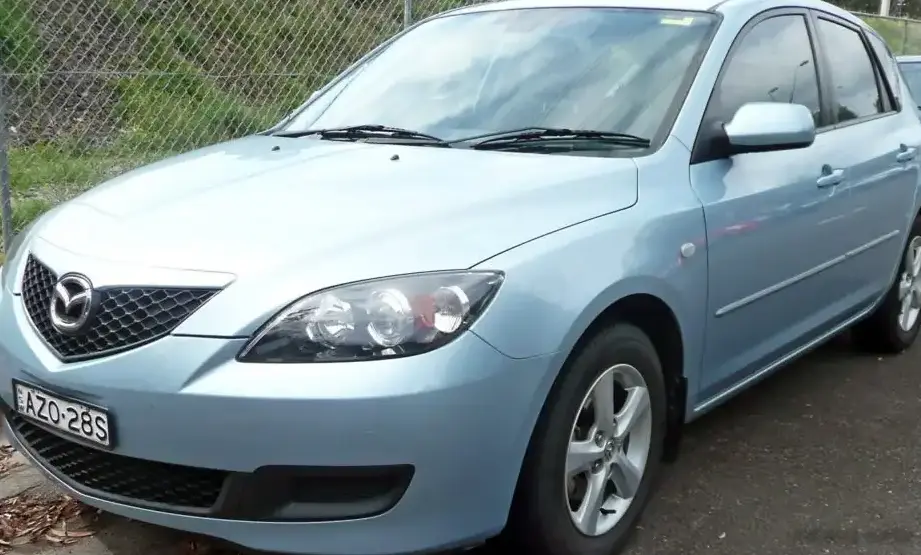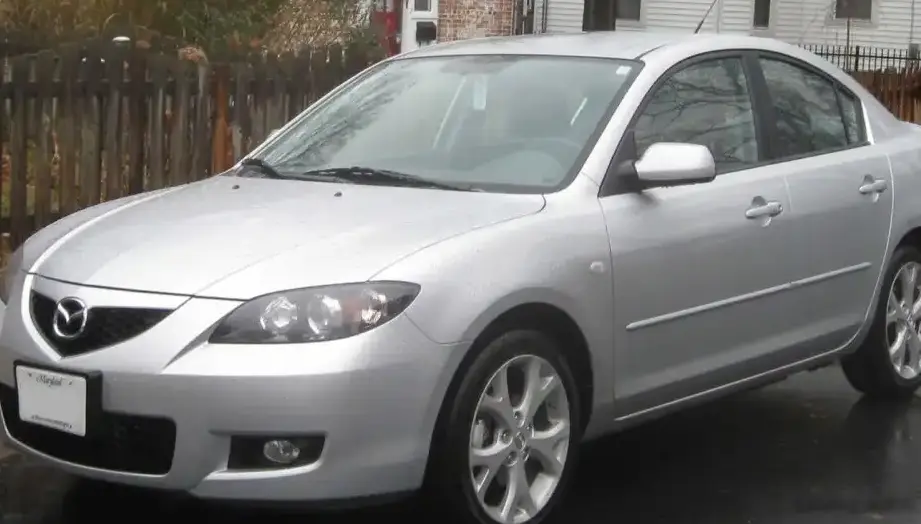
The Mazda 3 first generation (BK) facelift sedan, specifically the 1.6i variant with an automatic transmission, was produced from 2006 to 2009. This model represented Mazda’s entry point into the compact sedan market in many regions, particularly Europe and Asia, offering a balance of affordability, practicality, and Mazda’s signature sporty handling. The facelift brought revised styling cues, improved interior materials, and refinements to the engine and transmission options compared to the earlier BK models. This particular 1.6L automatic configuration was positioned as the more accessible trim level, aimed at buyers prioritizing ease of use and fuel efficiency over outright performance.
Technical Specifications
| Brand | Mazda |
| Model | 3 |
| Generation | I Sedan (BK, facelift 2006) |
| Type (Engine) | 1.6i (105 Hp) Automatic |
| Start of production | 2006 |
| End of production | 2009 |
| Powertrain Architecture | Internal Combustion engine |
| Body type | Sedan |
| Seats | 5 |
| Doors | 4 |
| Fuel consumption (urban) | 10 l/100 km (23.5 US mpg) |
| Fuel consumption (extra urban) | 6.2 l/100 km (37.9 US mpg) |
| Fuel consumption (combined) | 7.6 l/100 km (30.9 US mpg) |
| CO2 emissions | 179 g/km |
| Fuel Type | Petrol (Gasoline) |
| Acceleration 0 – 100 km/h | 12.6 sec |
| Acceleration 0 – 62 mph | 12.6 sec |
| Acceleration 0 – 60 mph | 12 sec |
| Maximum speed | 177 km/h (109.98 mph) |
| Emission standard | Euro 4 |
| Weight-to-power ratio | 11.4 kg/Hp |
| Weight-to-torque ratio | 8.3 kg/Nm |
| Power | 105 Hp @ 6000 rpm |
| Torque | 145 Nm @ 4000 rpm (106.95 lb.-ft. @ 4000 rpm) |
| Engine layout | Front, Transverse |
| Engine Model/Code | Z601, Z627 |
| Engine displacement | 1598 cm3 (97.52 cu. in.) |
| Number of cylinders | 4 |
| Engine configuration | Inline |
| Cylinder Bore | 78 mm (3.07 in.) |
| Piston Stroke | 83.6 mm (3.29 in.) |
| Compression ratio | 10:1 |
| Number of valves per cylinder | 4 |
| Fuel injection system | Multi-port manifold injection |
| Engine aspiration | Naturally aspirated engine |
| Valvetrain | DOHC |
| Engine oil capacity | 3.9 l (4.12 US qt | 3.43 UK qt) |
| Coolant capacity | 6 l (6.34 US qt | 5.28 UK qt) |
| Kerb Weight | 1200 kg (2645.55 lbs.) |
| Max. weight | 1730 kg (3814 lbs.) |
| Max load | 530 kg (1168.45 lbs.) |
| Trunk (boot) space – minimum | 413 l (14.58 cu. ft.) |
| Trunk (boot) space – maximum | 1285 l (45.38 cu. ft.) |
| Fuel tank capacity | 55 l (14.53 US gal | 12.1 UK gal) |
| Permitted trailer load with brakes (12%) | 1200 kg (2645.55 lbs.) |
| Permitted trailer load without brakes | 550 kg (1212.54 lbs.) |
| Length | 4490 mm (176.77 in.) |
| Width | 1755 mm (69.09 in.) |
| Width including mirrors | 1935 mm (76.18 in.) |
| Height | 1465 mm (57.68 in.) |
| Wheelbase | 2640 mm (103.94 in.) |
| Front track | 1530 mm (60.24 in.) |
| Rear (Back) track | 1515 mm (59.65 in.) |
| Ride height (ground clearance) | 160 mm (6.3 in.) |
| Drag coefficient (Cd) | 0.33 |
| Minimum turning circle (turning diameter) | 10.4 m (34.12 ft.) |
| Drivetrain Architecture | Front wheel drive |
| Drive wheel | Front wheel drive |
| Number of gears and type of gearbox | 4 gears, automatic transmission |
| Front suspension | Coil spring |
| Rear suspension | Coil spring |
| Front brakes | Ventilated discs |
| Rear brakes | Disc |
| Assisting systems | ABS (Anti-lock braking system) |
| Steering type | Steering rack and pinion |
| Power steering | Electric Steering |
| Tires size | 205/55 R16 |
| Wheel rims size | 16 |
Powertrain & Engine Architecture
The 1.6i variant utilized Mazda’s Z6 engine family, specifically the Z601 or Z627 code depending on the specific market and production date. This engine is a naturally aspirated, 1.6-liter (1598cc) inline-four cylinder engine. It featured a double overhead camshaft (DOHC) valvetrain with four valves per cylinder, and a multi-port fuel injection system. The engine produced 105 horsepower at 6000 rpm and 145 Nm (106.95 lb-ft) of torque at 4000 rpm. The automatic transmission was a conventional four-speed unit, designed for smooth operation and ease of use. While not particularly sporty, it was well-suited to the engine’s characteristics and the target audience for this trim level.
Driving Characteristics
The 1.6L automatic Mazda 3 offered a comfortable and predictable driving experience. Acceleration from 0-100 km/h (0-62 mph) took approximately 12.6 seconds, making it slower than the manual transmission or higher-powered variants. The four-speed automatic transmission, while smooth, lacked the responsiveness of a manual or more modern automatic with additional gears. Power delivery was linear, but the engine felt strained at higher RPMs. The gear ratios were optimized for fuel efficiency rather than performance, resulting in a relaxed cruising experience but limited passing power. Compared to the 2.0L or 2.3L models, the 1.6i automatic was noticeably less engaging to drive, but it provided a more accessible and economical option.
Equipment & Trim Levels
The 1.6i automatic trim typically included standard features such as air conditioning, power windows, power door locks, and a basic audio system. Interior upholstery was usually cloth, and the dashboard featured a straightforward design. Optional extras could include alloy wheels, a sunroof, upgraded audio systems, and side airbags. The specific equipment levels varied depending on the market and any optional packages selected by the original buyer. This trim level generally represented a good value proposition, offering essential features without the added cost of more luxurious options.
Chassis & Braking
The Mazda 3 BK utilized a front-engine, front-wheel-drive layout. Suspension consisted of coil springs all around. The front brakes were ventilated discs, providing adequate stopping power for everyday driving. The rear brakes were solid discs. The chassis was tuned to provide a balance of comfort and handling, with a focus on ride quality. The steering was rack and pinion with electric power assistance, offering light and precise control. The 1.6i automatic models typically featured a slightly softer suspension setup compared to the higher-performance trims, prioritizing comfort over sporty handling.
Market Reception & Comparison
The 1.6i automatic Mazda 3 was generally well-received as an affordable and practical compact sedan. Critics praised its fuel efficiency and comfortable ride, but noted its lack of performance compared to other variants. Fuel economy figures averaged around 7.6 l/100 km (30.9 US mpg), making it a competitive option in its class. Compared to the 2.0L or 2.3L models, the 1.6i automatic was significantly cheaper to purchase and insure, but offered less driving excitement. It appealed to buyers who prioritized practicality and economy over sporty performance.
Legacy
The 1.6L engine and four-speed automatic transmission combination in the Mazda 3 BK proved to be relatively reliable. While not known for exceptional longevity, the powertrain generally held up well with regular maintenance. Today, these vehicles are readily available on the used car market at affordable prices. Common issues include wear and tear on suspension components and potential for oil leaks as the engine ages. However, the relatively simple design of the powertrain makes it relatively easy and inexpensive to repair. The 1.6i automatic Mazda 3 remains a viable option for budget-conscious buyers seeking a dependable and economical compact sedan.