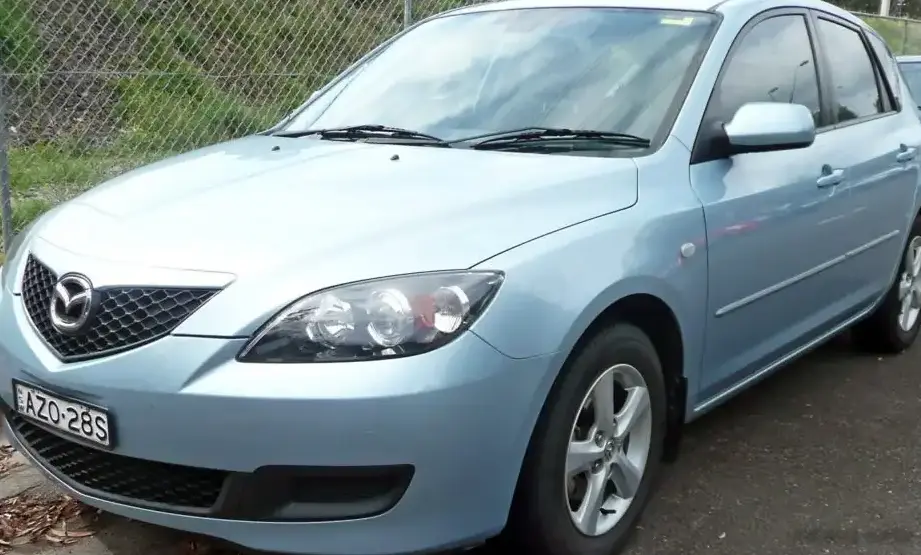
The Mazda 3 II Sedan (BL) 2.0 DISI, produced from 2009 to 2011, represented a significant step forward for Mazda’s compact offering. Positioned as a mid-range trim within the second generation (BL) Mazda 3 lineup, this variant combined a naturally aspirated 2.0-liter direct injection spark ignition (DISI) engine with a six-speed manual transmission. It aimed to deliver a balance of performance and fuel efficiency, appealing to drivers seeking a more engaging experience than the base 1.6-liter models, but without the higher price tag of the more powerful 2.3-liter options. The BL generation Mazda 3 was a crucial model for Mazda, building on the success of the first generation and establishing the brand’s reputation for sporty handling and stylish design in the compact segment.
Technical Specifications
| Brand | Mazda |
| Model | 3 |
| Generation | II Sedan (BL) |
| Type (Engine) | 2.0 DISI (151 Hp) |
| Start of production | 2009 |
| End of production | 2011 |
| Powertrain Architecture | Internal Combustion engine |
| Body type | Sedan |
| Seats | 5 |
| Doors | 4 |
| Fuel consumption (urban) | 9.3 l/100 km (25.3 US mpg) |
| Fuel consumption (extra urban) | 5.4 l/100 km (43.6 US mpg) |
| Fuel consumption (combined) | 6.8 l/100 km (34.6 US mpg) |
| CO2 emissions | 159 g/km |
| Fuel Type | Petrol (Gasoline) |
| Acceleration 0 – 100 km/h | 10.4 sec |
| Acceleration 0 – 62 mph | 10.4 sec |
| Acceleration 0 – 60 mph | 9.9 sec |
| Maximum speed | 212 km/h (131.73 mph) |
| Emission standard | Euro 5 |
| Weight-to-power ratio | 8.3 kg/Hp |
| Weight-to-torque ratio | 6.6 kg/Nm |
| Power | 151 Hp @ 6200 rpm |
| Torque | 191 Nm @ 4500 rpm (140.87 lb.-ft. @ 4500 rpm) |
| Engine layout | Front, Transverse |
| Engine Model/Code | LFZ2 |
| Engine displacement | 1999 cm3 (121.99 cu. in.) |
| Number of cylinders | 4 |
| Engine configuration | Inline |
| Cylinder Bore | 87.5 mm (3.44 in.) |
| Piston Stroke | 83.1 mm (3.27 in.) |
| Compression ratio | 11.2:1 |
| Number of valves per cylinder | 4 |
| Fuel injection system | Direct injection |
| Engine aspiration | Naturally aspirated |
| Valvetrain | DOHC |
| Engine oil capacity | 4.3 l (4.54 US qt | 3.78 UK qt) |
| Coolant capacity | 7.5 l (7.93 US qt | 6.6 UK qt) |
| Kerb Weight | 1255 kg (2766.8 lbs.) |
| Max. weight | 1820 kg (4012.41 lbs.) |
| Max load | 565 kg (1245.61 lbs.) |
| Trunk (boot) space – minimum | 430 l (15.19 cu. ft.) |
| Fuel tank capacity | 55 l (14.53 US gal | 12.1 UK gal) |
| Permitted trailer load with brakes (12%) | 1000 kg (2204.62 lbs.) |
| Permitted trailer load without brakes | 550 kg (1212.54 lbs.) |
| Length | 4580 mm (180.31 in.) |
| Width | 1755 mm (69.09 in.) |
| Width including mirrors | 2002 mm (78.82 in.) |
| Height | 1470 mm (57.87 in.) |
| Wheelbase | 2640 mm (103.94 in.) |
| Front track | 1520 mm (59.84 in.) |
| Rear (Back) track | 1515 mm (59.65 in.) |
| Ride height (ground clearance) | 155 mm (6.1 in.) |
| Drag coefficient (Cd) | 0.28 |
| Minimum turning circle (turning diameter) | 10.4 m (34.12 ft.) |
| Drivetrain Architecture | Front wheel drive |
| Drive wheel | Front wheel drive |
| Number of gears and type of gearbox | 6 gears, manual transmission |
| Front brakes | Ventilated discs |
| Rear brakes | Disc |
| Assisting systems | ABS (Anti-lock braking system) |
| Steering type | Steering rack and pinion |
| Power steering | Electric Steering |
| Tires size | 205/50 R17 |
| Wheel rims size | 17 |
Powertrain & Engine Architecture
The heart of the 2.0 DISI variant is the LFZ2 engine, a 1999cc inline-four cylinder powerplant. This engine utilizes direct injection technology, injecting fuel directly into the combustion chamber, allowing for more precise fuel control and increased efficiency. The engine also features a double overhead camshaft (DOHC) valvetrain with four valves per cylinder, optimizing airflow for improved performance. The 11.2:1 compression ratio further contributes to the engine’s power output. Paired with the engine is a six-speed manual transmission, providing drivers with precise control over gear selection and enhancing the overall driving experience. The transmission’s gear ratios were tuned to maximize both acceleration and fuel economy. Unlike some competitors who were moving towards turbocharged engines, Mazda opted for a naturally aspirated approach, prioritizing linear power delivery and a responsive feel.
Driving Characteristics
The 2.0 DISI with the six-speed manual offered a noticeably more engaging driving experience compared to the base 1.6-liter models. While not as overtly powerful as the 2.3-liter variants, the 151 horsepower and 191 Nm (140.87 lb-ft) of torque provided ample power for everyday driving and confident highway passing. The six-speed transmission allowed the engine to stay within its optimal power band, resulting in brisk acceleration. The 0-60 mph time of around 9.9 seconds was respectable for its class. The direct injection system contributed to a smooth and responsive throttle response. The manual transmission, while offering greater driver involvement, did require more effort than the automatic transmissions available on other trims.
Equipment & Trim Levels
The 2.0 DISI trim typically included standard features such as air conditioning, power windows and locks, a CD player with auxiliary input, and alloy wheels. Safety features included ABS, front airbags, and side airbags. Optional extras often included a sunroof, upgraded audio system, and leather upholstery. Interior materials were generally of good quality for the price point, with a focus on functionality and durability. The dashboard layout was clean and straightforward, prioritizing ease of use. The trim level sat comfortably between the base models and the more luxurious trims, offering a good balance of features and value.
Chassis & Braking
The Mazda 3 II Sedan utilized a MacPherson strut front suspension and a multi-link rear suspension, providing a comfortable ride while maintaining responsive handling. The front brakes were ventilated discs, offering excellent stopping power, while the rear brakes were solid discs. The chassis was relatively lightweight, contributing to the car’s agility. The electric power steering provided a precise and responsive feel. Stabilizer bars were fitted to both the front and rear axles to reduce body roll during cornering.
Market Reception & Comparison
The 2.0 DISI variant was generally well-received by automotive critics. It was praised for its responsive engine, engaging handling, and stylish design. Compared to the 1.6-liter models, the 2.0 DISI offered a significant performance upgrade. Compared to the 2.3-liter models, it provided a more fuel-efficient option without sacrificing too much performance. Fuel economy figures of around 34.6 US mpg combined were competitive for its class. Reliability was generally good, although some owners reported minor issues with the direct injection system over the long term.
Legacy
The Mazda 3 II Sedan 2.0 DISI remains a popular choice in the used car market today. The LFZ2 engine, while requiring regular maintenance, is generally considered to be a durable and reliable powerplant. The car’s sporty handling and stylish design continue to appeal to enthusiasts. Parts availability is generally good, and maintenance costs are reasonable. The 2.0 DISI variant represents a sweet spot in the second-generation Mazda 3 lineup, offering a compelling combination of performance, fuel efficiency, and value.