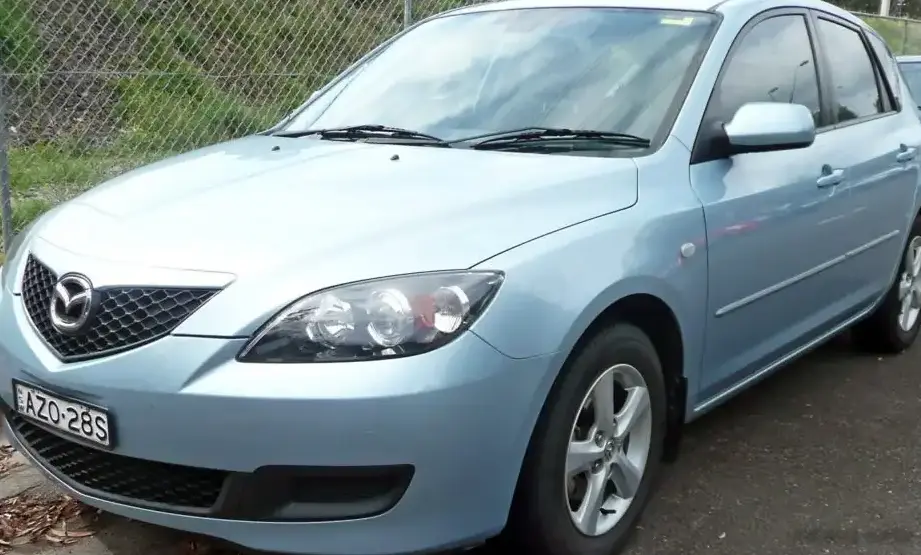
The Mazda 3 II Sedan (BL) 2.5, produced between 2009 and 2011, represented a significant step forward for Mazda’s compact offering in the North American market. Positioned as a mid-range trim within the BL generation (2009-2013), this variant combined a 2.5-liter inline-four engine with a five-speed automatic transmission, aiming to deliver a balance of performance and convenience. The BL generation Mazda 3 was a crucial model for Mazda, building on the success of the first generation and establishing the 3 as a serious contender in the competitive compact segment. This specific 2.5L automatic configuration was designed to appeal to buyers seeking a more refined driving experience than the base 2.0-liter engine offered, without the sportier focus of the manual transmission options.
Technical Specifications
| Brand | Mazda |
| Model | 3 |
| Generation | II Sedan (BL) |
| Type (Engine) | 2.5 (167 Hp) Automatic |
| Start of production | 2009 |
| End of production | 2011 |
| Powertrain Architecture | Internal Combustion engine |
| Body type | Sedan |
| Seats | 5 |
| Doors | 4 |
| Fuel consumption (urban) | 9.2 l/100 km (25.6 US mpg) |
| Fuel consumption (extra urban) | 6.8 l/100 km (34.6 US mpg) |
| Fuel Type | Petrol (Gasoline) |
| Weight-to-power ratio | 8.3 kg/Hp |
| Weight-to-torque ratio | 6.1 kg/Nm |
| Power | 167 Hp @ 6000 rpm |
| Power per litre | 67.1 Hp/l |
| Torque | 228 Nm @ 4000 rpm (168.16 lb.-ft. @ 4000 rpm) |
| Engine layout | Front, Transverse |
| Engine Model/Code | L5-VE |
| Engine displacement | 2489 cm3 (151.89 cu. in.) |
| Number of cylinders | 4 |
| Engine configuration | Inline |
| Cylinder Bore | 89 mm (3.5 in.) |
| Piston Stroke | 100 mm (3.94 in.) |
| Compression ratio | 9.7:1 |
| Number of valves per cylinder | 4 |
| Fuel injection system | Multi-port manifold injection |
| Engine aspiration | Naturally aspirated engine |
| Valvetrain | DOHC, VVT |
| Engine oil capacity | 5 l (5.28 US qt | 4.4 UK qt) |
| Coolant capacity | 7.5 l (7.93 US qt | 6.6 UK qt) |
| Kerb Weight | 1381 kg (3044.58 lbs.) |
| Trunk (boot) space | 335 l (11.83 cu. ft.) |
| Fuel tank capacity | 60 l (15.85 US gal | 13.2 UK gal) |
| Length | 4595 mm (180.91 in.) |
| Width | 1755 mm (69.09 in.) |
| Height | 1470 mm (57.87 in.) |
| Wheelbase | 2640 mm (103.94 in.) |
| Front track | 1530 mm (60.24 in.) |
| Rear track | 1515 mm (59.65 in.) |
| Ride height (ground clearance) | 155 mm (6.1 in.) |
| Minimum turning circle | 10.4 m (34.12 ft.) |
| Drivetrain Architecture | Front wheel drive |
| Number of gears | 5 |
| Gearbox type | Automatic transmission |
| Front suspension | Coil spring, Independent type McPherson, Transverse stabilizer |
| Rear suspension | Independent multi-link suspension, Transverse stabilizer, Coil spring |
| Front brakes | Ventilated discs |
| Rear brakes | Disc |
| Assisting systems | ABS (Anti-lock braking system) |
| Steering type | Steering rack and pinion |
| Power steering | Electric Steering |
| Tires size | 205/50 R17 |
| Wheel rims size | 7J x 17 |
Powertrain & Engine Architecture
The heart of the Mazda 3 2.5 Automatic is the L5-VE engine, a 2.5-liter inline-four cylinder powerplant. This engine utilized multi-port fuel injection and a double overhead camshaft (DOHC) valvetrain with variable valve timing (VVT) on both intake and exhaust camshafts. The L5-VE was designed to provide a smooth and responsive driving experience, prioritizing torque delivery over peak horsepower. The five-speed automatic transmission was a conventional torque converter automatic, chosen for its smoothness and ease of use. While not offering the quickest acceleration, it provided comfortable and predictable shifts. The transmission was tuned to prioritize fuel efficiency and drivability, rather than aggressive performance.
Driving Characteristics
The 2.5-liter engine and automatic transmission combination delivered a respectable, though not exhilarating, driving experience. Acceleration from a standstill was adequate, with 0-60 mph times typically around 8-9 seconds. The automatic transmission’s gear ratios were optimized for everyday driving, providing sufficient power for highway merging and passing maneuvers. Compared to the six-speed manual transmission available on the 2.5L model, the automatic offered less driver engagement but greater convenience. The 2.0-liter base engine felt noticeably less powerful, while the higher-performance Mazdaspeed3 offered significantly more aggressive acceleration. The suspension tuning provided a comfortable ride, absorbing bumps and imperfections in the road effectively.
Equipment & Trim Levels
The 2.5-liter automatic trim typically included standard features such as air conditioning, power windows and locks, a CD player with auxiliary input, and keyless entry. Higher trim levels, such as the Grand Touring, added features like leather upholstery, a sunroof, and a premium sound system. Optional extras included a navigation system, Bluetooth connectivity, and heated front seats. Interior upholstery was typically cloth, with higher trims offering leather options. The dashboard layout was functional and well-designed, with easy-to-read gauges and intuitive controls.
Chassis & Braking
The Mazda 3 II Sedan utilized a front-wheel-drive layout with an independent McPherson strut suspension in the front and an independent multi-link suspension in the rear. This suspension setup provided a good balance of ride comfort and handling. The front brakes were ventilated discs, while the rear brakes were solid discs. Anti-lock braking system (ABS) was standard. The chassis was relatively lightweight, contributing to the car’s nimble handling characteristics. Stabilizer bars were included both front and rear to reduce body roll during cornering.
Market Reception & Comparison
The Mazda 3 II Sedan 2.5 Automatic was generally well-received by automotive critics. It was praised for its comfortable ride, refined interior, and responsive engine. Fuel economy was considered average for its class, with EPA estimates around 22 mpg city and 30 mpg highway. Compared to competitors like the Honda Civic and Toyota Corolla, the Mazda 3 offered a more engaging driving experience and a more stylish interior. However, some critics noted that the automatic transmission could feel slightly sluggish at times. Reliability was generally good, with few major issues reported.
Legacy
The L5-VE engine, while not known for being exceptionally high-performance, proved to be a reliable and durable powerplant. The five-speed automatic transmission also demonstrated good longevity. Today, used Mazda 3 II Sedans with the 2.5-liter engine and automatic transmission are relatively affordable and represent a good value for buyers seeking a comfortable and reliable compact car. Maintenance costs are generally reasonable, and parts availability is good. The BL generation Mazda 3 remains a popular choice among enthusiasts and everyday drivers alike, appreciated for its blend of practicality, style, and driving enjoyment.