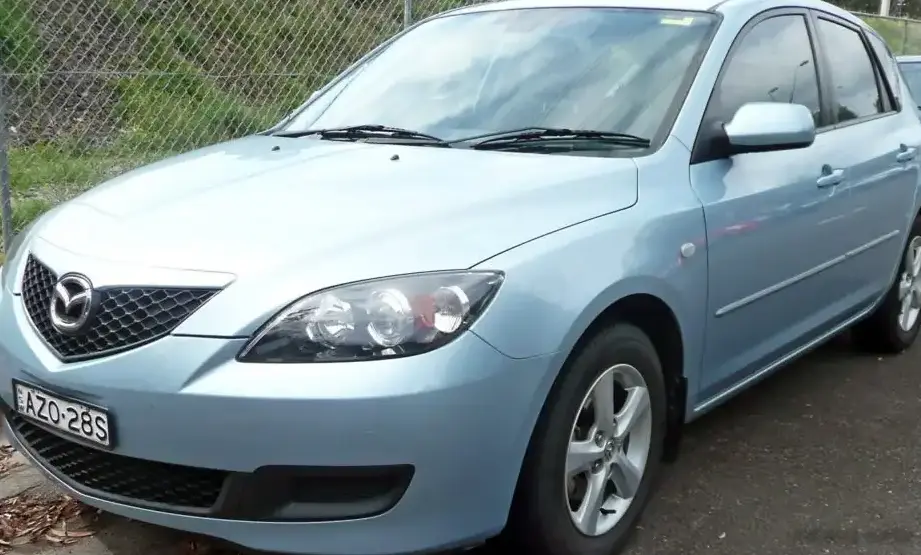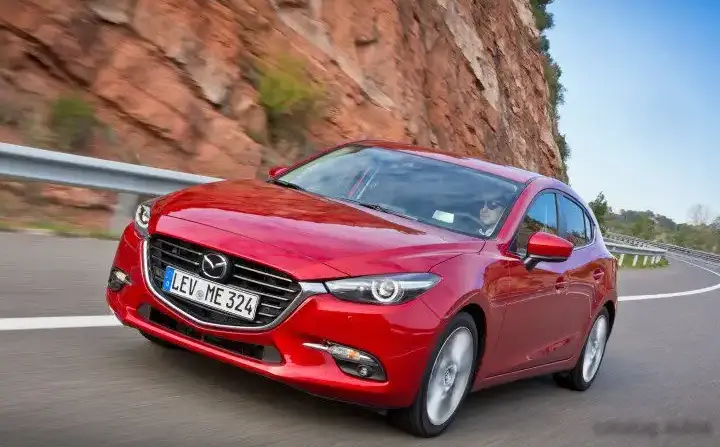
The Mazda 3 III Hatchback, specifically the facelift model released in 2017, represented a significant evolution of Mazda’s popular compact car. Within the BM series, the 2.0 SkyActiv-G variant producing 120 horsepower and paired with the Skyactiv-Drive automatic transmission was positioned as a mainstream offering, balancing fuel efficiency with acceptable performance. Production of this specific configuration ran from 2017 to 2018, serving primarily the European and Asian markets, though limited numbers were also available in North America. This model aimed to appeal to buyers seeking a refined and economical daily driver with Mazda’s signature driving dynamics.
Technical Specifications
| Brand | Mazda |
| Model | 3 |
| Generation | 3 III Hatchback (BM, facelift 2017) |
| Type (Engine) | 2.0 SkyActiv-G (120 Hp) Skyactiv-Drive |
| Start of production | 2017 |
| End of production | 2018 |
| Powertrain Architecture | Internal Combustion engine |
| Body type | Hatchback |
| Seats | 5 |
| Doors | 5 |
| Fuel consumption (urban) | 7 l/100 km (33.6 US mpg, 40.4 UK mpg, 14.3 km/l) |
| Fuel consumption (extra urban) | 4.8 l/100 km (49 US mpg, 58.9 UK mpg, 20.8 km/l) |
| Fuel consumption (combined) | 5.6 l/100 km (42 US mpg, 50.4 UK mpg, 17.9 km/l) |
| CO2 emissions | 129 g/km |
| Fuel Type | Petrol (Gasoline) |
| Acceleration 0 – 100 km/h | 10.4 sec |
| Acceleration 0 – 62 mph | 10.4 sec |
| Acceleration 0 – 60 mph | 9.9 sec |
| Maximum speed | 194 km/h (120.55 mph) |
| Emission standard | Euro 6 |
| Weight-to-power ratio | 10.4 kg/Hp, 96.4 Hp/tonne |
| Weight-to-torque ratio | 5.9 kg/Nm, 168.7 Nm/tonne |
| Power | 120 Hp @ 6000 rpm |
| Power per litre | 60.1 Hp/l |
| Torque | 210 Nm @ 4000 rpm (154.89 lb.-ft. @ 4000 rpm) |
| Engine layout | Front, Transverse |
| Engine displacement | 1998 cm3 (121.93 cu. in.) |
| Number of cylinders | 4 |
| Engine configuration | Inline |
| Cylinder Bore | 83.5 mm (3.29 in.) |
| Piston Stroke | 91.2 mm (3.59 in.) |
| Compression ratio | 14:1 |
| Number of valves per cylinder | 4 |
| Fuel injection system | Direct injection |
| Engine aspiration | Naturally aspirated engine |
| Engine oil capacity | 4.2 l (4.44 US qt | 3.7 UK qt) |
| Coolant | 6.3 l (6.66 US qt | 5.54 UK qt) |
| Kerb Weight | 1245-1332 kg (2744.76 – 2936.56 lbs.) |
| Max. weight | 1835 kg (4045.48 lbs.) |
| Max load | 503-590 kg (1108.93 – 1300.73 lbs.) |
| Trunk (boot) space – minimum | 364 l (12.85 cu. ft.) |
| Trunk (boot) space – maximum | 1263 l (44.6 cu. ft.) |
| Fuel tank capacity | 51 l (13.47 US gal | 11.22 UK gal) |
| Max. roof load | 75 kg (165.35 lbs.) |
| Permitted trailer load with brakes (8%) | 1600 kg (3527.4 lbs.) |
| Permitted trailer load with brakes (12%) | 1300 kg (2866.01 lbs.) |
| Permitted trailer load without brakes | 600 kg (1322.77 lbs.) |
| Permitted towbar download | 75 kg (165.35 lbs.) |
| Length | 4470 mm (175.98 in.) |
| Width | 1795 mm (70.67 in.) |
| Width including mirrors | 2053 mm (80.83 in.) |
| Height | 1465 mm (57.68 in.) |
| Wheelbase | 2700 mm (106.3 in.) |
| Ride height (ground clearance) | 155 mm (6.1 in.) |
| Minimum turning circle | 10.6 m (34.78 ft.) |
| Drivetrain Architecture | The Internal combustion engine (ICE) drives the front wheels of the vehicle. |
| Drive wheel | Front wheel drive |
| Number of gears and type of gearbox | 6 gears, automatic transmission |
| Front suspension | Independent, type McPherson with coil spring and anti-roll bar |
| Rear suspension | Independent multi-link suspension |
| Front brakes | Ventilated discs |
| Rear brakes | Disc |
| Assisting systems | ABS (Anti-lock braking system) |
| Steering type | Steering rack and pinion |
| Power steering | Electric Steering |
| Tires size | 205/60 R16; 215/45 R18 |
| Wheel rims size | 16; 18 |
INTRODUCTION
The 2017-2018 Mazda 3 III Hatchback 2.0 SkyActiv-G (120 hp) with the Skyactiv-Drive automatic transmission was a key component of Mazda’s third-generation 3 lineup (BM series). Following the 2017 facelift, this variant offered a balance between affordability, fuel economy, and the brand’s renowned driving experience. It sat within the range as a mid-level offering, positioned above the lower-powered 1.5-liter engine options and below the more performance-oriented 2.5-liter variants. Built on the 1HX0 platform (shared with other Mazda models), it aimed to provide a practical and enjoyable driving experience for a broad range of customers.
Powertrain & Engine Architecture
At the heart of this Mazda 3 variant lies the PE-VPH 2.0-liter SkyActiv-G inline-four cylinder engine. This engine is characterized by its high compression ratio of 14:1, achieved through advanced combustion control and precise fuel injection. The engine utilizes direct injection, optimizing fuel delivery for improved efficiency and power. The SkyActiv-Drive automatic transmission is a six-speed unit with a torque converter, designed to provide smooth and efficient gear changes. Unlike traditional automatic transmissions, the Skyactiv-Drive prioritizes fuel economy by utilizing a wider range of gear ratios and quicker shift times. The engine code is typically PE-VPH. The valvetrain employs dual overhead camshafts (DOHC) and four valves per cylinder, contributing to the engine’s responsive nature. The engine is transversely mounted in the front of the vehicle, driving the front wheels.
Driving Characteristics
The 120 hp output, coupled with the Skyactiv-Drive automatic, delivers a comfortable and predictable driving experience. Acceleration from 0-60 mph takes approximately 9.9 seconds, and 0-100 km/h in 10.4 seconds, making it suitable for everyday commuting and highway driving. The automatic transmission is programmed for fuel efficiency, meaning it may hold gears longer to maximize economy, sometimes at the expense of immediate responsiveness. Compared to the manual transmission versions of the 2.0-liter engine, the automatic feels slightly less engaging, but offers greater convenience. The higher-output 2.5-liter variants provide significantly more power and quicker acceleration, but at the cost of increased fuel consumption. The gear ratios are tuned for a balance between acceleration and fuel economy, with a relatively tall final drive.
Equipment & Trim Levels
The 2.0 SkyActiv-G Automatic typically came equipped with a reasonable level of standard features. These included air conditioning, power windows and mirrors, a basic audio system with USB connectivity, and alloy wheels. Higher trim levels offered upgrades such as a touchscreen infotainment system with navigation, automatic climate control, keyless entry, and a suite of advanced safety features like lane departure warning and automatic emergency braking. Interior upholstery was typically cloth, with options for leather or partial leather upgrades. Dashboard configuration was consistent across the range, featuring a clean and modern design. Optional extras included a sunroof, premium sound system, and parking sensors.
Chassis & Braking
The Mazda 3 III Hatchback utilizes an independent suspension system on both the front and rear axles. The front suspension employs a McPherson strut design with coil springs and an anti-roll bar, while the rear features a multi-link setup. This configuration provides a good balance between ride comfort and handling precision. Braking duties are handled by ventilated discs on the front wheels and solid discs on the rear. Anti-lock Braking System (ABS) is standard. The chassis is designed to be lightweight yet rigid, contributing to the car’s agile handling characteristics. Stabilizer bar thickness is moderate, providing adequate roll control without compromising ride comfort.
Market Reception & Comparison
Critics generally praised the Mazda 3 III Hatchback for its stylish design, engaging driving dynamics, and fuel efficiency. The 2.0 SkyActiv-G Automatic was considered a sensible choice for buyers prioritizing practicality and economy. However, some reviewers noted that the automatic transmission could feel slightly hesitant at times, and the 120 hp output wasn’t particularly exciting. Compared to competitors like the Volkswagen Golf and Ford Focus, the Mazda 3 offered a more driver-focused experience, but may have lacked some of the refinement and interior space of its rivals. Fuel economy figures of around 42 US mpg combined were competitive for its class. Reliability reports generally indicate good long-term reliability for this powertrain.
Legacy
The 2.0 SkyActiv-G engine and Skyactiv-Drive transmission combination proved to be a reliable and durable powertrain. In the used car market, these Mazda 3 models are generally well-regarded for their build quality and relatively low running costs. While not the most powerful or sporty variant, the 120 hp automatic offers a compelling blend of practicality, efficiency, and Mazda’s signature driving feel. Maintenance is relatively straightforward, and parts availability is good. These models continue to represent a good value proposition for buyers seeking a dependable and enjoyable compact hatchback.