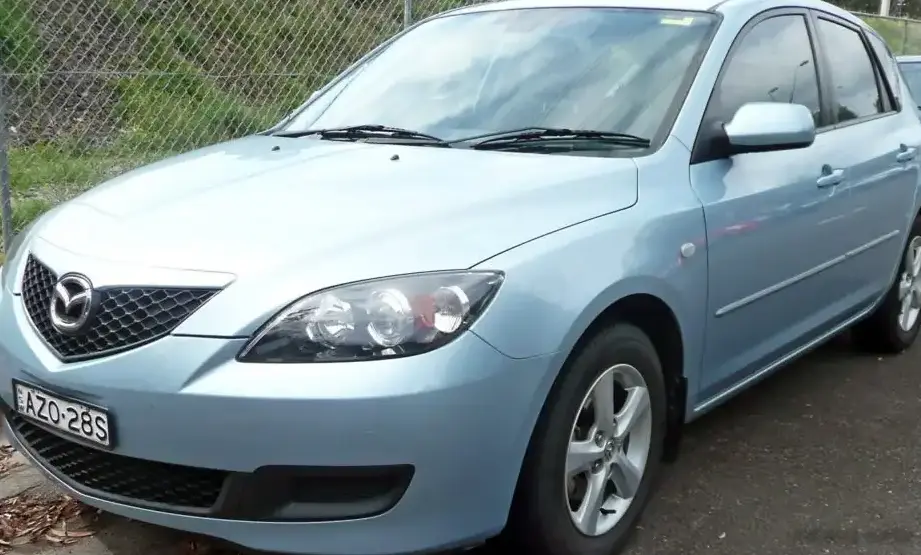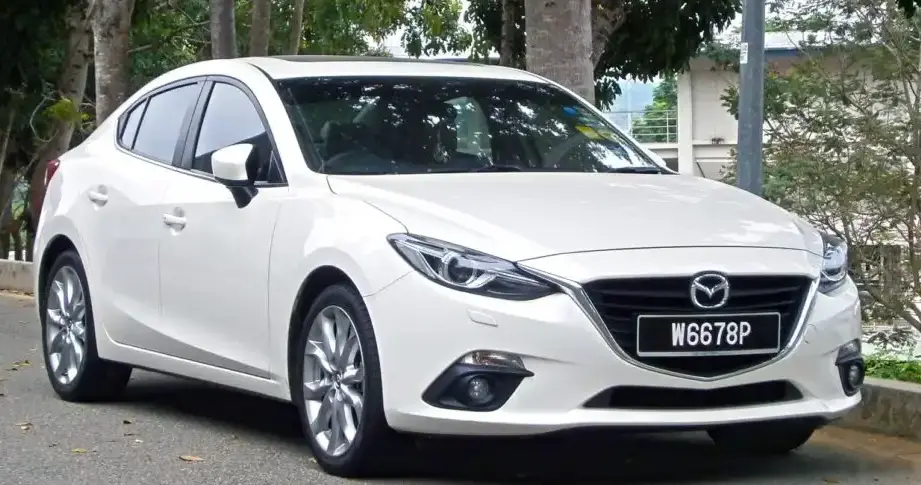
The Mazda 3 III Sedan (BM) 2.5 SkyActiv-G (184 Hp) Skyactiv-Drive, produced from July 2013 to 2016, represents a significant iteration of Mazda’s popular compact sedan. Positioned as a mid-range offering within the third generation (BM) Mazda 3 lineup, this variant combined Mazda’s innovative SkyActiv technology with a comfortable and efficient automatic transmission. It was primarily marketed in North America, Europe, and Asia-Pacific regions, appealing to buyers seeking a balance of performance, fuel economy, and modern features in a stylish package. This model year marked a shift towards more sophisticated engineering and design for Mazda, aiming to compete with established rivals like the Honda Civic and Toyota Corolla.
Technical Specifications
| Brand | Mazda |
| Model | 3 |
| Generation | 3 III Sedan (BM) |
| Type (Engine) | 2.5 SkyActiv-G (184 Hp) Skyactiv-Drive |
| Start of production | July, 2013 |
| End of production | 2016 |
| Powertrain Architecture | Internal Combustion engine |
| Body type | Sedan |
| Seats | 5 |
| Doors | 4 |
| Fuel consumption (economy) – urban (EPA) | 8.1-8.4 l/100 km (29 – 28 US mpg, 34.9 – 33.6 UK mpg, 12.3 – 11.9 km/l) |
| Fuel consumption (economy) – extra urban (EPA) | 5.9-6 l/100 km (39.9 – 39.2 US mpg, 47.9 – 47.1 UK mpg, 16.9 – 16.7 km/l) |
| Fuel consumption (economy) – combined (EPA) | 7.1-7.4 l/100 km (33.1 – 31.8 US mpg, 39.8 – 38.2 UK mpg, 14.1 – 13.5 km/l) |
| Fuel Type | Petrol (Gasoline) |
| Maximum speed | 210 km/h (130.49 mph) |
| Emission standard | PZEV |
| Weight-to-power ratio | 7.4 kg/Hp, 136 Hp/tonne |
| Weight-to-torque ratio | 5.4 kg/Nm, 185.5 Nm/tonne |
| Power | 184 Hp @ 5700 rpm |
| Power per litre | 74 Hp/l |
| Torque | 251 Nm @ 3250 rpm (185.13 lb.-ft. @ 3250 rpm) |
| Maximum engine speed | 6500 rpm |
| Engine layout | Front, Transverse |
| Engine Model/Code | PY-VPS |
| Engine displacement | 2488 cm3 (151.83 cu. in.) |
| Number of cylinders | 4 |
| Engine configuration | Inline |
| Cylinder Bore | 89 mm (3.5 in.) |
| Piston Stroke | 100 mm (3.94 in.) |
| Compression ratio | 13:1 |
| Number of valves per cylinder | 4 |
| Fuel injection system | Direct injection |
| Engine aspiration | Naturally aspirated engine |
| Valvetrain | DOHC, VVT |
| Engine oil capacity | 4.5 l (4.76 US qt | 3.96 UK qt) |
| Coolant | 6.8 l (7.19 US qt | 5.98 UK qt) |
| Kerb Weight | 1353-1361 kg (2982.85 – 3000.49 lbs.) |
| Max. weight | 1847 kg (4071.94 lbs.) |
| Max load | 486-494 kg (1071.45 – 1089.08 lbs.) |
| Trunk (boot) space – minimum | 351 l (12.4 cu. ft.) |
| Fuel tank capacity | 50 l (13.21 US gal | 11 UK gal) |
| Length | 4580 mm (180.31 in.) |
| Width | 1795 mm (70.67 in.) |
| Height | 1455 mm (57.28 in.) |
| Wheelbase | 2700 mm (106.3 in.) |
| Front track | 1555 mm (61.22 in.) |
| Rear (Back) track | 1560 mm (61.42 in.) |
| Ride height (ground clearance) | 155 mm (6.1 in.) |
| Drag coefficient (Cd) | 0.255-0.26 |
| Minimum turning circle (turning diameter) | 11.3 m (37.07 ft.) |
| Drivetrain Architecture | The Internal combustion engine (ICE) drives the front wheels of the vehicle. |
| Drive wheel | Front wheel drive |
| Number of gears and type of gearbox | 6 gears, automatic transmission Skyactiv-Drive |
| Front suspension | Independent, type McPherson with coil spring and anti-roll bar |
| Rear suspension | Independent multi-link spring suspension with stabilizer |
| Front brakes | Ventilated discs, 295 mm |
| Rear brakes | Disc, 265 mm |
| Assisting systems | ABS (Anti-lock braking system) |
| Steering type | Steering rack and pinion |
| Power steering | Electric Steering |
| Tires size | 215/45 R18 |
| Wheel rims size | 7J x 18 |
Powertrain & Engine Architecture
At the heart of the Mazda 3 2.5 SkyActiv-G lies the PY-VPS engine, a 2.5-liter inline-four cylinder gasoline engine. This engine is a cornerstone of Mazda’s SkyActiv technology, designed to maximize combustion efficiency. Key features include a high compression ratio of 13:1, achieved through advanced engine design and precise fuel injection. The engine utilizes direct injection, delivering fuel directly into the combustion chamber for improved fuel atomization and power output. The valvetrain employs a Dual Overhead Camshaft (DOHC) configuration with Variable Valve Timing (VVT) on both intake and exhaust valves, optimizing engine breathing across the rev range. Paired with this engine is Mazda’s Skyactiv-Drive six-speed automatic transmission. This transmission isn’t a traditional torque-converter automatic; it utilizes a torque converter with a quick response and a wider range of lock-up, behaving more like a continuously variable transmission (CVT) in certain situations to improve fuel efficiency without sacrificing the feel of a conventional automatic.
Driving Characteristics
The 184 horsepower and 185 lb-ft of torque produced by the 2.5-liter SkyActiv-G engine, when coupled with the Skyactiv-Drive automatic, provided a smooth and responsive driving experience. While not as overtly sporty as the manual transmission variants, the automatic offered seamless gear changes and adequate acceleration for everyday driving. The transmission’s programming prioritized fuel efficiency, resulting in slightly slower shifts compared to more performance-oriented automatics. The gear ratios were tuned for a balance between acceleration and highway cruising, with a focus on maintaining low engine speeds at higher velocities. Compared to the lower-powered 2.0-liter engine option, the 2.5-liter provided noticeably more power, especially during overtaking maneuvers. However, it didn’t quite match the more engaging and direct feel of the six-speed manual transmission available on other Mazda 3 trims.
Equipment & Trim Levels
The 2.5 SkyActiv-G with Skyactiv-Drive typically came equipped as a mid-level trim, often designated as the “Touring” or similar. Standard features generally included air conditioning, power windows and locks, a touchscreen infotainment system with Bluetooth connectivity, and a rearview camera. Interior upholstery was typically cloth, with available upgrades to leatherette or full leather on higher sub-trims. Optional extras included a sunroof, premium audio system (often Bose), navigation system, and advanced safety features like blind-spot monitoring and lane departure warning. The dashboard layout was clean and modern, with a focus on driver ergonomics.
Chassis & Braking
The Mazda 3 BM utilized a front-engine, front-wheel-drive layout. The suspension consisted of an independent McPherson strut setup at the front and an independent multi-link setup at the rear, providing a comfortable ride and responsive handling. Stabilizer bars were fitted to both axles to reduce body roll during cornering. Braking duties were handled by ventilated discs at the front and solid discs at the rear. Anti-lock Braking System (ABS) was standard. The chassis was designed to be lightweight, contributing to the car’s overall agility and fuel efficiency.
Market Reception & Comparison
The Mazda 3 2.5 SkyActiv-G with Skyactiv-Drive received generally positive reviews from automotive critics. It was praised for its stylish design, comfortable interior, and fuel-efficient engine. The Skyactiv-Drive transmission, while not universally loved, was recognized for its ability to deliver smooth shifts and improve fuel economy. Compared to the 2.0-liter engine option, the 2.5-liter offered a significant performance upgrade without a substantial penalty in fuel economy. However, some reviewers noted that the automatic transmission lacked the engagement of the manual gearbox. Reliability reports have been generally favorable, with the SkyActiv engine proving to be durable and long-lasting.
Legacy
The Mazda 3 III Sedan (BM) 2.5 SkyActiv-G Skyactiv-Drive has proven to be a reliable and well-regarded vehicle in the used car market. The SkyActiv powertrain has demonstrated good long-term durability, with many examples exceeding 150,000 miles with proper maintenance. The combination of fuel efficiency, performance, and modern features continues to make it an attractive option for buyers seeking a compact sedan. The model helped solidify Mazda’s reputation for building cars that are fun to drive and offer a premium feel at a competitive price point.