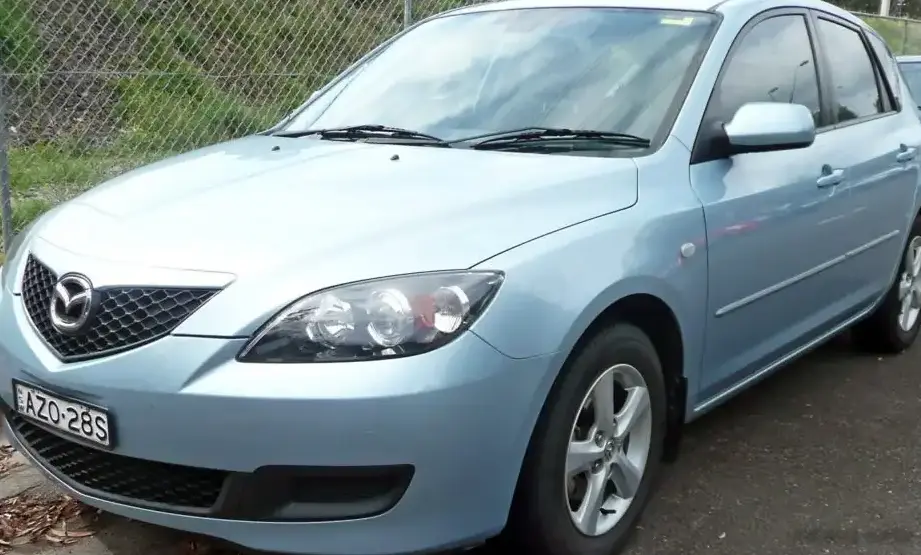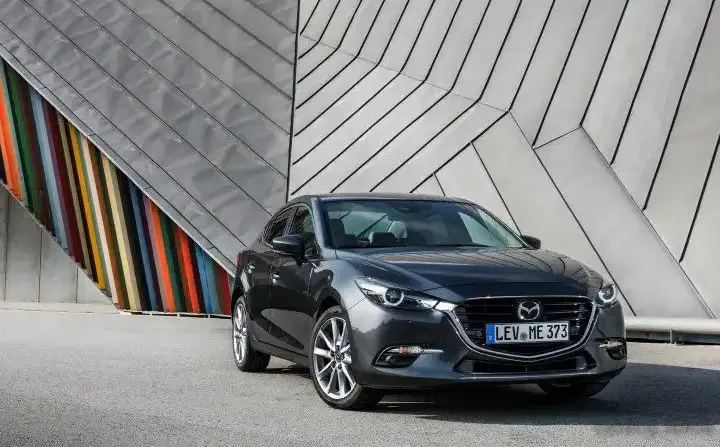
The Mazda 3 III Sedan (BM), specifically the facelifted version introduced in 2017, represented a significant evolution of Mazda’s compact offering. The 2.0 SkyActiv-G variant, producing 155 horsepower, was a key model within the lineup, primarily sold from 2018. This iteration of the Mazda 3 aimed to balance fuel efficiency with a more engaging driving experience, appealing to a broad range of consumers in markets where sedans remained popular. It sat in the mid-range of the 3rd generation Mazda 3 offerings, positioned above the base 2.0L non-SkyActiv engine and below the more performance-oriented options.
Technical Specifications
| Brand | Mazda |
| Model | 3 |
| Generation | 3 III Sedan (BM, facelift 2017) |
| Type (Engine) | 2.0 SkyActiv-G (155 Hp) |
| Start of production | 2018 |
| End of production | 2018 |
| Powertrain Architecture | Internal Combustion engine |
| Body type | Sedan |
| Seats | 5 |
| Doors | 4 |
| Fuel consumption (urban) | 8.7 l/100 km (27 US mpg, 32.5 UK mpg, 11.5 km/l) |
| Fuel consumption (extra urban) | 6.4 l/100 km (36.8 US mpg, 44.1 UK mpg, 15.6 km/l) |
| Fuel consumption (combined) | 7.6 l/100 km (30.9 US mpg, 37.2 UK mpg, 13.2 km/l) |
| Fuel Type | Petrol (Gasoline) |
| Weight-to-power ratio | 8.5 kg/Hp, 117.9 Hp/tonne |
| Weight-to-torque ratio | 6.5 kg/Nm, 154.4 Nm/tonne |
| Power | 155 Hp @ 6000 rpm |
| Power per litre | 77.6 Hp/l |
| Torque | 203 Nm @ 4000 rpm (149.73 lb.-ft. @ 4000 rpm) |
| Maximum engine speed | 6800 rpm |
| Engine layout | Front, Transverse |
| Engine displacement | 1998 cm3 (121.93 cu. in.) |
| Number of cylinders | 4 |
| Engine configuration | Inline |
| Cylinder Bore | 83.5 mm (3.29 in.) |
| Piston Stroke | 91.2 mm (3.59 in.) |
| Compression ratio | 13:1 |
| Number of valves per cylinder | 4 |
| Fuel injection system | Direct injection |
| Engine aspiration | Naturally aspirated engine |
| Valvetrain | DOHC-VVT |
| Engine oil capacity | 4.2 l (4.44 US qt | 3.7 UK qt) |
| Coolant capacity | 6.2 l (6.55 US qt | 5.46 UK qt) |
| Kerb Weight | 1315 kg (2899.08 lbs.) |
| Trunk (boot) space (minimum) | 351 l (12.4 cu. ft.) |
| Fuel tank capacity | 50 l (13.21 US gal | 11 UK gal) |
| Length | 4580 mm (180.31 in.) |
| Width | 1796 mm (70.71 in.) |
| Height | 1455 mm (57.28 in.) |
| Wheelbase | 2700 mm (106.3 in.) |
| Front track | 1554 mm (61.18 in.) |
| Rear track | 1560 mm (61.42 in.) |
| Ride height (ground clearance) | 155 mm (6.1 in.) |
| Minimum turning circle | 10.6 m (34.78 ft.) |
| Drivetrain Architecture | Front wheel drive |
| Number of gears and type of gearbox | 6 gears, manual transmission |
| Front suspension | Independent, type McPherson with coil spring and anti-roll bar |
| Rear suspension | Independent multi-link spring suspension with stabilizer |
| Front brakes | Ventilated discs |
| Rear brakes | Disc |
| Assisting systems | ABS (Anti-lock braking system) |
| Steering type | Steering rack and pinion |
| Power steering | Electric Steering |
| Tires size | 205/60 R16 |
| Wheel rims size | 6.5J x 16 |
INTRODUCTION
The Mazda 3 III Sedan (BM) facelift, launched in 2018, continued Mazda’s commitment to refining the driving experience in the compact segment. The 2.0 SkyActiv-G engine, producing 155 hp, was a popular choice for buyers seeking a balance between performance and fuel economy. This engine was part of Mazda’s SkyActiv technology suite, designed to maximize combustion efficiency and reduce emissions. The facelift brought subtle styling updates, improved interior materials, and enhanced safety features, further solidifying the Mazda 3’s position as a class leader. This particular variant was primarily sold in markets where sedans were preferred, offering a more traditional body style compared to the hatchback version.
Powertrain & Engine Architecture
The heart of this Mazda 3 variant is the 1.998-liter (121.93 cu. in.) 2.0-liter SkyActiv-G inline-four cylinder engine. This engine is characterized by its high compression ratio of 13:1, achieved through careful engineering and optimized combustion chamber design. The SkyActiv-G technology incorporates direct injection, allowing for precise fuel delivery and improved efficiency. The engine utilizes a double overhead camshaft (DOHC) valvetrain with variable valve timing (VVT) on both intake and exhaust camshafts, optimizing performance across the rev range. The engine code is typically PE-VPH. The 155 hp and 203 Nm (149.73 lb-ft) of torque are delivered at 6000 and 4000 rpm respectively. Paired with a 6-speed manual transmission, the powertrain aimed for a responsive and engaging driving experience. The transmission’s gear ratios were tuned to provide a good balance between acceleration and fuel efficiency.
Driving Characteristics
The 2.0 SkyActiv-G with the 6-speed manual transmission offered a reasonably spirited driving experience. While not as quick as the higher-output variants, it provided sufficient power for everyday driving and highway cruising. The engine felt responsive, with a linear power delivery that made it easy to modulate. The 6-speed manual transmission offered precise shifts and a satisfying mechanical feel. Compared to the automatic transmission option, the manual provided more driver engagement and slightly better fuel economy. The weight of the vehicle (1315 kg / 2899.08 lbs) meant the 155 hp engine wasn’t overwhelmed, but it wasn’t delivering blistering acceleration either. The gear ratios were well-matched to the engine’s characteristics, allowing for comfortable cruising at highway speeds without excessive engine noise.
Equipment & Trim Levels
The 2.0 SkyActiv-G variant typically came with a respectable level of standard equipment. Base models included features such as air conditioning, power windows and locks, a basic audio system with USB connectivity, and standard safety features like ABS, stability control, and multiple airbags. Higher trim levels added features like alloy wheels, a touchscreen infotainment system with Bluetooth connectivity, a rearview camera, and advanced safety technologies like lane departure warning and automatic emergency braking. Interior upholstery was typically cloth, with options for leather or leatherette in higher trims. Dashboard configuration was generally straightforward and functional, with a focus on ergonomics.
Chassis & Braking
The Mazda 3 III Sedan utilized a McPherson strut front suspension and an independent multi-link rear suspension. This setup provided a good balance between ride comfort and handling precision. The suspension was tuned to offer a relatively firm ride, which contributed to the car’s sporty handling characteristics. Front brakes were ventilated discs, providing ample stopping power, while rear brakes were solid discs. The electric power steering system offered a light and precise feel, making it easy to maneuver the car in tight spaces. The standard tire size was 205/60 R16, providing a good compromise between grip and ride comfort.
Market Reception & Comparison
The 2.0 SkyActiv-G variant of the Mazda 3 III Sedan was generally well-received by critics. It was praised for its fuel efficiency, engaging driving dynamics, and stylish design. Compared to other compact sedans in its class, the Mazda 3 offered a more premium feel and a more enjoyable driving experience. The 1.8L automatic versions of competitors like the Toyota Corolla and Honda Civic offered similar fuel economy, but often lacked the Mazda 3’s sporty handling. The Mazda 3’s reliability was also generally considered to be good, although some owners reported minor issues with the infotainment system.
Legacy
The 2.0 SkyActiv-G engine proved to be a reliable and durable powertrain. The engine’s direct injection system and high compression ratio contributed to its fuel efficiency and performance. On the used car market, the Mazda 3 III Sedan (BM) with this engine remains a popular choice, known for its affordability, reliability, and engaging driving experience. Regular maintenance, including oil changes and timing chain inspections, is crucial for ensuring the long-term health of this powertrain. The SkyActiv technology introduced in this generation of Mazda 3 laid the foundation for the company’s future engine development and cemented its reputation for building cars that are fun to drive.