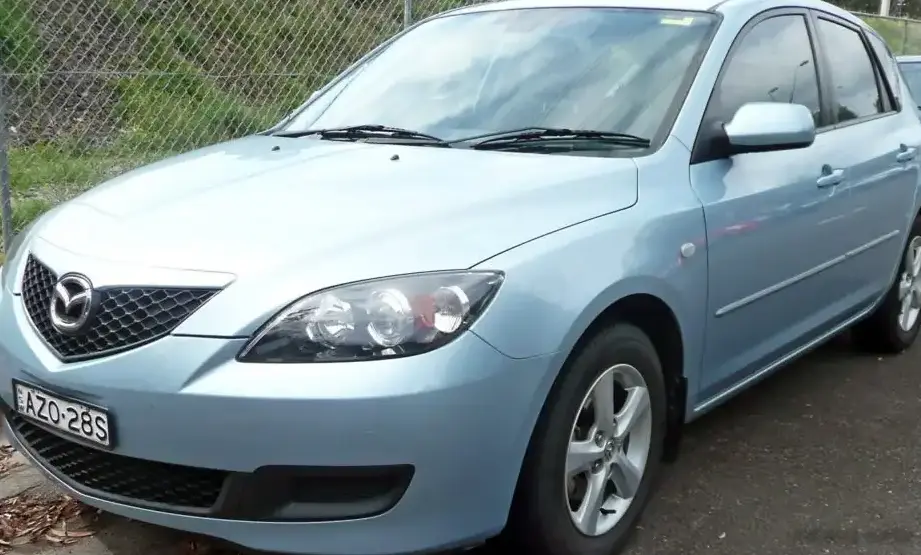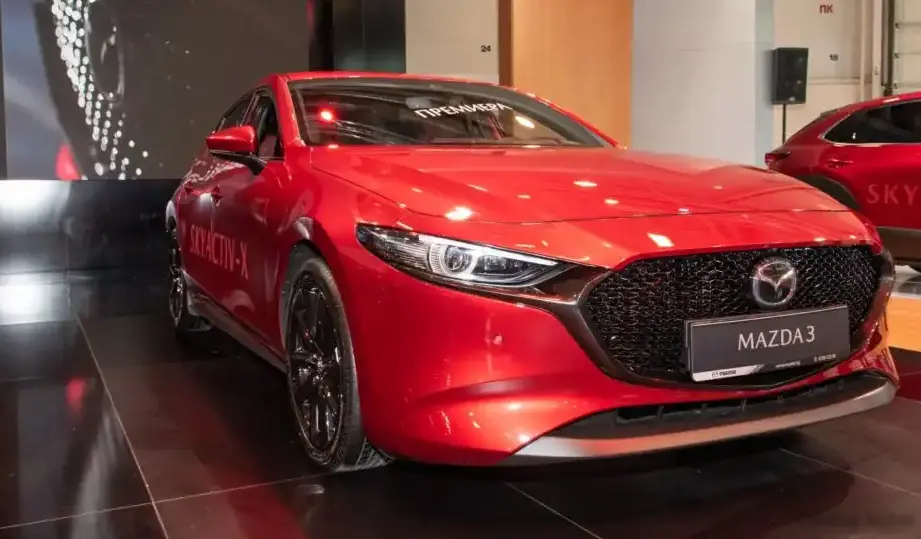
The Mazda 3 IV Hatchback 2.0 SkyActiv-G M Hybrid (150 Hp) Skyactiv-Drive, produced from 2020 to 2021, represents a significant iteration of Mazda’s globally successful compact car. Positioned as a mid-range offering within the fourth generation (BP) Mazda 3 lineup, this variant combined Mazda’s renowned SkyActiv technology with a mild hybrid system to enhance fuel efficiency and refine the driving experience. It was primarily marketed in Europe and other regions where fuel economy and emissions regulations are stringent. This model is part of the broader Mazda 3 BP platform, which also includes sedan body styles and a range of engine options.
Technical Specifications
| Brand | Mazda |
| Model | 3 |
| Generation | IV Hatchback |
| Type (Engine) | 2.0 SkyActiv-G M Hybrid (150 Hp) Skyactiv-Drive |
| Start of production | 2020 |
| End of production | 2021 |
| Powertrain Architecture | MHEV (Mild Hybrid Electric Vehicle) |
| Body type | Hatchback |
| Seats | 5 |
| Doors | 5 |
| Combined fuel consumption (WLTP) | 6.4-6.5 l/100 km (36.8 – 36.2 US mpg) |
| CO2 emissions (WLTP) | 144-147 g/km |
| Fuel consumption (urban) | 6.6-6.7 l/100 km (35.6 – 35.1 US mpg) |
| Fuel consumption (extra urban) | 4.7-4.8 l/100 km (50 – 49 US mpg) |
| Fuel consumption (combined) | 5.4-5.5 l/100 km (43.6 – 42.8 US mpg) |
| CO2 emissions | 122-124 g/km |
| Fuel Type | Petrol (Gasoline) |
| Acceleration 0 – 100 km/h | 9.5 sec |
| Acceleration 0 – 62 mph | 9.5 sec |
| Acceleration 0 – 60 mph | 9 sec |
| Maximum speed | 204 km/h (126.76 mph) |
| Emission standard | Euro 6d-Temp |
| Weight-to-power ratio | 8.7 kg/Hp |
| Weight-to-torque ratio | 6.1 kg/Nm |
| Power | 150 Hp @ 6000 rpm |
| Torque | 213 Nm @ 4000 rpm (157.1 lb.-ft. @ 4000 rpm) |
| Engine layout | Front, Transverse |
| Engine displacement | 1998 cm3 (121.93 cu. in.) |
| Number of cylinders | 4 |
| Engine configuration | Inline |
| Cylinder Bore | 83.5 mm (3.29 in.) |
| Piston Stroke | 91.2 mm (3.59 in.) |
| Compression ratio | 13:1 |
| Number of valves per cylinder | 4 |
| Fuel injection system | Direct injection |
| Engine aspiration | Naturally aspirated |
| Engine oil capacity | 4.2 l (4.44 US qt | 3.7 UK qt) |
| Coolant capacity | 6.3 l (6.66 US qt | 5.54 UK qt) |
| Kerb Weight | 1299-1389 kg (2863.8 – 3062.22 lbs.) |
| Max. weight | 1907 kg (4204.22 lbs.) |
| Max load | 518-608 kg (1141.99 – 1340.41 lbs.) |
| Trunk (boot) space – minimum | 351 l (12.4 cu. ft.) |
| Trunk (boot) space – maximum | 1026 l (36.23 cu. ft.) |
| Fuel tank capacity | 51 l (13.47 US gal | 11.22 UK gal) |
| Max. roof load | 75 kg (165.35 lbs.) |
| Permitted trailer load with brakes (8%) | 1300 kg (2866.01 lbs.) |
| Permitted trailer load with brakes (12%) | 1300 kg (2866.01 lbs.) |
| Permitted trailer load without brakes | 600 kg (1322.77 lbs.) |
| Permitted towbar download | 75 kg (165.35 lbs.) |
| Length | 4460 mm (175.59 in.) |
| Width | 1795 mm (70.67 in.) |
| Width including mirrors | 2028 mm (79.84 in.) |
| Height | 1435 mm (56.5 in.) |
| Wheelbase | 2725 mm (107.28 in.) |
| Ride height (ground clearance) | 135 mm (5.31 in.) |
| Minimum turning circle | 10.6 m (34.78 ft.) |
| Drivetrain Architecture | ICE to Front Wheels |
| Drive wheel | Front wheel drive |
| Number of gears | 6 |
| Gearbox type | Automatic transmission |
| Front suspension | Independent type McPherson |
| Rear suspension | Torsion |
| Front brakes | Disc |
| Rear brakes | Disc |
| Assisting systems | ABS (Anti-lock braking system) |
| Steering type | Steering rack and pinion |
| Power steering | Electric |
| Tires size | 205/60 R16; 215/45 R18 |
| Wheel rims size | 16; 18 |
Powertrain & Engine Architecture
At the heart of the Mazda 3 2.0 SkyActiv-G M Hybrid is the PE-VPH 2.0-liter inline-four cylinder gasoline engine. This engine is a key component of Mazda’s SkyActiv technology, designed for high compression (13:1) and improved thermal efficiency. It utilizes direct injection and a sophisticated variable valve timing system to optimize performance and fuel economy. The ‘M Hybrid’ designation indicates the inclusion of a 24V mild hybrid system. This system employs a small electric motor and battery pack to provide power assistance during acceleration and enable an extended start/stop system operation. The electric motor isn’t powerful enough to propel the vehicle on its own, but it reduces the load on the gasoline engine, improving fuel efficiency. The Skyactiv-Drive automatic transmission is a six-speed unit with a torque converter, tuned for smooth and efficient operation. It features a quick-shifting design and adaptive learning capabilities.
Driving Characteristics
The 150 hp and 157 lb-ft of torque delivered by this powertrain configuration provides adequate, though not exhilarating, performance. Acceleration from 0-60 mph takes approximately 9 seconds. The Skyactiv-Drive automatic transmission is programmed for fuel efficiency, meaning it prioritizes higher gears at lower speeds. This can sometimes result in a slight hesitation during overtaking maneuvers. Compared to the more powerful 2.5-liter engine option, or even the diesel variants available in some markets, this 2.0-liter hybrid feels less responsive. However, the mild hybrid system does provide a noticeable boost during initial acceleration, smoothing out the driving experience. The gear ratios are optimized for cruising, making it a comfortable vehicle for long highway journeys.
Equipment & Trim Levels
The 2.0 SkyActiv-G M Hybrid typically came equipped with a generous amount of standard features. These included Mazda’s infotainment system with a 8.8-inch display, Apple CarPlay and Android Auto integration, and a suite of safety features such as lane departure warning, lane keep assist, and automatic emergency braking. Interior upholstery was typically cloth, with options for leather upgrades on higher trim levels. Available options included a sunroof, premium audio system, and adaptive cruise control. Trim levels varied by market, but generally followed a progression from base models to more luxurious variants with additional features and cosmetic enhancements.
Chassis & Braking
The Mazda 3 IV utilizes a front-wheel-drive platform with independent McPherson strut suspension in the front and a torsion beam setup in the rear. This suspension configuration provides a good balance between ride comfort and handling. The steering is precise and responsive, characteristic of Mazda’s engineering philosophy. Braking duties are handled by disc brakes on all four wheels, providing adequate stopping power. ABS (Anti-lock Braking System) is standard, along with electronic brake-force distribution and brake assist. The chassis was tuned to accommodate the slightly increased weight of the hybrid system components without significantly compromising handling.
Market Reception & Comparison
The Mazda 3 2.0 SkyActiv-G M Hybrid was generally well-received by automotive critics. It was praised for its fuel efficiency, comfortable ride, and stylish interior. However, some reviewers noted that the engine lacked the punch of its larger counterparts. Compared to the non-hybrid 2.0-liter version, the M Hybrid offered a modest improvement in fuel economy, but at a slightly higher price point. Against competitors like the Volkswagen Golf eTSI and Toyota Corolla Hybrid, the Mazda 3 offered a more engaging driving experience, but potentially slightly lower fuel economy figures.
Legacy
The SkyActiv-G M Hybrid powertrain has proven to be relatively reliable in real-world use. The mild hybrid system components have demonstrated good durability, and the 2.0-liter engine is known for its longevity. On the used car market, these models hold their value reasonably well, particularly those with lower mileage and a full service history. The Mazda 3 IV, in general, has established a reputation as a well-built and enjoyable compact car, and the 2.0 SkyActiv-G M Hybrid variant represents a compelling option for buyers seeking a balance of efficiency, comfort, and driving dynamics.