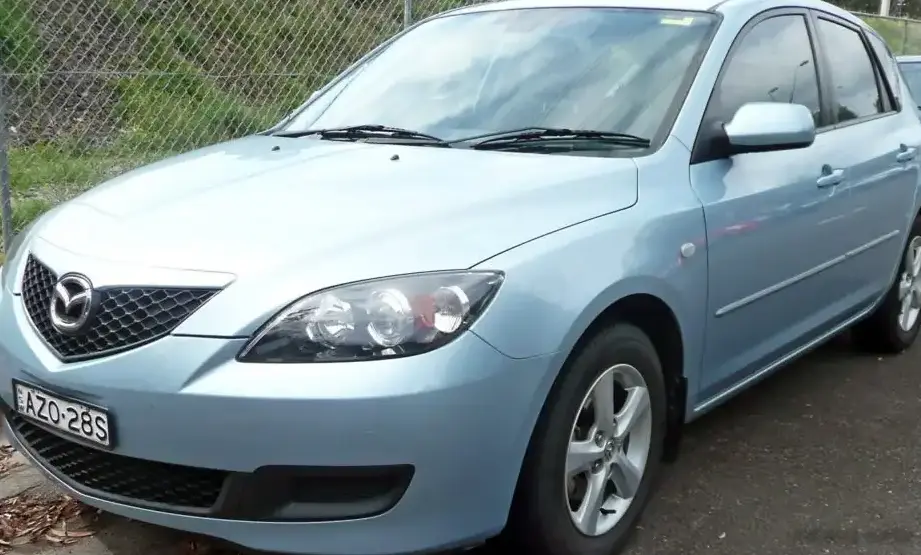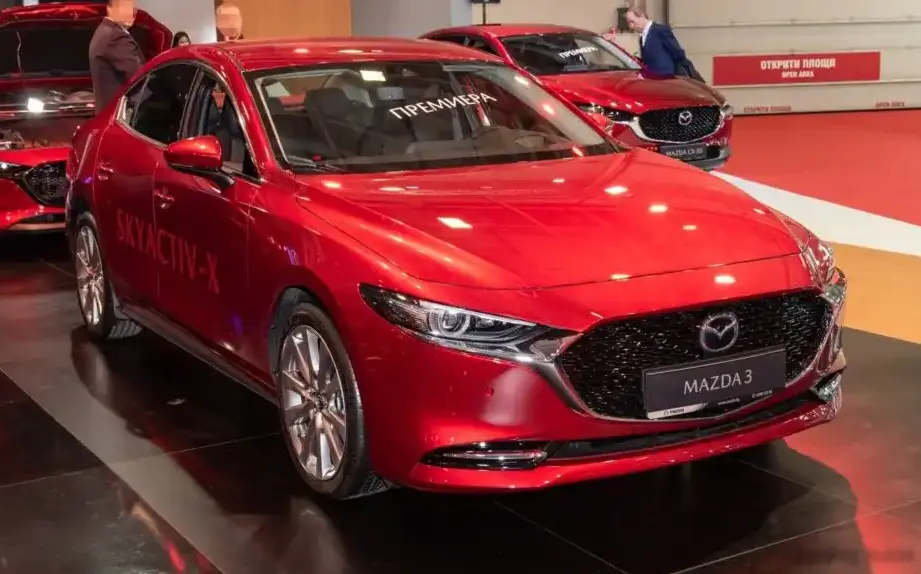
The Mazda 3 IV Sedan 2.0 e-SkyActiv-G (150 Hp) Skyactiv-Drive, produced from 2023 to June 2024, represents a key variant within the fourth generation (BP) Mazda 3 lineup. Positioned as a mainstream offering, this model combined Mazda’s efficient SkyActiv-G gasoline engine with a six-speed Skyactiv-Drive automatic transmission and mild hybrid technology. It aimed to deliver a balance of fuel economy, performance, and comfort for everyday driving, serving as a popular choice in markets where sedans remain favored. This variant is part of the broader BP platform, which also includes hatchback body styles and various engine options.
Technical Specifications
| Brand | Mazda |
| Model | 3 |
| Generation | IV Sedan |
| Type (Engine) | 2.0 e-SkyActiv-G (150 Hp) Skyactiv-Drive |
| Start of production | 2023 |
| End of production | June, 2024 |
| Powertrain Architecture | MHEV (Mild Hybrid Electric Vehicle) |
| Body type | Sedan |
| Seats | 5 |
| Doors | 4 |
| Fuel consumption at Low speed (WLTP) | 8.1-8.2 l/100 km (29 – 28.7 US mpg) |
| Fuel consumption at Medium speed (WLTP) | 5.7-5.8 l/100 km (41.3 – 40.6 US mpg) |
| Fuel consumption at high speed (WLTP) | 5.1-5.3 l/100 km (46.1 – 44.4 US mpg) |
| Fuel consumption at very high speed (WLTP) | 6.1-6.2 l/100 km (38.6 – 37.9 US mpg) |
| Combined fuel consumption (WLTP) | 6-6.1 l/100 km (39.2 – 38.6 US mpg) |
| CO2 emissions (WLTP) | 136-139 g/km |
| Fuel Type | Petrol (Gasoline) |
| Acceleration 0 – 100 km/h | 9.5 sec |
| Acceleration 0 – 62 mph | 9.5 sec |
| Acceleration 0 – 60 mph | 9 sec |
| Maximum speed | 210 km/h (130.49 mph) |
| Emission standard | Euro 6d-ISC-FCM |
| Weight-to-power ratio | 8.9 kg/Hp |
| Weight-to-torque ratio | 6.3 kg/Nm |
| Power | 150 Hp @ 6000 rpm |
| Torque | 213 Nm @ 4000 rpm (157.1 lb.-ft. @ 4000 rpm) |
| Engine layout | Front, Transverse |
| Engine displacement | 1998 cm3 (121.93 cu. in.) |
| Number of cylinders | 4 |
| Engine configuration | Inline |
| Cylinder Bore | 83.5 mm (3.29 in.) |
| Piston Stroke | 91.2 mm (3.59 in.) |
| Compression ratio | 13:1 |
| Number of valves per cylinder | 4 |
| Fuel injection system | Direct injection |
| Engine aspiration | Naturally aspirated |
| Engine oil capacity | 4 l (4.23 US qt | 3.52 UK qt) |
| Coolant capacity | 6.5 l (6.87 US qt | 5.72 UK qt) |
| Kerb Weight | 1332-1385 kg (2936.56 – 3053.4 lbs.) |
| Max. weight | 1902 kg (4193.19 lbs.) |
| Max load | 517-570 kg (1139.79 – 1256.63 lbs.) |
| Trunk (boot) space – minimum | 450 l (15.89 cu. ft.) |
| Trunk (boot) space – maximum | 1138 l (40.19 cu. ft.) |
| Fuel tank capacity | 51 l (13.47 US gal | 11.22 UK gal) |
| Max. roof load | 75 kg (165.35 lbs.) |
| Permitted trailer load with brakes (8%) | 1300 kg (2866.01 lbs.) |
| Permitted trailer load with brakes (12%) | 1300 kg (2866.01 lbs.) |
| Permitted trailer load without brakes | 600 kg (1322.77 lbs.) |
| Permitted towbar download | 75 kg (165.35 lbs.) |
| Length | 4660 mm (183.46 in.) |
| Width | 1795 mm (70.67 in.) |
| Width including mirrors | 2028 mm (79.84 in.) |
| Height | 1440 mm (56.69 in.) |
| Wheelbase | 2725 mm (107.28 in.) |
| Ride height (ground clearance) | 135 mm (5.31 in.) |
| Minimum turning circle | 11.4 m (37.4 ft.) |
| Drivetrain Architecture | ICE to Front Wheels |
| Drive wheel | Front wheel drive |
| Number of gears and type of gearbox | 6 gears, automatic transmission |
| Front suspension | Independent type McPherson |
| Rear suspension | Torsion |
| Front brakes | Disc |
| Rear brakes | Disc |
| Assisting systems | ABS (Anti-lock braking system) |
| Steering type | Steering rack and pinion |
| Power steering | Electric Steering |
| Tires size | 205/60 R16; 215/45 R18 |
| Wheel rims size | 16; 18 |
Powertrain & Engine Architecture
At the heart of the Mazda 3 2.0 e-SkyActiv-G is the PE-VPH engine, a 1998cc inline-four cylinder gasoline engine. This engine is a cornerstone of Mazda’s SkyActiv technology, emphasizing high compression (13:1) for improved thermal efficiency. Direct injection is employed to precisely control fuel delivery, optimizing combustion. The engine utilizes a conventional DOHC (Double Overhead Camshaft) valvetrain with four valves per cylinder. The mild hybrid system, integrated into this variant, consists of a 24V integrated starter generator (ISG) and a small lithium-ion battery. This system provides a small boost during acceleration and enables smoother start-stop functionality, contributing to improved fuel economy. The Skyactiv-Drive automatic transmission is a six-speed unit with a torque converter. It’s programmed for smooth shifts and efficiency, prioritizing fuel economy over aggressive performance.
Driving Characteristics
The 150 hp and 157 lb-ft of torque delivered by this powertrain configuration results in a 0-60 mph time of around 9 seconds. While not particularly sporty, the engine provides adequate power for everyday driving situations. The Skyactiv-Drive transmission is tuned for comfort and efficiency, meaning shifts are generally smooth but not particularly quick or engaging. The gear ratios are optimized for fuel economy, which can sometimes result in the engine feeling slightly strained during aggressive acceleration. Compared to the more powerful 2.5-liter engine option, this 2.0-liter variant offers a more relaxed driving experience, prioritizing fuel efficiency and refinement over outright performance. The mild hybrid system provides a subtle boost during initial acceleration, but its impact is not dramatic.
Equipment & Trim Levels
The 2.0 e-SkyActiv-G Skyactiv-Drive typically came standard with features like Mazda’s infotainment system with a 8.8-inch display, Apple CarPlay and Android Auto integration, LED headlights, and a suite of safety features including adaptive cruise control, lane departure warning, and automatic emergency braking. Interior upholstery was typically cloth, with options for leatherette or full leather available as upgrades. Higher trim levels added features like a sunroof, premium audio system, and heated front seats. The dashboard layout was consistent across the range, featuring a minimalist design with a focus on driver ergonomics.
Chassis & Braking
The Mazda 3 IV Sedan utilizes a front-wheel-drive platform with an independent McPherson strut suspension in the front and a torsion beam suspension in the rear. This setup provides a good balance of ride comfort and handling. The chassis is relatively lightweight, contributing to the car’s agility. Braking duties are handled by disc brakes on all four wheels, providing adequate stopping power for everyday driving. ABS (Anti-lock Braking System) is standard, along with electronic brake-force distribution and brake assist. Stabilizer bars are fitted to both the front and rear axles to reduce body roll during cornering.
Market Reception & Comparison
The Mazda 3 2.0 e-SkyActiv-G Skyactiv-Drive was generally well-received by critics for its fuel efficiency, comfortable ride, and well-appointed interior. However, some reviewers noted that the engine lacked the punch of the 2.5-liter option. Compared to competitors like the Honda Civic and Toyota Corolla, the Mazda 3 offered a more premium feel and a more engaging driving experience. Fuel economy figures of 39-40 mpg combined made it a competitive option in its class. Reliability has been generally good, with few reported issues specific to this powertrain configuration.
Legacy
The 2.0 e-SkyActiv-G Skyactiv-Drive powertrain has proven to be relatively reliable in the long term. The SkyActiv engine is known for its durability and efficiency. The Skyactiv-Drive transmission, while not as sporty as some other automatics, has also demonstrated good reliability. On the used car market, this variant represents a good value proposition, offering a well-equipped and fuel-efficient sedan at a reasonable price. Its blend of practicality, comfort, and efficiency continues to make it an appealing choice for buyers seeking a reliable and economical compact sedan.