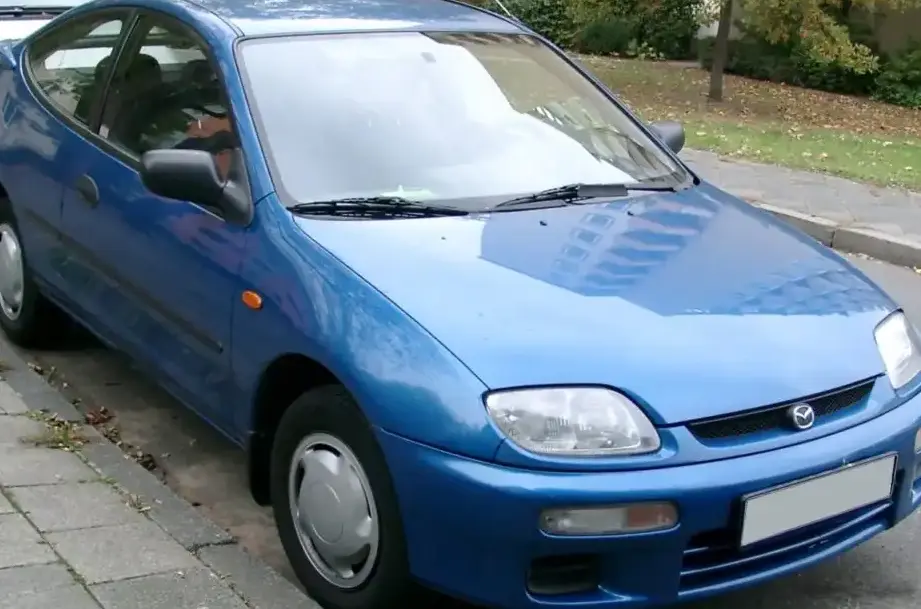
The Mazda 323 C IV (BG), produced between 1989 and 1994, represented Mazda’s entry into the competitive compact hatchback segment. This generation, known internally as the BG platform, aimed to offer a blend of practicality, affordability, and Mazda’s signature driving dynamics. The 1.3-liter 16-valve variant, producing 73 horsepower, served as the base engine option in many European and Asian markets, offering an economical and accessible entry point to the 323 range. It was positioned as the most fuel-efficient and budget-friendly model, appealing to first-time buyers and those prioritizing economy over outright performance.
Technical Specifications
| Brand | Mazda |
| Model | 323 |
| Generation | 323 C IV (BG) |
| Type (Engine) | 1.3 16V (73 Hp) |
| Start of production | 1989 |
| End of production | 1994 |
| Powertrain Architecture | Internal Combustion engine |
| Body type | Hatchback |
| Seats | 5 |
| Doors | 4/5 |
| Fuel consumption (urban) | 7 l/100 km (33.6 US mpg, 40.4 UK mpg, 14.3 km/l) |
| Fuel consumption (extra urban) | 5 l/100 km (47 US mpg, 56.5 UK mpg, 20 km/l) |
| Fuel consumption (combined) | 6.3 l/100 km (37.3 US mpg, 44.8 UK mpg, 15.9 km/l) |
| Fuel Type | Petrol (Gasoline) |
| Acceleration 0 – 100 km/h | 11.2 sec |
| Acceleration 0 – 62 mph | 11.2 sec |
| Acceleration 0 – 60 mph | 10.6 sec |
| Maximum speed | 170 km/h (105.63 mph) |
| Weight-to-power ratio | 13.1 kg/Hp, 76.4 Hp/tonne |
| Power | 73 Hp @ 5500 rpm |
| Power per litre | 55.1 Hp/l |
| Engine layout | Front, Transverse |
| Engine displacement | 1324 cm3 (80.8 cu. in.) |
| Number of cylinders | 4 |
| Cylinder Bore | 71 mm (2.8 in.) |
| Piston Stroke | 83.6 mm (3.29 in.) |
| Compression ratio | 9.4:1 |
| Engine aspiration | Naturally aspirated |
| Kerb Weight | 955 kg (2105.41 lbs.) |
| Fuel tank capacity | 50 l (13.21 US gal, 11 UK gal) |
| Length | 3996 mm (157.32 in.) |
| Width | 1675 mm (65.94 in.) |
| Height | 1379 mm (54.29 in.) |
| Wheelbase | 2451 mm (96.5 in.) |
| Front track | 1431 mm (56.34 in.) |
| Rear track | 1435 mm (56.5 in.) |
| Drivetrain Architecture | Front wheel drive |
| Drive wheel | Front wheel drive |
| Number of gears and type of gearbox | 5 gears, manual transmission |
| Front brakes | Ventilated discs |
| Rear brakes | Drum |
| Tires size | 185/65 R14 |
| Wheel rims size | 14 |
Powertrain & Engine Architecture
The heart of the 323 C IV 1.3 16V was the Mazda B6 engine, specifically the B6-ZE variant in many markets. This 1.3-liter, four-cylinder engine featured a single overhead camshaft (SOHC) design with four valves per cylinder, hence the “16V” designation. Fuel delivery was managed by a multi-point fuel injection system, a significant upgrade from the carbureted engines found in earlier Mazda models. This system contributed to improved fuel efficiency and smoother operation. The engine produced 73 horsepower at 5500 rpm and 88 lb-ft of torque. The engine’s relatively small displacement and modest output were geared towards maximizing fuel economy rather than providing exhilarating performance. The engine was transversely mounted in the front of the vehicle, driving the front wheels.
Driving Characteristics
The 1.3-liter engine, paired with a five-speed manual transmission, provided adequate, though not sporty, performance. Acceleration from 0 to 60 mph took around 10.6 seconds, and top speed was approximately 105 mph. The engine felt somewhat strained at higher speeds or when carrying a full load. The five-speed gearbox was well-matched to the engine’s characteristics, allowing drivers to keep the engine in its optimal power band. Compared to the more powerful 1.6-liter and 1.8-liter variants, the 1.3 offered a more relaxed driving experience, prioritizing fuel efficiency and ease of use over outright speed. The steering was light and precise, typical of Mazda’s engineering philosophy, making the car easy to maneuver in urban environments.
Equipment & Trim Levels
The 323 C IV 1.3 16V typically came with a fairly basic level of equipment, reflecting its position as the entry-level model. Standard features generally included power steering, central locking, and a basic stereo system. Interior upholstery was typically cloth, and the dashboard featured a simple, functional design. Optional extras included power windows, a sunroof, and upgraded audio systems. Trim levels varied by market, but generally, the 1.3 was offered in a single, relatively spartan trim. Air conditioning was often an optional extra, and higher trim levels added features like alloy wheels and a more comprehensive instrument cluster.
Chassis & Braking
The 323 C IV utilized a MacPherson strut front suspension and a torsion beam rear suspension. This setup provided a good balance of ride comfort and handling. The front brakes were ventilated discs, offering adequate stopping power, while the rear brakes were drums, a cost-saving measure common in this class of vehicle. The car’s relatively light weight (around 2105 lbs) helped to compensate for the rear drum brakes. Stabilizer bars were fitted to both the front and rear axles, further enhancing handling stability. The 185/65 R14 tires provided reasonable grip in most conditions.
Market Reception & Comparison
The Mazda 323 C IV 1.3 16V was generally well-received as an affordable and reliable compact hatchback. Critics praised its fuel efficiency and ease of driving, but noted its lack of outright performance. Compared to rivals like the Volkswagen Golf, Ford Escort, and Opel Astra, the 323 offered a more engaging driving experience, thanks to Mazda’s focus on handling. However, it often lacked the refinement and interior quality of some of its competitors. The 1.3-liter engine offered significantly better fuel economy than the larger 1.6 and 1.8-liter engines, but at the expense of performance. The 1.6-liter variant was often considered a better all-around choice for those willing to sacrifice a small amount of fuel economy for more power.
Legacy
The Mazda 323 C IV 1.3 16V has proven to be a relatively reliable vehicle, with many examples still on the road today. The B6 engine is known for its durability, although regular maintenance is essential to prevent issues such as oil leaks and timing belt failure. Parts availability is generally good, although some components may be becoming increasingly difficult to find. In the used car market, the 1.3-liter variant is typically the most affordable 323 C IV model, making it an attractive option for budget-conscious buyers. While it may not offer the performance or features of higher-spec models, its simplicity, reliability, and fuel efficiency continue to make it a viable choice for everyday transportation.