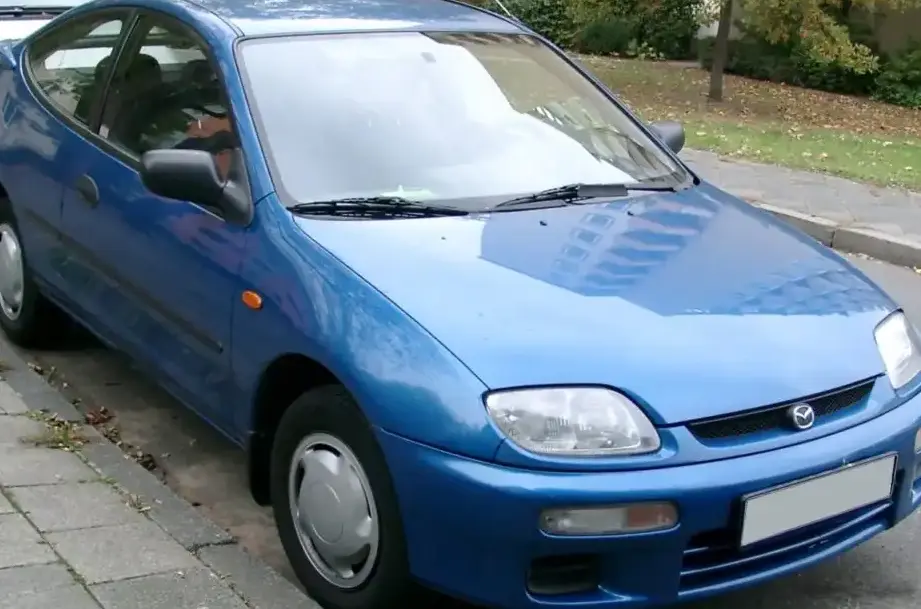
The Mazda 323 C V (BA) 1.5 i 16V, produced between 1994 and 1998, represented a key offering in Mazda’s compact hatchback lineup. Positioned as an entry-level to mid-range trim, this variant aimed to provide a balance of affordability, fuel efficiency, and practicality for European and Asian markets. It was part of the BA series, the second generation of the 323, known for its improved styling and refinement over its predecessor. This specific 1.5-liter, 16-valve engine paired with a 5-speed manual transmission was a popular choice for buyers seeking a reliable and economical daily driver.
Technical Specifications
| Brand | Mazda |
| Model | 323 |
| Generation | 323 C V (BA) |
| Type (Engine) | 1.5 i 16V (87 Hp) |
| Start of production | 1994 |
| End of production | 1998 |
| Powertrain Architecture | Internal Combustion engine |
| Body type | Hatchback |
| Seats | 5 |
| Doors | 3 |
| Fuel consumption (urban) | 10.5 l/100 km (22.4 US mpg) |
| Fuel consumption (extra urban) | 6 l/100 km (39.2 US mpg) |
| Fuel consumption (combined) | 7.2 l/100 km (32.7 US mpg) |
| Fuel Type | Petrol (Gasoline) |
| Maximum speed | 173 km/h (107.5 mph) |
| Weight-to-power ratio | 12.2 kg/Hp |
| Weight-to-torque ratio | 8.1 kg/Nm |
| Power | 87 Hp @ 5500 rpm |
| Power per litre | 58.4 Hp/l |
| Torque | 132 Nm @ 4000 rpm (97.36 lb.-ft. @ 4000 rpm) |
| Engine layout | Front, Transverse |
| Engine Model/Code | Z5-DE |
| Engine displacement | 1489 cm3 (90.86 cu. in.) |
| Number of cylinders | 4 |
| Engine configuration | Inline |
| Cylinder Bore | 75.3 mm (2.96 in.) |
| Piston Stroke | 83.6 mm (3.29 in.) |
| Compression ratio | 9.4:1 |
| Number of valves per cylinder | 4 |
| Fuel injection system | Multi-port manifold injection |
| Engine aspiration | Naturally aspirated engine |
| Valvetrain | DOHC |
| Engine oil capacity | 3.5 l (3.7 US qt | 3.08 UK qt) |
| Coolant capacity | 5 l (5.28 US qt | 4.4 UK qt) |
| Kerb Weight | 1065 kg (2347.92 lbs.) |
| Max. weight | 1575 kg (3472.28 lbs.) |
| Max load | 510 kg (1124.36 lbs.) |
| Trunk (boot) space – minimum | 300 l (10.59 cu. ft.) |
| Fuel tank capacity | 55 l (14.53 US gal | 12.1 UK gal) |
| Length | 4035 mm (158.86 in.) |
| Width | 1710 mm (67.32 in.) |
| Height | 1405 mm (55.31 in.) |
| Wheelbase | 2505 mm (98.62 in.) |
| Front track | 1460 mm (57.48 in.) |
| Rear track | 1460 mm (57.48 in.) |
| Drivetrain Architecture | Front wheel drive |
| Number of gears and type of gearbox | 5 gears, manual transmission |
| Front suspension | Spring Strut |
| Rear suspension | Spring Strut |
| Front brakes | Ventilated discs |
| Rear brakes | Disc |
| Assisting systems | ABS (Anti-lock braking system) |
| Steering type | Steering rack and pinion |
| Power steering | Hydraulic Steering |
| Tires size | 175/70 R13 T |
| Wheel rims size | 13 |
Powertrain & Engine Architecture
The heart of the 323 C V 1.5 i 16V is the Z5-DE engine, a 1.5-liter inline-four cylinder gasoline engine. This engine featured a double overhead camshaft (DOHC) valvetrain operating 16 valves (four per cylinder), contributing to its relatively high output for its displacement. The Z5-DE utilized a multi-port fuel injection system, delivering fuel directly to each intake port for improved combustion efficiency. The engine’s 9.4:1 compression ratio was a compromise between performance and the ability to run on readily available fuel grades. Paired with this engine was a robust 5-speed manual transmission, offering drivers good control over the engine’s powerband. This transmission was chosen for its durability and relatively simple maintenance requirements.
Driving Characteristics
The 87 horsepower and 97 lb-ft of torque produced by the 1.5-liter engine provided adequate, though not exhilarating, performance. Acceleration was modest, with a 0-60 mph time estimated around 11-12 seconds. The engine felt most comfortable in the mid-range, offering sufficient power for everyday driving situations like merging onto highways and overtaking slower traffic. The 5-speed manual transmission allowed drivers to keep the engine in its optimal powerband, maximizing efficiency and responsiveness. Compared to the higher-output 1.8-liter versions, the 1.5-liter felt less strained at higher speeds, but lacked the same level of outright acceleration. The manual transmission also provided a more engaging driving experience than the optional automatic transmission available on other trims.
Equipment & Trim Levels
The 323 C V 1.5 i 16V typically came equipped with a fairly basic, yet functional, set of features. Standard equipment included power steering, central locking, and an AM/FM radio. Interior upholstery was typically cloth, with a simple, durable design. Optional extras included air conditioning, electric windows, and a sunroof. The trim level was generally considered entry-level to mid-range, appealing to buyers prioritizing value and practicality. The interior design was functional and focused on ergonomics, though it lacked the more luxurious appointments found in higher-spec models.
Chassis & Braking
The 323 C V utilized a relatively simple suspension setup, featuring MacPherson strut front suspension and a twist-beam rear axle. This configuration provided a comfortable ride quality, suitable for everyday driving. Braking duties were handled by ventilated discs on the front wheels and solid discs on the rear, providing adequate stopping power for the vehicle’s weight and performance. An Anti-lock Braking System (ABS) was often included as standard equipment, enhancing safety in emergency braking situations. The chassis was designed to balance handling with ride comfort, making it a pleasant vehicle to drive on a variety of road surfaces.
Market Reception & Comparison
The Mazda 323 C V 1.5 i 16V was generally well-received by automotive critics as a practical and affordable compact hatchback. It was praised for its fuel efficiency, reliability, and ease of driving. However, some critics noted its lack of outright performance compared to rivals with larger engines. Compared to the 1.8-liter versions of the 323, the 1.5-liter offered better fuel economy and lower running costs, but at the expense of acceleration and top speed. The 1.5-liter also proved to be more reliable than some of the more complex engine options available in the lineup, making it a popular choice for budget-conscious buyers.
Legacy
The Z5-DE engine, found in the 323 C V 1.5 i 16V, has proven to be a remarkably durable and reliable powertrain. Many examples are still on the road today, testament to its robust design and relatively simple maintenance requirements. In the used car market, these models are often sought after for their affordability and practicality. While not a performance icon, the 323 C V 1.5 i 16V represents a solid and dependable compact hatchback that provided a valuable transportation solution for many drivers in the 1990s. Its simplicity and reliability continue to make it a viable option for those seeking an inexpensive and trustworthy vehicle.