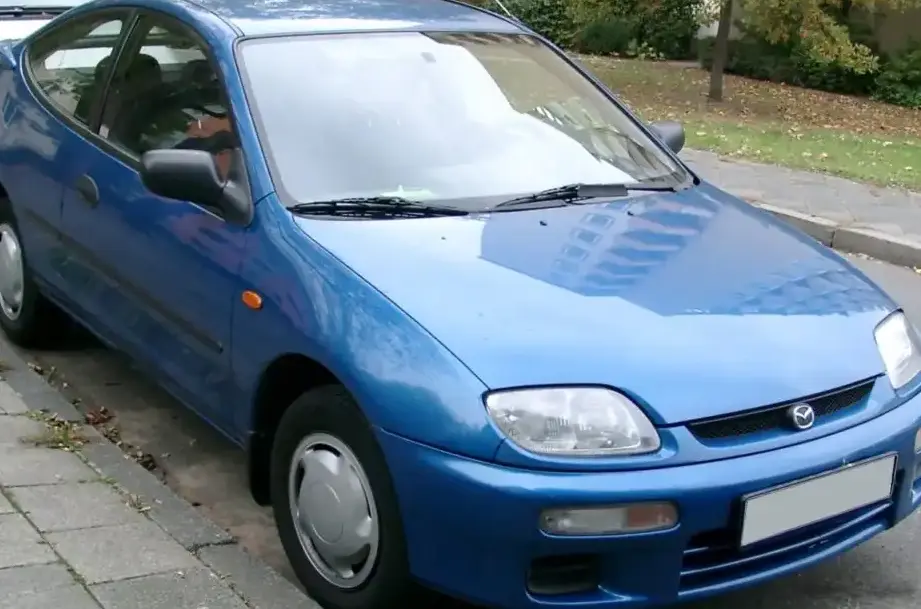
The Mazda 323 F V (BA) 2.0 D, produced between 1996 and 1998, represents a diesel-powered variant within the fifth generation (BA) of Mazda’s globally marketed 323 compact car. This model was primarily aimed at European markets where diesel engines enjoyed significant popularity due to fuel economy and tax incentives. Positioned as an entry-level offering within the 323 F V range, it provided a more economical alternative to the gasoline-powered versions, though at the cost of performance. The “F” designation denoted a facelifted version of the BA platform, introducing minor cosmetic and equipment updates.
Technical Specifications
| Brand | Mazda |
| Model | 323 |
| Generation | 323 F V (BA) |
| Type (Engine) | 2.0 D (71 Hp) |
| Start of production | 1996 |
| End of production | 1998 |
| Powertrain Architecture | Internal Combustion engine |
| Body type | Hatchback |
| Fuel Type | Diesel |
| Power | 71 Hp |
| Engine Model/Code | RF1G |
| Engine aspiration | Naturally aspirated engine |
| Engine oil capacity | 5.8 l (6.13 US qt | 5.1 UK qt) |
| Coolant capacity | 6.4 l (6.76 US qt | 5.63 UK qt) |
Powertrain & Engine Architecture
The 323 F V 2.0 D was powered by the RF1G engine, a 1998cc four-cylinder diesel. This engine was a naturally aspirated, indirect injection diesel, a common configuration for the time. Indirect injection, while quieter than direct injection, generally resulted in lower power output and increased emissions. The RF1G featured a cast iron block and an aluminum cylinder head, a typical construction for durability and weight reduction. The engine utilized a Bosch rotary injection pump, delivering fuel to the pre-chamber where combustion was initiated. The valvetrain consisted of a single overhead camshaft (SOHC) operating two valves per cylinder. Unlike many contemporary gasoline engines, the RF1G did not employ turbocharging or intercooling, contributing to its relatively modest power output. The engine was mated to a five-speed manual transmission as standard, though a four-speed automatic transmission was also available, albeit less common. The automatic transmission was a conventional hydraulic unit, prioritizing smoothness and ease of use over outright performance.
Driving Characteristics
The 2.0 D variant of the 323 F V offered a distinctly different driving experience compared to its gasoline counterparts. With only 71 horsepower, acceleration was leisurely, and overtaking required careful planning. The engine produced a respectable 137 Nm (101 lb-ft) of torque, however, which was available from relatively low engine speeds. This made it reasonably tractable in everyday driving situations, particularly around town. The five-speed manual transmission allowed drivers to keep the engine in its optimal power band, while the four-speed automatic, while convenient, further dulled performance. Gear ratios were geared towards fuel efficiency rather than spirited driving. The suspension, tuned for comfort, provided a compliant ride, but body roll was noticeable during cornering. Steering was light and precise, making the car easy to maneuver in urban environments. Compared to the 1.5L or 1.8L gasoline versions, the 2.0 D felt significantly slower, but offered a noticeable improvement in fuel economy.
Equipment & Trim Levels
The 323 F V 2.0 D typically came equipped with a fairly basic level of standard features. Interior upholstery was usually cloth, with a simple dashboard layout. Standard equipment included power steering, central locking, and electric front windows. Air conditioning was often an optional extra, as were alloy wheels and a radio/cassette player. Higher trim levels, such as the “GLX”, added features like a sunroof, upgraded interior trim, and more comprehensive instrumentation. Safety features were relatively limited by modern standards, typically consisting of a driver’s airbag and seatbelts. The overall interior design was functional and practical, prioritizing usability over luxury.
Chassis & Braking
The 323 F V utilized a MacPherson strut front suspension and a torsion beam rear suspension. This configuration provided a good balance between ride comfort and handling. The torsion beam rear suspension was a cost-effective solution, but it did limit independent wheel movement. Braking systems varied depending on the specific market and trim level. Lower-spec models typically featured disc brakes on the front wheels and drum brakes on the rear, while higher-spec models often had disc brakes all around. Anti-lock Braking System (ABS) was available as an option, but not standard on all models. Stabilizer bars were fitted to both the front and rear axles to reduce body roll. The chassis was relatively lightweight, contributing to the car’s overall fuel efficiency.
Market Reception & Comparison
The Mazda 323 F V 2.0 D was generally well-received in European markets as a practical and economical hatchback. Critics praised its fuel efficiency and comfortable ride, but noted its lack of performance. Compared to other diesel-powered hatchbacks of the time, such as the Volkswagen Golf TDI or the Peugeot 306 HDi, the 323 F V 2.0 D offered a competitive fuel economy figure, but fell short in terms of power and refinement. The gasoline-powered versions of the 323 F V offered significantly more performance, but at the expense of fuel economy. The 2.0 D was often seen as a sensible choice for drivers who prioritized economy and practicality over driving excitement. Maintenance costs were generally reasonable, although diesel engines can be more expensive to repair than gasoline engines.
Legacy
The RF1G engine, while not known for its high performance, proved to be a relatively durable and reliable unit. With proper maintenance, these engines can continue to operate reliably for many years. In the used car market today, the 323 F V 2.0 D is often sought after by those looking for a simple, affordable, and economical hatchback. Parts availability is generally good, although some specific components may be becoming increasingly difficult to find. The car’s relatively simple mechanical design makes it a popular choice for DIY mechanics. While it may not be a particularly exciting car to drive, the Mazda 323 F V 2.0 D remains a testament to Mazda’s commitment to building practical and reliable vehicles.