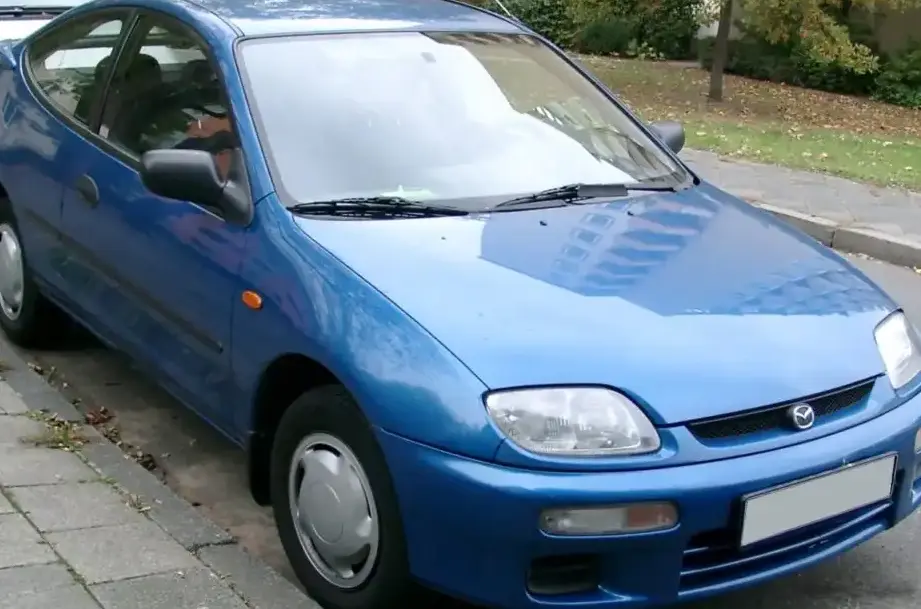
The Mazda 323 F V (BA) 2.0i V6 24V, produced between 1994 and 1998, represented a significant step up in performance and refinement for Mazda’s compact offering. Part of the BA series, the “F V” designation denoted the fastback (hatchback) body style, and the 2.0i V6 24V identified the engine. This variant occupied a premium position within the 323 lineup, offering a more powerful and sophisticated alternative to the more common 1.5 and 1.8 liter four-cylinder models. The BA generation 323 was primarily aimed at the European market, where compact hatchbacks were – and remain – incredibly popular, offering a blend of practicality, affordability, and increasingly, performance.
Technical Specifications
| Brand | Mazda |
| Model | 323 |
| Generation | 323 F V (BA) |
| Type (Engine) | 2.0i V6 24V (144 Hp) |
| Start of production | 1994 |
| End of production | 1998 |
| Powertrain Architecture | Internal Combustion engine |
| Body type | Hatchback |
| Seats | 5 |
| Doors | 5 |
| Fuel consumption (combined) | 8.9 l/100 km (26.4 US mpg, 31.7 UK mpg, 11.2 km/l) |
| Fuel Type | Petrol (Gasoline) |
| Acceleration 0 – 100 km/h | 8.5 sec |
| Acceleration 0 – 62 mph | 8.5 sec |
| Acceleration 0 – 60 mph | 8.1 sec |
| Maximum speed | 213 km/h (132.35 mph) |
| Weight-to-power ratio | 8.4 kg/Hp, 119 Hp/tonne |
| Weight-to-torque ratio | 6.7 kg/Nm, 148.8 Nm/tonne |
| Power | 144 Hp @ 6000 rpm |
| Power per litre | 72.2 Hp/l |
| Torque | 180 Nm @ 5000 rpm (132.76 lb.-ft. @ 5000 rpm) |
| Engine layout | Front, Transverse |
| Engine displacement | 1995 cm3 (121.74 cu. in.) |
| Number of cylinders | 6 |
| Engine configuration | V-engine |
| Cylinder Bore | 78 mm (3.07 in.) |
| Piston Stroke | 69.6 mm (2.74 in.) |
| Compression ratio | 9.5:1 |
| Number of valves per cylinder | 4 |
| Fuel injection system | Multi-port manifold injection |
| Engine aspiration | Naturally aspirated engine |
| Valvetrain | DOHC |
| Kerb Weight | 1210 kg (2667.59 lbs.) |
| Max. weight | 1740 kg (3836.04 lbs.) |
| Max load | 530 kg (1168.45 lbs.) |
| Trunk (boot) space – minimum | 346 l (12.22 cu. ft.) |
| Fuel tank capacity | 55 l (14.53 US gal | 12.1 UK gal) |
| Length | 4245 mm (167.13 in.) |
| Width | 1695 mm (66.73 in.) |
| Height | 1355 mm (53.35 in.) |
| Wheelbase | 2605 mm (102.56 in.) |
| Front track | 1460 mm (57.48 in.) |
| Rear (Back) track | 1460 mm (57.48 in.) |
| Drivetrain Architecture | The Internal combustion engine (ICE) drives the front wheels of the vehicle. |
| Drive wheel | Front wheel drive |
| Number of gears and type of gearbox | 5 gears, manual transmission |
| Front suspension | Spring Strut |
| Rear suspension | Spring Strut |
| Front brakes | Ventilated discs |
| Rear brakes | Disc |
| Assisting systems | ABS (Anti-lock braking system) |
| Steering type | Steering rack and pinion |
| Power steering | Hydraulic Steering |
| Tires size | 195/60 R15 V |
| Wheel rims size | 15 |
Powertrain & Engine Architecture
The heart of the 323 F V 2.0i was the Mazda KF-DE engine, a 1995cc, naturally aspirated V6. This engine featured a 60-degree V-angle, contributing to a relatively compact engine bay footprint. The KF-DE utilized a multi-port fuel injection system, delivering fuel directly to each intake port for optimized combustion. The engine also employed a double overhead camshaft (DOHC) valvetrain, operating 24 valves (four per cylinder) to enhance breathing and high-rpm performance. The 9.5:1 compression ratio was a balance between performance and the fuel quality available in European markets. The engine was paired with a five-speed manual transmission as standard, providing drivers with full control over the power delivery. While an automatic transmission was offered in some markets, the manual was favored by enthusiasts for its responsiveness.
Driving Characteristics
The 144 horsepower and 180 Nm (132.76 lb-ft) of torque provided by the KF-DE engine gave the 323 F V a noticeable performance advantage over its four-cylinder siblings. Acceleration to 60 mph was achieved in approximately 8.1 seconds, and the car could reach a top speed of 132.35 mph. The V6 engine delivered a smooth and linear power delivery, with a pleasing exhaust note. The five-speed manual transmission offered precise shifts and allowed drivers to keep the engine in its optimal power band. Compared to the 1.8L models, the V6 offered significantly more mid-range punch, making overtaking maneuvers easier and more confident. While not a sports car, the 323 F V provided a genuinely enjoyable driving experience, blending performance with everyday usability.
Equipment & Trim Levels
The 2.0i V6 trim typically included features such as power steering, central locking, electric windows, and an upgraded audio system. Interior upholstery was generally cloth, but leather options were available. The dashboard layout was functional and driver-focused, with clear instrumentation. Optional extras included air conditioning, a sunroof, and alloy wheels. The V6 model often received subtle exterior styling enhancements, such as a rear spoiler and unique wheel designs, to differentiate it from the lower trims.
Chassis & Braking
The 323 F V utilized a MacPherson strut suspension setup at the front and a torsion beam suspension at the rear. This configuration provided a good balance between ride comfort and handling. The front brakes were ventilated discs, offering strong stopping power, while the rear brakes were solid discs. Anti-lock Braking System (ABS) was standard, enhancing safety and control during emergency braking situations. The chassis was reinforced compared to the lower trims to handle the increased power output of the V6 engine.
Market Reception & Comparison
The Mazda 323 F V 2.0i V6 24V was generally well-received by automotive critics. It was praised for its smooth engine, responsive handling, and overall refinement. However, some critics noted that the fuel economy was slightly higher than that of the four-cylinder models. Compared to rivals such as the Volkswagen Golf and Ford Escort, the 323 F V offered a more distinctive driving experience and a more powerful engine option. The V6 variant appealed to drivers who wanted a compact hatchback with a bit more performance and sophistication.
Legacy
The KF-DE V6 engine proved to be a relatively reliable unit, provided it was properly maintained. Regular oil changes and timely servicing were crucial to prevent issues such as oil leaks and timing belt failure. Today, the 323 F V 2.0i V6 24V is becoming increasingly sought after by enthusiasts and collectors. Well-maintained examples are relatively rare, and prices have been steadily rising. The car represents a unique chapter in Mazda’s history, showcasing the company’s willingness to offer a more premium and performance-oriented compact hatchback option. Its blend of practicality, performance, and distinctive styling continues to appeal to a dedicated following.