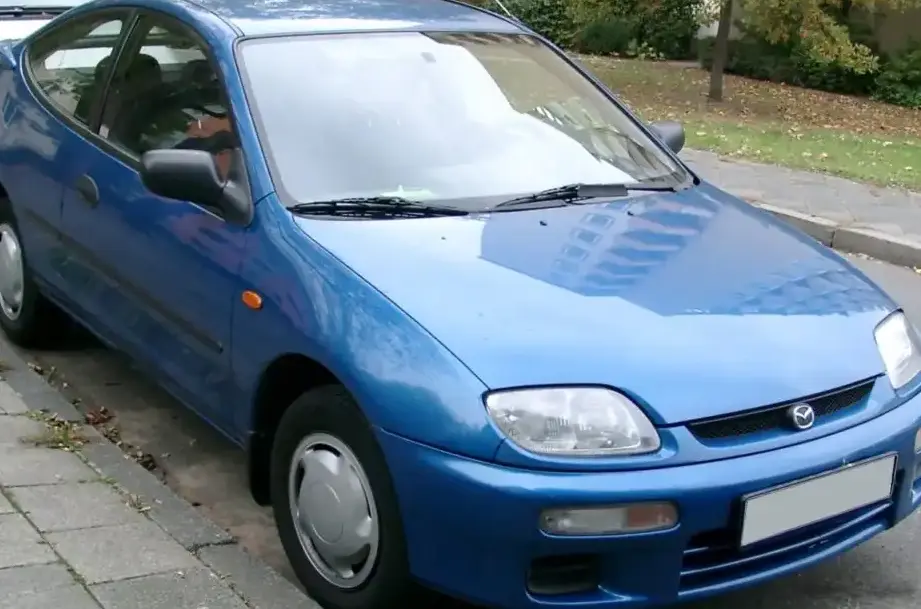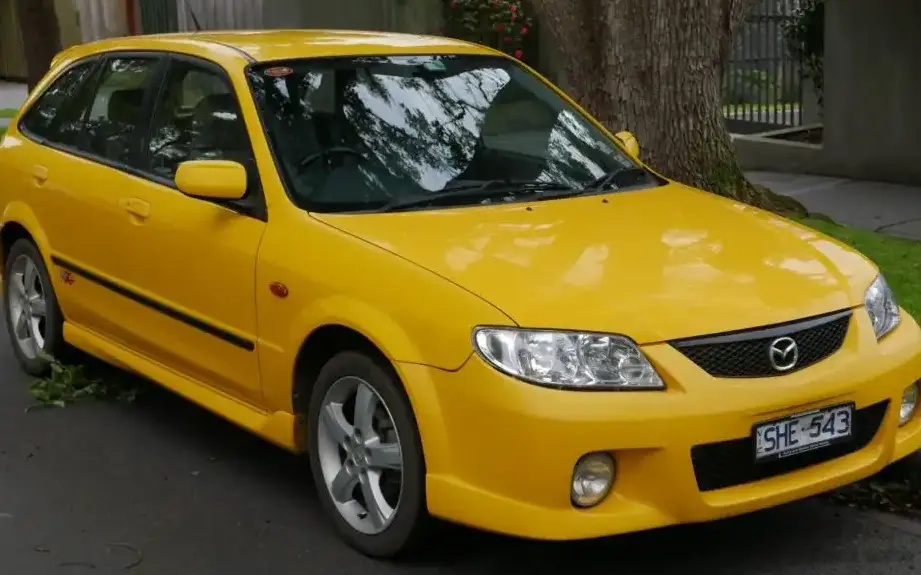
The Mazda 323 F VI (BJ) 1.6 i 16V, produced from 2000 to 2003, represented a key iteration of Mazda’s compact offering in the European and Asian markets. Positioned as a mainstream, affordable hatchback, it formed part of the BJ generation of the 323, which aimed to provide a balance of practicality, fuel efficiency, and reasonable performance. This specific 1.6-liter, 98 horsepower variant with a manual transmission served as a core model within the lineup, appealing to buyers seeking economical transportation without sacrificing essential features.
Technical Specifications
| Brand | Mazda |
| Model | 323 |
| Generation | 323 F VI (BJ) |
| Type (Engine) | 1.6 i 16V (98 Hp) |
| Start of production | 2000 year |
| End of production | 2003 year |
| Powertrain Architecture | Internal Combustion engine |
| Body type | Hatchback |
| Seats | 5 |
| Doors | 5 |
| Fuel consumption (urban) | 9.6 l/100 km (24.5 US mpg) |
| Fuel consumption (extra urban) | 6.3 l/100 km (37.3 US mpg) |
| Fuel consumption (combined) | 7.4 l/100 km (31.8 US mpg) |
| Fuel Type | Petrol (Gasoline) |
| Acceleration 0 – 100 km/h | 11.6 sec |
| Acceleration 0 – 62 mph | 11.6 sec |
| Acceleration 0 – 60 mph | 11 sec |
| Maximum speed | 184 km/h (114.33 mph) |
| Weight-to-power ratio | 10.9 kg/Hp |
| Weight-to-torque ratio | 7.4 kg/Nm |
| Power | 98 Hp @ 5500 rpm |
| Torque | 145 Nm @ 3700 rpm (106.95 lb.-ft. @ 3700 rpm) |
| Engine layout | Front, Transverse |
| Engine Model/Code | ZM |
| Engine displacement | 1598 cm3 (97.52 cu. in.) |
| Number of cylinders | 4 |
| Engine configuration | Inline |
| Cylinder Bore | 78 mm (3.07 in.) |
| Piston Stroke | 83.6 mm (3.29 in.) |
| Compression ratio | 9.7:1 |
| Number of valves per cylinder | 4 |
| Fuel injection system | Multi-port manifold injection |
| Engine aspiration | Naturally aspirated engine |
| Valvetrain | DOHC |
| Engine oil capacity | 2.9 l (3.06 US qt | 2.55 UK qt) |
| Coolant capacity | 6 l (6.34 US qt | 5.28 UK qt) |
| Kerb Weight | 1070 kg (2358.95 lbs.) |
| Max. weight | 1585 kg (3494.33 lbs.) |
| Max load | 515 kg (1135.38 lbs.) |
| Trunk (boot) space – minimum | 355 l (12.54 cu. ft.) |
| Trunk (boot) space – maximum | 1000 l (35.31 cu. ft.) |
| Fuel tank capacity | 55 l (14.53 US gal | 12.1 UK gal) |
| Length | 4290 mm (168.9 in.) |
| Width | 1705 mm (67.13 in.) |
| Height | 1420 mm (55.91 in.) |
| Wheelbase | 2610 mm (102.76 in.) |
| Front track | 1470 mm (57.87 in.) |
| Rear track | 1470 mm (57.87 in.) |
| Drivetrain Architecture | Front wheel drive |
| Number of gears | 5 gears, manual transmission |
| Front suspension | Coil spring |
| Rear suspension | Coil spring |
| Front brakes | Ventilated discs |
| Rear brakes | Disc |
| Assisting systems | ABS (Anti-lock braking system) |
| Steering type | Steering rack and pinion |
| Power steering | Hydraulic Steering |
| Tires size | 185/65 R14 |
| Wheel rims size | 14 |
Powertrain & Engine Architecture
The heart of this 323 variant was the ZM-series 1.6-liter inline-four engine. This engine, a mainstay in Mazda’s lineup during the late 1990s and early 2000s, featured a double overhead camshaft (DOHC) valvetrain operating four valves per cylinder. The multi-port fuel injection system delivered fuel directly into the intake ports, optimizing combustion efficiency. With a compression ratio of 9.7:1, the engine produced 98 horsepower at 5500 rpm and 145 Nm (106.95 lb-ft) of torque at 3700 rpm. The engine’s design prioritized fuel economy and smooth operation over outright performance. The five-speed manual transmission was the standard offering, providing a relatively direct connection between the engine and the front wheels. Gear ratios were tuned for everyday drivability, emphasizing acceleration in the lower gears and comfortable cruising at highway speeds.
Driving Characteristics
The 1.6 i 16V offered a predictable and undemanding driving experience. Acceleration from 0-60 mph took around 11 seconds, and top speed was approximately 114 mph. While not particularly quick, the engine provided sufficient power for typical urban and highway driving. The manual transmission allowed for driver control, but the relatively low horsepower meant frequent downshifting was necessary when overtaking or climbing hills. Compared to the higher-output 1.8-liter versions, the 1.6 felt noticeably less responsive. However, it offered a more economical alternative, with combined fuel consumption figures around 31.8 US mpg. The suspension, tuned for comfort, provided a reasonably smooth ride, although it wasn’t particularly sporty.
Equipment & Trim Levels
The 323 F VI 1.6 i 16V typically came equipped with basic but essential features. Standard equipment included power steering, central locking, electric front windows, and an AM/FM radio. Interior upholstery was typically cloth, and the dashboard featured a straightforward layout with easy-to-read gauges. Optional extras included air conditioning, alloy wheels, and a CD player. The trim level was generally considered entry-level, making it an attractive option for first-time car buyers or those seeking a budget-friendly vehicle.
Chassis & Braking
The 323 F VI utilized a relatively simple chassis design. Front suspension consisted of coil springs and MacPherson struts, while the rear employed a coil spring torsion beam setup. Braking duties were handled by ventilated discs at the front and solid discs at the rear. Anti-lock Braking System (ABS) was standard, enhancing safety by preventing wheel lockup during hard braking. The relatively lightweight construction of the vehicle (approximately 2359 lbs) contributed to its reasonable handling characteristics.
Market Reception & Comparison
The Mazda 323 F VI 1.6 i 16V was generally well-received as a practical and affordable hatchback. Critics praised its fuel efficiency and comfortable ride, but noted its lack of outright performance. Compared to the more powerful 1.8-liter variants, the 1.6 offered a lower purchase price and better fuel economy, but at the expense of acceleration and overall driving excitement. Against competitors like the Ford Focus, Volkswagen Golf, and Opel/Vauxhall Astra, the 323 offered a competitive package, particularly in terms of value for money.
Legacy
The ZM-series 1.6-liter engine proved to be a reliable and durable unit, and many examples of the 323 F VI 1.6 i 16V remain on the road today. While not known for exceptional performance, the engine’s simplicity and robust construction contribute to its longevity. In the used car market, these models are often sought after as affordable and dependable transportation. Maintenance costs are generally low, and parts availability remains reasonable. The 323 F VI 1.6 i 16V represents a solid example of a practical and well-engineered compact hatchback from the early 2000s.