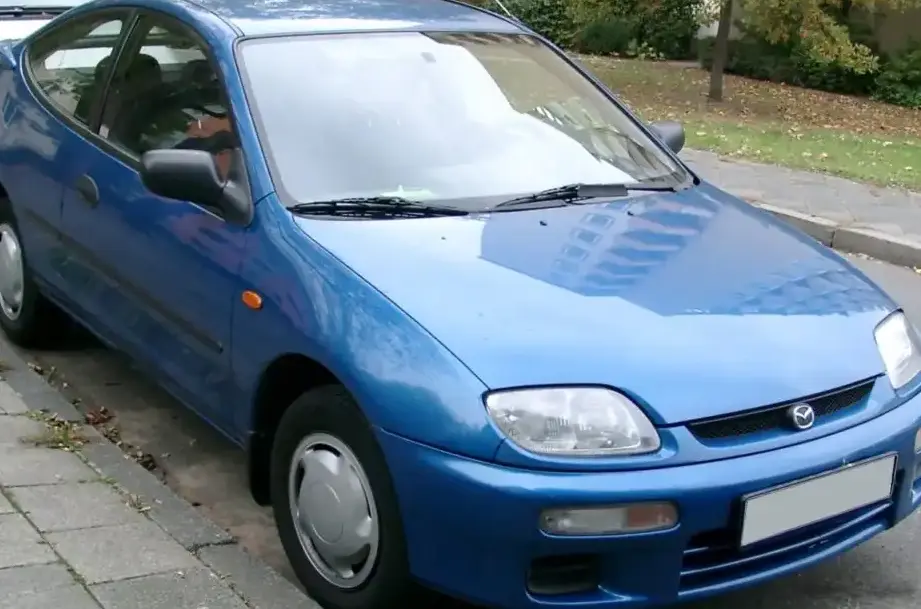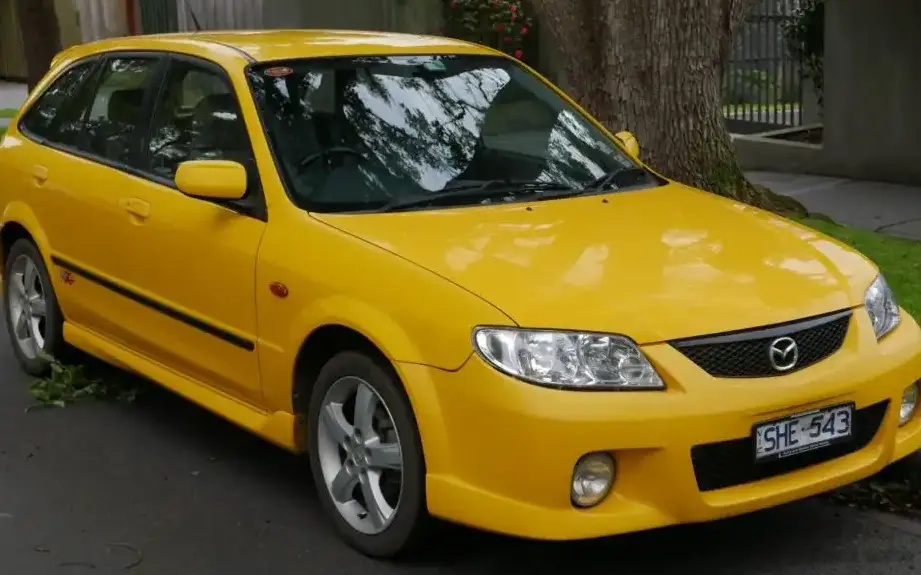
The Mazda 323 F VI (BJ) Sport 2.0i 16V, produced between 2000 and 2003, represented a performance-oriented variant within the sixth generation of Mazda’s popular compact hatchback. Positioned as a step up from the base models, the Sport 2.0i 16V offered a more powerful engine and a sportier driving experience, appealing to buyers seeking a balance between practicality and driving enjoyment. This model was primarily sold in the European market, where the 323 competed with rivals like the Volkswagen Golf, Ford Focus, and Opel Astra. It was a key part of Mazda’s strategy to enhance its image as a manufacturer of engaging and reliable vehicles.
Technical Specifications
| Brand | Mazda |
| Model | 323 |
| Generation | 323 F VI (BJ) |
| Type | Sport 2.0i 16V (130 Hp) |
| Start of production | 2000 |
| End of production | 2003 |
| Powertrain Architecture | Internal Combustion engine |
| Body type | Hatchback |
| Seats | 5 |
| Doors | 5 |
| Fuel consumption (urban) | 11.2 l/100 km (21 US mpg, 25.2 UK mpg, 8.9 km/l) |
| Fuel consumption (extra urban) | 6.9 l/100 km (34.1 US mpg, 40.9 UK mpg, 14.5 km/l) |
| Fuel consumption (combined) | 8.5 l/100 km (27.7 US mpg, 33.2 UK mpg, 11.8 km/l) |
| Fuel Type | Petrol (Gasoline) |
| Acceleration 0 – 100 km/h | 9.7 sec |
| Acceleration 0 – 62 mph | 9.7 sec |
| Acceleration 0 – 60 mph | 9.2 sec |
| Maximum speed | 203 km/h (126.14 mph) |
| Weight-to-power ratio | 9.1 kg/Hp, 109.7 Hp/tonne |
| Weight-to-torque ratio | 6.9 kg/Nm, 144.3 Nm/tonne |
| Power | 130 Hp @ 6000 rpm |
| Power per litre | 65.3 Hp/l |
| Torque | 171 Nm @ 4400 rpm (126.12 lb.-ft. @ 4400 rpm) |
| Engine layout | Front, Transverse |
| Engine Model/Code | FS7E, FS7G |
| Engine displacement | 1991 cm3 (121.5 cu. in.) |
| Number of cylinders | 4 |
| Engine configuration | Inline |
| Cylinder Bore | 83 mm (3.27 in.) |
| Piston Stroke | 92 mm (3.62 in.) |
| Compression ratio | 9.7:1 |
| Number of valves per cylinder | 4 |
| Fuel injection system | Multi-port manifold injection |
| Engine aspiration | Naturally aspirated engine |
| Valvetrain | DOHC |
| Engine oil capacity | 3.5 l (3.7 US qt | 3.08 UK qt) |
| Coolant capacity | 7.5 l (7.93 US qt | 6.6 UK qt) |
| Kerb Weight | 1185 kg (2612.48 lbs.) |
| Max. weight | 1650 kg (3637.63 lbs.) |
| Max load | 465 kg (1025.15 lbs.) |
| Trunk (boot) space – minimum | 355 l (12.54 cu. ft.) |
| Trunk (boot) space – maximum | 1000 l (35.31 cu. ft.) |
| Fuel tank capacity | 55 l (14.53 US gal | 12.1 UK gal) |
| Length | 4290 mm (168.9 in.) |
| Width | 1705 mm (67.13 in.) |
| Height | 1420 mm (55.91 in.) |
| Wheelbase | 2610 mm (102.76 in.) |
| Front track | 1470 mm (57.87 in.) |
| Rear track | 1470 mm (57.87 in.) |
| Drivetrain Architecture | Front wheel drive |
| Drive wheel | Front wheel drive |
| Number of gears | 5 gears, manual transmission |
| Front suspension | Coil spring |
| Rear suspension | Coil spring |
| Front brakes | Ventilated discs |
| Rear brakes | Disc |
| Assisting systems | ABS (Anti-lock braking system) |
| Steering type | Steering rack and pinion |
| Power steering | Hydraulic Steering |
| Tires size | 195/50 R15 |
| Wheel rims size | 15 |
Powertrain & Engine Architecture
The heart of the 323 F VI Sport 2.0i 16V was the FS-DE engine, a 1.991-liter inline-four cylinder gasoline engine. This engine, part of Mazda’s FS family, featured a double overhead camshaft (DOHC) valvetrain with four valves per cylinder, contributing to its relatively high output for its displacement. The FS-DE utilized multi-point fuel injection, delivering fuel directly to each intake port for improved combustion efficiency. The engine codes FS7E and FS7G were commonly found in this variant, with minor variations depending on the specific market and emissions regulations. The engine produced 130 horsepower at 6000 rpm and 171 Nm (126 lb-ft) of torque at 4400 rpm. This power was delivered to the front wheels through a five-speed manual transmission, which was the standard offering. While an automatic transmission was available in some markets, the Sport model was primarily marketed with the manual gearbox to enhance the driving experience.
Driving Characteristics
The 323 F VI Sport 2.0i 16V offered a noticeably more engaging driving experience compared to the lower-spec models. The 2.0-liter engine provided ample power for everyday driving and confident overtaking maneuvers. Acceleration from 0 to 60 mph took approximately 9.2 seconds, and the car could reach a top speed of 126 mph. The five-speed manual transmission allowed drivers to fully utilize the engine’s powerband, while the relatively lightweight chassis contributed to nimble handling. Compared to the 1.6-liter models, the Sport 2.0i 16V felt significantly more responsive and capable. While not a dedicated sports car, it offered a good balance of performance and practicality. The suspension was tuned for a comfortable ride, but it also provided adequate body control during cornering.
Equipment & Trim Levels
The Sport trim level of the 323 F VI included several standard features designed to enhance both comfort and aesthetics. These typically included alloy wheels, a sport-tuned suspension, and a more aggressive body kit. Inside, the Sport model featured sport seats with enhanced bolstering, providing better support during spirited driving. Air conditioning, power windows, and a basic audio system were also standard. Optional extras included a sunroof, upgraded audio systems, and metallic paint finishes. The interior trim was generally functional and well-built, although it lacked the premium feel of some of its competitors.
Chassis & Braking
The 323 F VI utilized a MacPherson strut front suspension and a coil spring rear suspension. This setup provided a good balance of ride comfort and handling. The Sport model often featured a slightly stiffer suspension tuning compared to the base models. Braking duties were handled by ventilated disc brakes at the front and solid disc brakes at the rear. Anti-lock Braking System (ABS) was standard, enhancing safety and control during emergency braking situations. The steering was a rack-and-pinion system with hydraulic power assistance, providing precise and responsive steering feel.
Market Reception & Comparison
The Mazda 323 F VI Sport 2.0i 16V was generally well-received by automotive critics. It was praised for its lively engine, nimble handling, and overall value for money. However, some critics noted that the interior lacked the refinement of some of its rivals. Compared to the 1.6-liter models, the Sport 2.0i 16V offered a significant performance upgrade, but it also came with a higher price tag and slightly increased fuel consumption. The 2.0-liter engine provided a noticeable improvement in acceleration and overall driving enjoyment. Fuel economy was respectable, averaging around 27.7 US mpg in combined driving conditions.
Legacy
The Mazda 323 F VI Sport 2.0i 16V has proven to be a relatively reliable vehicle, with the FS-DE engine being known for its durability. While finding well-maintained examples can be challenging today, these cars offer a compelling combination of affordability and driving enjoyment. The FS-DE engine is generally considered to be robust and relatively easy to maintain, although regular servicing is essential. In the used car market, the Sport 2.0i 16V commands a slightly higher price than the lower-spec models, reflecting its increased performance and desirability among enthusiasts. It remains a popular choice for those seeking a practical and engaging compact hatchback.