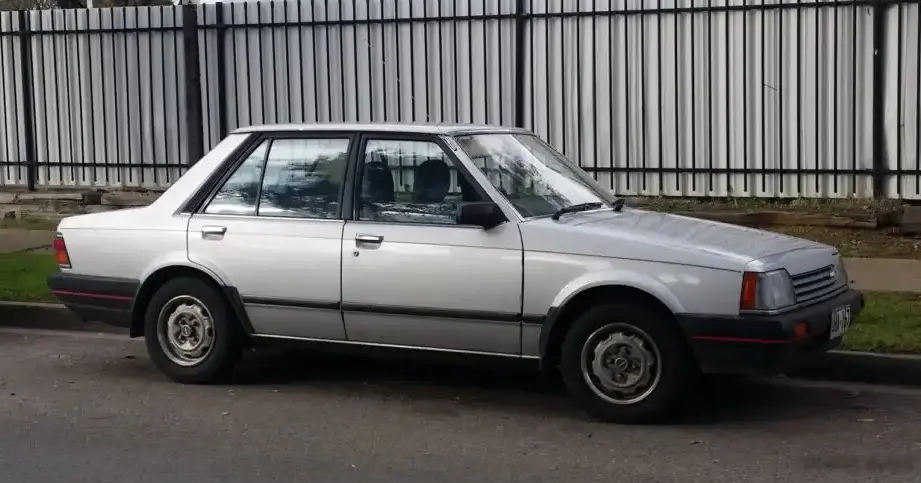
The Mazda 323 II (BD), produced between 1982 and 1986, represented a significant step forward for Mazda in the compact car segment. This second generation of the 323, known as the Ford Astina in some markets, aimed to offer a blend of practicality, fuel efficiency, and a degree of sporty handling. The 1.5-liter, 88 horsepower variant occupied a crucial position in the lineup, serving as the entry-level model for buyers seeking affordable and reliable transportation. It was a key competitor against vehicles like the Toyota Corolla, Honda Civic, and Nissan Sentra of the era, particularly in European and Asian markets where compact cars were highly popular. While not the most powerful offering in the 323 II range, this version provided a balanced package for everyday driving.
Technical Specifications
| Brand | Mazda |
| Model | 323 |
| Generation | 323 II (BD) |
| Type (Engine) | 1.5 (88 Hp) |
| Start of production | 1982 |
| End of production | 1986 |
| Powertrain Architecture | Internal Combustion Engine |
| Body type | Sedan |
| Fuel Type | Petrol (Gasoline) |
| Power | 88 Hp |
| Engine aspiration | Naturally Aspirated |
Powertrain & Engine Architecture
The heart of the 323 II 1.5 was the Mazda B6 engine, a 1.5-liter (1498cc) inline-four cylinder gasoline engine. This engine utilized a single overhead camshaft (SOHC) design, operating with two valves per cylinder. The B6 was known for its relative simplicity and durability, characteristics valued in the early 1980s. Fuel delivery was managed by a carburetor, a common feature for vehicles of this period, rather than fuel injection. This carburetor setup, while less precise than injection, contributed to the engine’s ease of maintenance and lower production cost. The 88 horsepower output was achieved at approximately 6000 rpm, with peak torque of around 95 lb-ft at 3500 rpm. The engine was typically paired with a four-speed automatic transmission, although a five-speed manual transmission was also available. The automatic transmission, while offering convenience, was geared more towards fuel economy than outright performance. It featured a traditional torque converter design and was not particularly sophisticated by modern standards.
Driving Characteristics
The 1.5-liter 323 II with the automatic transmission delivered a driving experience focused on comfort and economy. Acceleration was adequate for everyday driving, but not particularly brisk. Zero to sixty mph times were estimated to be around 12-14 seconds. The automatic transmission’s gear ratios were spaced to prioritize fuel efficiency, resulting in a somewhat leisurely pace. Compared to the manual transmission version, the automatic offered smoother shifts but at the expense of responsiveness. The 323 II’s suspension, featuring MacPherson struts in the front and a torsion beam rear axle, provided a reasonably comfortable ride, absorbing bumps and imperfections in the road surface effectively. Handling was predictable and safe, but not particularly sporty. Steering was light and easy, making it well-suited for urban driving. Compared to higher-spec 323 II models equipped with larger engines (like the 1.6 or 2.0-liter variants), the 1.5 automatic felt noticeably slower and less engaging.
Equipment & Trim Levels
The 1.5-liter 323 II typically represented the base trim level. Standard equipment generally included cloth upholstery, a basic AM/FM radio, and manual windows and door locks. Air conditioning was often an optional extra, as were power steering and upgraded audio systems. Interior appointments were functional and durable, prioritizing practicality over luxury. The dashboard layout was straightforward, with clearly labeled controls. The seats offered reasonable comfort for short to medium-length journeys. Higher trim levels of the 323 II, such as the Deluxe or Special, added features like upgraded interior trim, a more comprehensive instrument cluster, and additional convenience items. The base 1.5 model was intentionally kept relatively spartan to maintain an attractive price point.
Chassis & Braking
The 323 II’s chassis was a traditional unibody construction, providing a good balance of strength and weight. The front suspension utilized MacPherson struts, coil springs, and an anti-roll bar, contributing to stable handling. The rear suspension employed a torsion beam axle, which was a cost-effective and space-efficient design. Braking on the base 1.5 model typically consisted of disc brakes in the front and drum brakes in the rear. This configuration was common for vehicles in this price range during the 1980s. Power assistance for the brakes was not always standard, depending on the market. Steering was rack-and-pinion, providing reasonably precise control. The overall chassis setup was geared towards providing a comfortable and predictable driving experience, rather than outright performance.
Market Reception & Comparison
The Mazda 323 II 1.5 automatic was generally well-received as a practical and affordable compact car. Critics praised its fuel efficiency, reliability, and comfortable ride. However, it was often criticized for its relatively modest performance, particularly when equipped with the automatic transmission. Compared to the manual transmission version, the automatic offered less engaging driving experience. Against competitors like the Toyota Corolla and Honda Civic, the 323 II 1.5 offered a comparable level of features and reliability, often at a slightly lower price point. Fuel economy was competitive, typically achieving around 28-32 mpg in combined driving conditions. The 1.5-liter engine proved to be durable and relatively easy to maintain, contributing to the 323 II’s reputation for reliability.
Legacy
The Mazda 323 II 1.5, while not a performance icon, played a significant role in establishing Mazda as a reputable manufacturer of compact cars. The B6 engine proved to be a robust and reliable powerplant, and many examples remain on the road today. In the used car market, these 323 IIs are often sought after by enthusiasts looking for a simple, affordable, and reliable classic car. Maintenance costs are generally low, and parts availability is still reasonable. The 1.5-liter automatic variant is particularly appealing to those seeking a comfortable and easy-to-drive vehicle for everyday use. While not as collectible as some of the higher-performance 323 II models, the 1.5 represents a significant piece of Mazda’s history and a testament to the enduring appeal of well-engineered, practical automobiles.