Technical Specifications
| Brand | Mazda |
| Model | 323 |
| Generation | 323 II Hatchback (BD) |
| Type (Engine) | 1.3 (60 Hp) |
| Start of production | 1980 |
| End of production | 1985 |
| Powertrain Architecture | Internal Combustion Engine |
| Body type | Hatchback |
| Fuel Type | Petrol (Gasoline) |
| Power | 60 Hp |
| Engine aspiration | Naturally Aspirated |
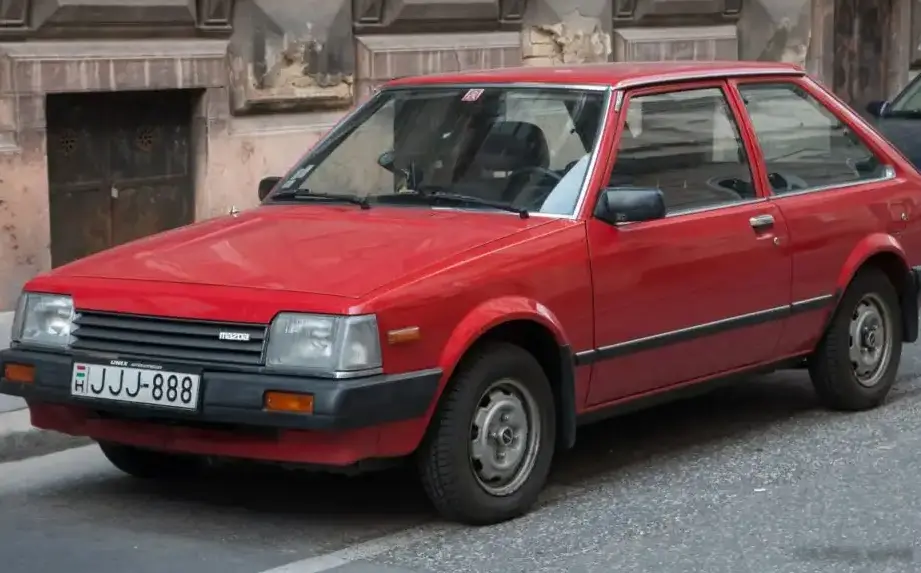
The Mazda 323 II Hatchback, internally designated as the BD series, represented Mazda’s entry into the competitive compact hatchback market of the early 1980s. Produced from 1980 to 1985, the BD series aimed to provide affordable and reliable transportation, particularly in Europe and Japan, where smaller, fuel-efficient cars were highly sought after. The 1.3-liter, 60 horsepower variant occupied the base trim level, serving as the most accessible and economical option within the 323 II range. This model was designed to appeal to first-time car buyers, commuters, and those prioritizing fuel economy over outright performance.
Powertrain & Engine Architecture
The heart of the 323 II 1.3 was the Mazda B6 engine, a 1298cc inline-four cylinder gasoline engine. This engine utilized a naturally aspirated configuration, meaning it did not employ a turbocharger or supercharger. The B6 featured a single overhead camshaft (SOHC) valvetrain, operating two valves per cylinder. Fuel delivery was managed by a carburetor, a common feature for vehicles of this era, prioritizing simplicity and cost-effectiveness over the more advanced fuel injection systems. While not particularly powerful, the B6 engine was known for its durability and relatively low maintenance requirements.
The 60 horsepower output was achieved at approximately 6000 rpm, with peak torque of around 77 lb-ft (104 Nm) delivered at 3000 rpm. This engine was typically paired with a four-speed manual transmission, although a three-speed automatic transmission was also available, albeit less common. The automatic transmission, while offering convenience, resulted in a noticeable reduction in acceleration and fuel economy. The engine block was constructed from cast iron, contributing to its robustness, while the cylinder head was made of aluminum alloy to reduce weight.
Driving Characteristics
The 323 II 1.3, particularly in hatchback form, was not designed for spirited driving. With only 60 horsepower propelling a vehicle weighing around 1,800 lbs (816 kg), acceleration was modest. Zero to sixty mph times were estimated to be around 14-16 seconds. The four-speed manual transmission allowed drivers to extract the most from the engine, while the automatic version felt sluggish, especially when attempting to overtake or climb hills. The gear ratios were optimized for fuel efficiency rather than performance.
Handling was adequate for everyday driving, with a relatively soft suspension setup prioritizing ride comfort over sharp cornering. The steering was light and easy to use, making it well-suited for urban environments. The car’s small size and nimble handling made it easy to maneuver in tight spaces. Compared to the later 1.6-liter versions of the 323 II, the 1.3 felt noticeably underpowered, but it offered a more economical driving experience.
Equipment & Trim Levels
The 1.3-liter 323 II Hatchback represented the entry-level trim, and as such, it came with a fairly basic level of equipment. Standard features typically included cloth upholstery, vinyl floor covering, and a simple dashboard layout with analog gauges. Power steering and air conditioning were generally not standard, but were available as optional extras. The interior was functional and durable, designed to withstand the rigors of daily use.
The exterior featured steel wheels with hubcaps, basic bumpers, and relatively simple lighting. Optional extras included upgraded stereo systems, tinted glass, and metallic paint finishes. The trim level was often identified by minimal badging, reflecting its position as the base model. The focus was on providing a practical and affordable vehicle, rather than luxury or extensive features.
Chassis & Braking
The 323 II Hatchback utilized a front-engine, rear-wheel-drive layout. The suspension consisted of independent front suspension with MacPherson struts and a live axle with leaf springs at the rear. This setup provided a reasonable balance between ride comfort and handling. The braking system was relatively simple, featuring drum brakes on all four wheels. While adequate for the car’s performance capabilities, the drum brakes lacked the stopping power and fade resistance of disc brakes.
The chassis was a unibody construction, providing a good level of structural rigidity. Stabilizer bars were not typically fitted to the base 1.3-liter model, further contributing to the softer ride quality. The tires were typically narrow, prioritizing fuel economy over grip. The overall chassis design was geared towards providing a comfortable and reliable driving experience, rather than sporty handling.
Market Reception & Comparison
The Mazda 323 II 1.3 was generally well-received as an affordable and reliable compact hatchback. Critics praised its fuel economy and durability, but noted its lack of power and basic equipment level. Compared to its rivals, such as the Ford Escort and Volkswagen Golf, the 323 II offered a competitive price point and a reputation for reliability. However, it lacked the refinement and performance of some of its competitors.
The 1.6-liter versions of the 323 II offered significantly more power and a more engaging driving experience, but came at a higher price. The 1.3-liter model appealed to buyers who prioritized fuel economy and affordability. Fuel economy figures were typically in the range of 35-40 mpg (combined), making it an attractive option for commuters. Reliability was generally good, with few major mechanical issues reported.
Legacy
The Mazda 323 II 1.3, while not a performance icon, played an important role in establishing Mazda as a reputable manufacturer of compact cars. The B6 engine proved to be a durable and reliable powerplant, and many examples of the 323 II 1.3 are still on the road today. In the used car market, these vehicles are often sought after by enthusiasts looking for a simple, affordable, and reliable classic car.
The 323 II series laid the foundation for Mazda’s future success in the compact car segment. While the 1.3-liter variant may not be the most desirable trim level, it represents an important part of Mazda’s history and a testament to the company’s commitment to providing affordable and reliable transportation. Parts availability can be a challenge, but the simplicity of the design makes it relatively easy to maintain and repair.