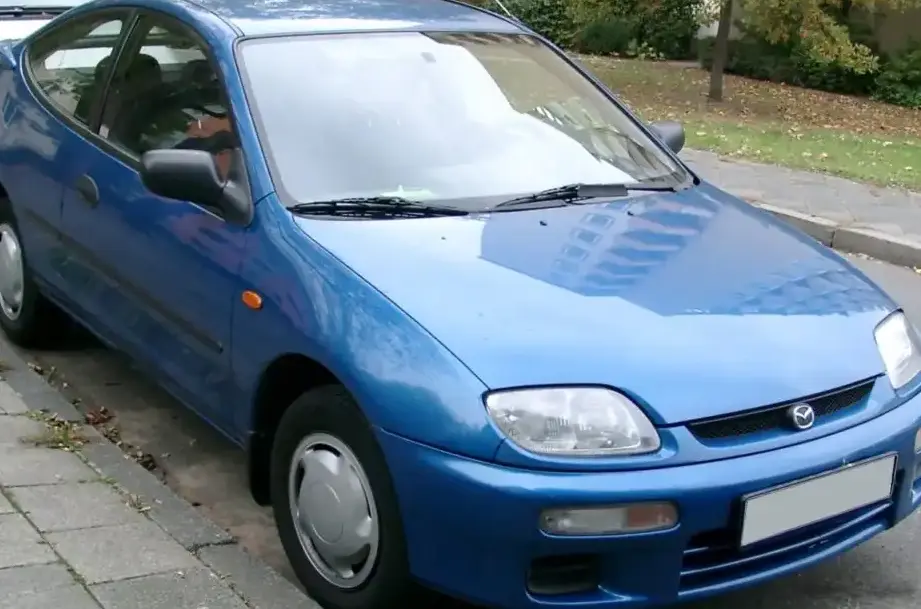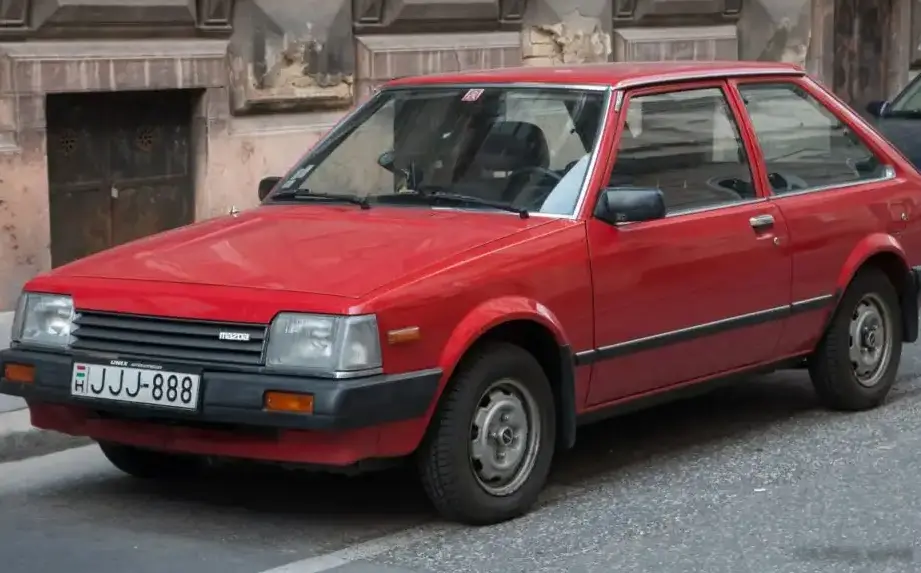
The Mazda 323 II Hatchback, internally designated as the BD series, represented Mazda’s entry into the competitive compact hatchback market of the early 1980s. Produced between 1980 and 1983, this generation of the 323 aimed to provide affordable and reliable transportation, particularly in Europe and Japan, where smaller, fuel-efficient cars were highly sought after. The 1.5-liter, 86 horsepower variant occupied the lower end of the 323 II hatchback lineup, serving as the base model and appealing to buyers prioritizing economy and practicality over outright performance. It was a crucial model for Mazda, helping to establish the 323 nameplate as a viable competitor against established rivals like the Volkswagen Golf and Ford Escort.
Technical Specifications
| Brand | Mazda |
| Model | 323 |
| Generation | 323 II Hatchback (BD) |
| Type (Engine) | 1.5 (86 Hp) |
| Start of production | 1980 |
| End of production | 1983 |
| Powertrain Architecture | Internal Combustion engine |
| Body type | Hatchback |
| Fuel Type | Petrol (Gasoline) |
| Power | 86 Hp |
| Engine aspiration | Naturally aspirated engine |
Powertrain & Engine Architecture
The heart of the 323 II 1.5 was the Mazda B6 engine, a 1.5-liter (1498 cc) inline-four cylinder gasoline engine. This engine utilized a naturally aspirated configuration, meaning it did not employ a turbocharger or supercharger. The B6 featured a single overhead camshaft (SOHC) valvetrain, operating two valves per cylinder. Fuel delivery was managed by a carburetor, a common feature for vehicles of this era, providing a relatively simple and cost-effective fuel system. While not particularly powerful, the B6 engine was known for its durability and relatively smooth operation.
The 86 horsepower output was achieved at approximately 6000 rpm, with peak torque of around 83 lb-ft (113 Nm) delivered at 3000 rpm. This engine was typically paired with a four-speed manual transmission, but a three-speed automatic transmission was also offered, and is the focus of this article. The automatic transmission, while providing ease of use, did impact acceleration and fuel economy compared to the manual counterpart. The transmission was a conventional hydraulic automatic, lacking the electronic controls found in later designs. The gear ratios were optimized for fuel efficiency and comfortable cruising, rather than sporty performance.
Driving Characteristics
The 323 II 1.5 Automatic offered a comfortable, if uninspiring, driving experience. Acceleration was modest, with a 0-60 mph time estimated to be around 14-16 seconds. The automatic transmission contributed to a smoother driving experience, particularly in urban environments, but it also resulted in a noticeable reduction in responsiveness compared to the manual version. The gear changes were not particularly quick or precise, and the transmission could sometimes feel hesitant when attempting to accelerate quickly.
The car’s handling was generally considered safe and predictable, but not particularly engaging. The suspension, consisting of MacPherson struts at the front and a twist-beam rear axle, provided a reasonable compromise between ride comfort and handling stability. The steering was light and easy to use, making it well-suited for city driving. Compared to higher-spec 323 II models equipped with larger engines and manual transmissions, the 1.5 Automatic felt noticeably slower and less agile. However, it excelled as a practical and economical daily driver.
Equipment & Trim Levels
The 1.5-liter 323 II Hatchback served as the entry-level trim, and as such, came with a relatively basic level of equipment. Standard features typically included cloth upholstery, vinyl floor covering, and a simple dashboard layout. The instrument cluster consisted of a speedometer, fuel gauge, and temperature gauge. Power steering was not standard, and air conditioning was typically an optional extra. The interior was functional and durable, but lacked the refinement of higher-spec models.
Optional extras included a radio, upgraded upholstery, and a sunroof. The exterior trim was also fairly basic, with steel wheels and black plastic bumpers being common features. The overall design was functional and understated, reflecting the car’s focus on affordability and practicality. The trim level was often simply identified as “L” or “Base” depending on the specific market.
Chassis & Braking
The 323 II Hatchback utilized a front-engine, front-wheel-drive layout. The chassis was a monocoque construction, providing a good balance of strength and weight. The front suspension featured MacPherson struts, coil springs, and an anti-roll bar. The rear suspension employed a twist-beam axle with coil springs. This setup provided a comfortable ride, but was not particularly sophisticated.
The braking system consisted of disc brakes at the front and drum brakes at the rear. This configuration was typical for cars in this price range during the early 1980s. The brakes were adequate for normal driving conditions, but lacked the stopping power of more modern systems. Power assistance was not standard on all models, requiring a reasonable amount of pedal effort to achieve effective braking.
Market Reception & Comparison
The Mazda 323 II 1.5 Automatic was generally well-received as an affordable and reliable compact hatchback. Critics praised its fuel efficiency and ease of use, but noted its lack of performance. Compared to the more powerful 1.6-liter and diesel variants of the 323 II, the 1.5 Automatic was significantly slower and less engaging to drive. However, it offered a lower price point and appealed to buyers who prioritized economy and practicality.
Fuel economy was a key selling point, with the 1.5 Automatic achieving around 30-35 mpg in mixed driving conditions. Reliability was also a strong suit, with the B6 engine proving to be durable and relatively trouble-free. In comparison to rivals like the Volkswagen Golf and Ford Escort, the 323 II 1.5 Automatic offered a competitive package in terms of price, fuel economy, and reliability.
Legacy
The Mazda 323 II 1.5 Automatic, while not a performance icon, played a significant role in establishing Mazda as a reputable manufacturer of compact cars. The B6 engine proved to be a reliable and durable powerplant, and many examples of this car are still on the road today. In the used car market, these vehicles are often sought after by enthusiasts looking for a classic and affordable Japanese car.
While maintenance can be challenging due to the age of the vehicles, parts availability is generally good, and the relatively simple mechanical design makes them relatively easy to repair. The 323 II 1.5 Automatic represents a snapshot of automotive engineering from the early 1980s, offering a glimpse into a time when affordability, reliability, and fuel efficiency were paramount concerns for car buyers. It remains a fondly remembered vehicle for those who experienced its simple, practical charm.