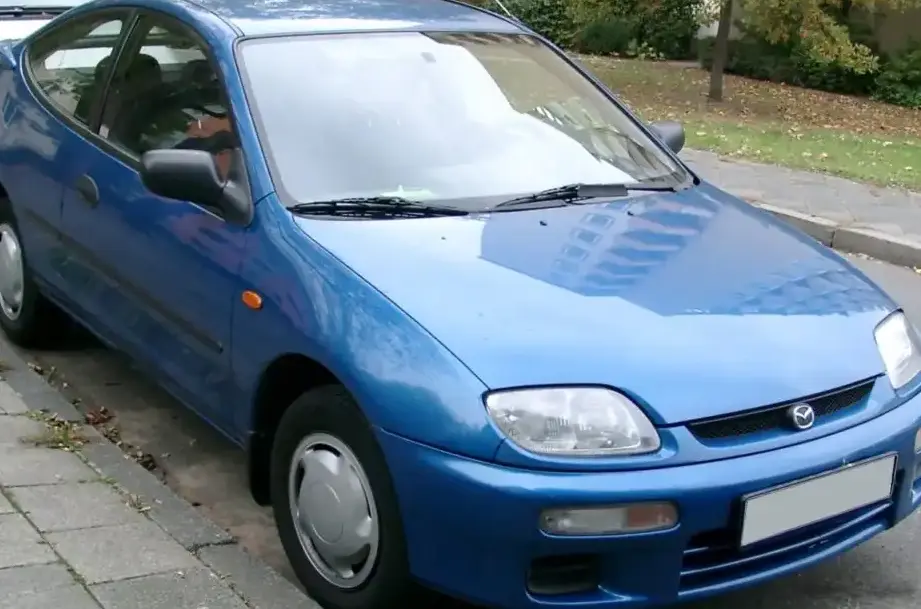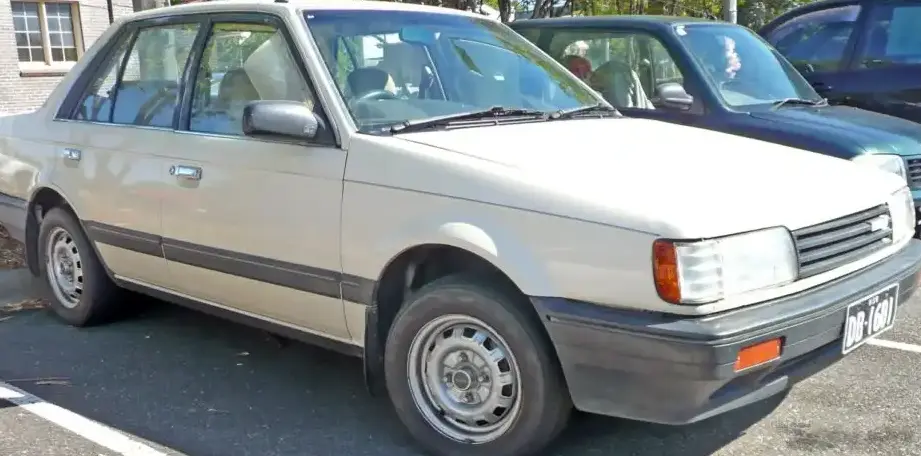
The Mazda 323 III (BF) 1.5, produced between 1987 and 1989, represented a significant step forward for Mazda’s compact offering. Part of the BF platform generation, this variant served as the entry point into the 323 range, targeting buyers seeking affordable and reliable transportation. It was primarily sold in Europe, Australia, and parts of Asia, offering a practical and economical alternative to larger family cars. While not known for blistering performance, the 1.5-liter engine and automatic transmission combination provided a comfortable and accessible driving experience for a broad demographic. This model played a crucial role in establishing the 323 as a competitive player in the global compact car market.
Technical Specifications
| Brand | Mazda |
| Model | 323 |
| Generation | 323 III (BF) |
| Type (Engine) | 1.5 (73 Hp) |
| Start of production | 1987 |
| End of production | 1989 |
| Powertrain Architecture | Internal Combustion Engine |
| Body type | Sedan |
| Fuel Type | Petrol (Gasoline) |
| Power | 73 Hp |
| Engine aspiration | Naturally Aspirated |
Powertrain & Engine Architecture
The heart of the 323 III 1.5 was the Mazda B6 engine, a 1.5-liter (1498 cc) inline-four cylinder gasoline engine. This engine utilized a single overhead camshaft (SOHC) valvetrain with eight valves. Fuel delivery was managed by a carburetor, a common feature for vehicles of this era, prioritizing simplicity and cost-effectiveness over the more advanced fuel injection systems found in higher-spec models. The B6 engine produced 73 horsepower (54 kW) at 6000 rpm and 98 lb-ft (133 Nm) of torque at 3000 rpm. The engine block was cast iron, contributing to its durability, while the cylinder head was aluminum.
The 323 1.5 was typically paired with a three-speed automatic transmission. This transmission was chosen to provide ease of use, particularly appealing to drivers prioritizing convenience over sporty performance. The automatic transmission featured a conventional torque converter and planetary gearsets. While not particularly sophisticated by modern standards, it offered smooth shifts and reliable operation. The gear ratios were optimized for fuel economy and everyday driving conditions, rather than acceleration. The final drive ratio varied slightly depending on the specific market, but generally fell around 4.1:1.
Driving Characteristics
The driving experience in the 323 III 1.5 automatic was characterized by its smoothness and ease of operation. Acceleration was modest, with a 0-60 mph time estimated around 13-15 seconds. The three-speed automatic transmission meant that the engine often operated at higher rpm during highway cruising, which could result in noticeable engine noise. However, the transmission’s simplicity contributed to its reliability. The power delivery was linear, with peak torque available at relatively low engine speeds, making it suitable for city driving and everyday commuting. Compared to the available five-speed manual transmission, the automatic version sacrificed some responsiveness and fuel efficiency, but gained in driver comfort. Compared to later, more powerful 323 variants, such as those equipped with 1.6-liter or turbocharged engines, the 1.5-liter model felt noticeably less energetic.
Equipment & Trim Levels
The 323 III 1.5, as the entry-level model, was equipped with a relatively basic set of features. Standard equipment typically included cloth upholstery, a simple dashboard layout with analog gauges, and manual windows and door locks. Air conditioning was often an optional extra, as were power steering and a radio. The interior trim was functional and durable, prioritizing practicality over luxury. The exterior featured steel wheels with hubcaps, black plastic bumpers, and relatively simple body-colored trim. Depending on the market, different trim levels were available, offering incremental upgrades such as upgraded upholstery, a more comprehensive instrument cluster, and additional exterior trim. The focus was on providing a well-rounded package at an affordable price point.
Chassis & Braking
The 323 III utilized a front-engine, front-wheel-drive layout. The suspension consisted of MacPherson struts at the front and a twist-beam rear axle. This suspension setup provided a comfortable ride quality, although it wasn’t particularly sporty. The steering was rack-and-pinion, offering reasonable precision. The braking system featured disc brakes at the front and drum brakes at the rear. This configuration was typical for cars in this price range during the late 1980s. The brakes were adequate for everyday driving, but lacked the stopping power of more advanced braking systems. Stabilizer bars were often omitted on the base 1.5 model to further reduce cost, contributing to a slightly more pronounced body roll during cornering.
Market Reception & Comparison
The Mazda 323 III 1.5 was generally well-received by automotive critics as a practical and affordable compact car. It was praised for its reliability, fuel efficiency, and comfortable ride. However, it was also criticized for its lack of performance and relatively basic interior. Compared to competitors such as the Ford Escort, Volkswagen Golf, and Toyota Corolla, the 323 1.5 offered a competitive package in terms of price and features. Fuel economy was a strong point, typically achieving around 30-35 mpg in mixed driving conditions. The automatic transmission version was less fuel-efficient than the manual, but still offered respectable economy for its class. Reliability was generally good, with the B6 engine proving to be a durable and long-lasting unit.
Legacy
The Mazda 323 III 1.5, while not a performance icon, holds a respectable place in automotive history as a reliable and affordable compact car. The B6 engine, in particular, is known for its durability and relatively simple maintenance requirements. Today, these cars are becoming increasingly rare, and well-maintained examples are sought after by enthusiasts and collectors. The 323 III 1.5 represents a snapshot of automotive engineering from the late 1980s, showcasing the emphasis on practicality, reliability, and affordability that characterized the era. The automatic transmission, while not the most technologically advanced, proved to be a dependable component, contributing to the car’s overall longevity. In the used car market, these vehicles are often valued for their simplicity and ease of repair, making them attractive to those seeking a classic car experience without the complexities of modern automotive technology.