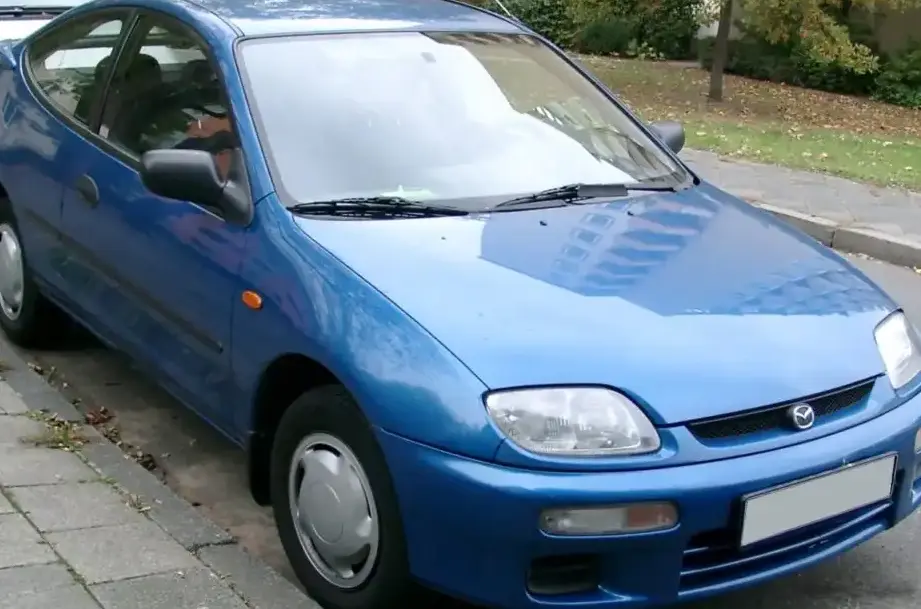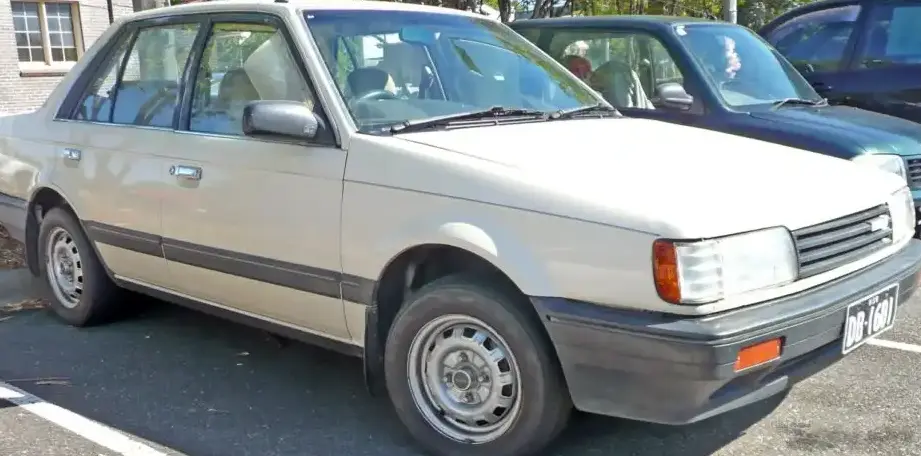
The Mazda 323 III, known as the BF platform, represented a significant step forward for Mazda in the compact car segment. Produced from 1986 to 1989, this generation aimed to offer a more refined and modern driving experience than its predecessors. The 1.6 GT variant, powered by a 105 horsepower engine and typically equipped with an automatic transmission, occupied a mid-range position within the 323 III lineup, appealing to buyers seeking a balance of performance, comfort, and features. It was a key model in Mazda’s attempt to gain market share in both North America and Europe, competing with established rivals like the Honda Civic, Toyota Corolla, and Ford Escort.
Technical Specifications
| Brand | Mazda |
| Model | 323 |
| Generation | 323 III (BF) |
| Type (Engine) | 1.6 GT (105 Hp) |
| Start of production | 1986 |
| End of production | 1988 |
| Powertrain Architecture | Internal Combustion Engine |
| Body type | Sedan |
| Fuel Type | Petrol (Gasoline) |
| Engine Power | 105 Hp |
| Engine Aspiration | Naturally Aspirated |
Powertrain & Engine Architecture
The heart of the 323 III 1.6 GT was the Mazda B6 engine, a 1.6-liter inline-four cylinder gasoline engine. This engine, part of Mazda’s F-series, featured a cast iron block and an aluminum cylinder head. The 105 horsepower output was achieved through a relatively high compression ratio (typically around 9.5:1) and a two-barrel carburetor, a common setup for the era. While fuel injection was becoming more prevalent, the carburetor offered a cost-effective solution for achieving acceptable performance and emissions. The engine utilized a single overhead camshaft (SOHC) valvetrain, operating 8 valves (two per cylinder).
The automatic transmission paired with the 1.6 GT was typically a four-speed unit. While not known for blistering acceleration, this transmission provided smooth and convenient operation for everyday driving. The transmission’s gear ratios were tuned for fuel efficiency and comfortable cruising, prioritizing usability over outright performance. The drivetrain was front-wheel drive, a configuration becoming increasingly standard in the compact car class.
Driving Characteristics
The 323 III 1.6 GT with the automatic transmission offered a comfortable, if not particularly sporty, driving experience. Acceleration from a standstill was adequate for merging into traffic and navigating city streets, but it wasn’t a car designed for quick sprints. The automatic transmission, while smooth, did sap some of the engine’s power, resulting in a noticeable difference in performance compared to the five-speed manual version. The 0-60 mph time was estimated to be around 11-12 seconds, placing it in line with other similarly equipped compact cars of the time.
Handling was generally considered good for a front-wheel-drive sedan of its era. The suspension, consisting of MacPherson struts in the front and a twist-beam rear axle, provided a reasonable balance between ride comfort and handling stability. Steering was light and responsive, making it easy to maneuver in tight spaces. However, the car wasn’t particularly engaging for enthusiastic drivers, lacking the sharp handling characteristics of some of its European competitors.
Equipment & Trim Levels
The 1.6 GT trim level represented a step up in features compared to the base models of the 323 III. Standard equipment typically included cloth upholstery, a basic AM/FM radio, and power steering. The GT trim also often included features like a more comprehensive instrument cluster, upgraded interior trim, and exterior brightwork. Optional extras could include air conditioning, a sunroof, and upgraded audio systems. The interior design was functional and relatively spacious for a compact car, although the materials used were generally of modest quality.
The exterior styling of the 1.6 GT was fairly conservative, reflecting the design trends of the mid-1980s. The sedan body style was the most common, although a hatchback version was also available in some markets. The GT trim often featured color-coded bumpers and side moldings, adding a touch of visual appeal.
Chassis & Braking
The 323 III utilized a unibody construction, providing a good balance of strength and weight. The front suspension employed MacPherson struts, while the rear suspension utilized a twist-beam axle. This setup was relatively simple and cost-effective, but it provided adequate ride quality and handling for most drivers.
Braking on the 1.6 GT typically consisted of disc brakes in the front and drum brakes in the rear. Power assist was standard. While adequate for normal driving conditions, the braking system wasn’t particularly powerful, and fade could be an issue under hard use. The car did not feature anti-lock brakes (ABS), which was uncommon for vehicles in this price range during the mid-1980s.
Market Reception & Comparison
The Mazda 323 III 1.6 GT was generally well-received by automotive critics. It was praised for its comfortable ride, decent fuel economy, and relatively spacious interior. However, it was also criticized for its lack of outright performance, particularly when equipped with the automatic transmission. Compared to the more powerful 1.6L manual or the later 2.0L variants, the 1.6 GT automatic offered a more relaxed driving experience, prioritizing comfort and convenience over sporty handling.
Fuel economy was a strong point for the 1.6 GT, with EPA estimates ranging around 26-30 mpg in combined driving. This made it an attractive option for buyers looking for an economical and reliable compact car. Reliability was also generally good, although some owners reported issues with the carburetor and the automatic transmission over the long term.
Legacy
The Mazda 323 III 1.6 GT, while not a particularly groundbreaking vehicle, played an important role in establishing Mazda as a credible competitor in the global compact car market. The B6 engine proved to be reasonably durable, and many examples are still on the road today. However, finding well-maintained examples can be challenging, as many have succumbed to rust or neglect.
In the used car market, the 323 III 1.6 GT is often sought after by enthusiasts looking for a classic 1980s Japanese car. Its affordability, simplicity, and relatively good reliability make it an appealing option for those seeking a nostalgic driving experience. While it may not offer the performance or features of more modern vehicles, the 323 III 1.6 GT represents a charming and practical piece of automotive history.