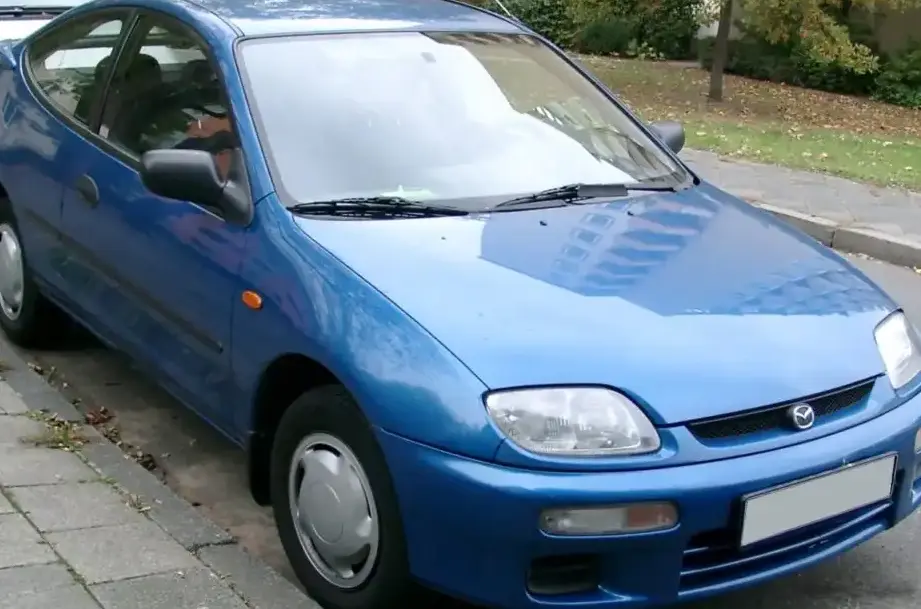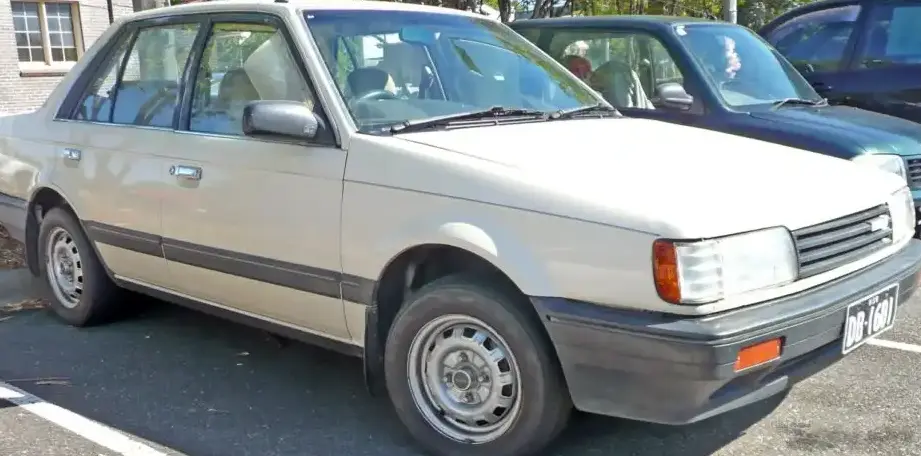
The Mazda 323 III (BF) 1.6 GT Turbo, produced between 1985 and 1991, represented a significant step forward for Mazda in the competitive compact car segment. This variant, a turbocharged iteration of the third-generation 323, aimed to deliver a blend of performance and practicality, appealing to drivers seeking something more engaging than the standard offerings. Positioned as a premium trim level within the BF 323 range, the GT Turbo offered a noticeable performance advantage over naturally aspirated models, while remaining relatively affordable. It was primarily sold in European and Japanese markets, with limited availability in the United States, where Mazda focused on other models within their lineup.
Technical Specifications
| Brand | Mazda |
| Model | 323 |
| Generation | 323 III (BF) |
| Type (Engine) | 1.6 GT Turbo (140 Hp) |
| Start of production | 1985 |
| End of production | 1991 |
| Powertrain Architecture | Internal Combustion engine |
| Body type | Sedan |
| Fuel Type | Petrol (Gasoline) |
| Power | 140 Hp |
| Engine aspiration | Turbocharger |
Powertrain & Engine Architecture
The heart of the 323 III 1.6 GT Turbo is the B6T engine, a 1.6-liter inline-four cylinder gasoline engine equipped with a turbocharger and an intercooler. This engine, part of Mazda’s F-series, utilized a cast iron block and an aluminum cylinder head. The B6T featured multi-point fuel injection, a significant upgrade over the carburetor systems found in earlier 323 models, contributing to improved fuel efficiency and responsiveness. The turbocharger, typically a Garrett unit, provided a boost pressure of around 7-9 psi, increasing power output to 140 horsepower at 5500 rpm and 158 lb-ft of torque at 4000 rpm. The engine’s valvetrain consisted of a single overhead camshaft (SOHC) operating eight valves.
The GT Turbo was typically paired with a five-speed manual transmission, although a four-speed automatic transmission was also available, albeit less common. The manual transmission offered precise shifts and enhanced driver control, while the automatic provided convenience for everyday driving. The drivetrain was front-wheel drive, standard for the 323 III.
Driving Characteristics
The 1.6 GT Turbo offered a noticeable performance improvement over the naturally aspirated 323 models. The turbocharger provided a surge of power in the mid-range, making overtaking maneuvers and highway cruising considerably easier. While not a sports car, the GT Turbo delivered a spirited driving experience, with a 0-60 mph time of around 8.5 seconds. The five-speed manual transmission allowed drivers to fully exploit the engine’s power band, while the automatic, though slower, offered smooth and comfortable gear changes. The suspension, tuned for a balance between comfort and handling, provided a reasonably controlled ride, although it could feel somewhat soft by modern standards. Turbo lag was present, typical of turbochargers of that era, but manageable once the engine reached a certain rpm.
Equipment & Trim Levels
The GT Turbo trim level included several features not found on the base 323 models. Standard equipment typically included power windows, power steering, central locking, and an upgraded interior with sport seats. The dashboard featured a comprehensive instrument cluster with gauges for oil pressure and turbo boost. Alloy wheels were also standard, enhancing the car’s appearance. Optional extras included a sunroof, air conditioning, and a premium sound system. The interior upholstery was typically cloth, with a sporty design. The GT Turbo was positioned as the top-of-the-line 323, offering a more luxurious and well-equipped experience than the lower trims.
Chassis & Braking
The 323 III utilized a MacPherson strut front suspension and a torsion beam rear suspension. This setup provided a good balance between ride comfort and handling. The GT Turbo featured slightly stiffer springs and dampers compared to the standard models, improving handling and reducing body roll. The braking system consisted of disc brakes on the front wheels and drum brakes on the rear wheels. While adequate for normal driving, the rear drum brakes were a limitation in terms of overall braking performance. Power-assisted steering was standard, making the car easy to maneuver in tight spaces.
Market Reception & Comparison
The Mazda 323 III 1.6 GT Turbo was generally well-received by automotive critics. It was praised for its performance, handling, and relatively affordable price. Compared to its rivals, such as the Volkswagen Golf GTI and the Ford Escort XR3i, the 323 GT Turbo offered a competitive package. The Golf GTI was generally considered to be more refined and better handling, while the Escort XR3i offered a more raw and sporty driving experience. The 323 GT Turbo occupied a middle ground, offering a good balance of both. Fuel economy was reasonable for a turbocharged car of that era, averaging around 28-32 mpg. Reliability was generally good, although the turbocharger could be a potential source of problems if not properly maintained.
Legacy
The Mazda 323 III 1.6 GT Turbo holds a special place in the hearts of many enthusiasts. It represents a golden era of affordable, turbocharged performance cars. While not as iconic as some of its rivals, the 323 GT Turbo offered a unique and enjoyable driving experience. Today, well-maintained examples are becoming increasingly collectible. The B6T engine, while relatively simple by modern standards, is known for its durability and tunability. However, finding parts can be challenging, as many components are now discontinued. The 323 GT Turbo remains a testament to Mazda’s engineering prowess and its commitment to delivering fun-to-drive cars.
The car’s relative rarity, particularly in original condition, has contributed to its increasing value in the used car market. Owners often appreciate its blend of 1980s styling, turbocharged performance, and relative simplicity compared to more modern vehicles. Regular maintenance, including turbocharger servicing and attention to cooling system components, is crucial for preserving the longevity of these vehicles.