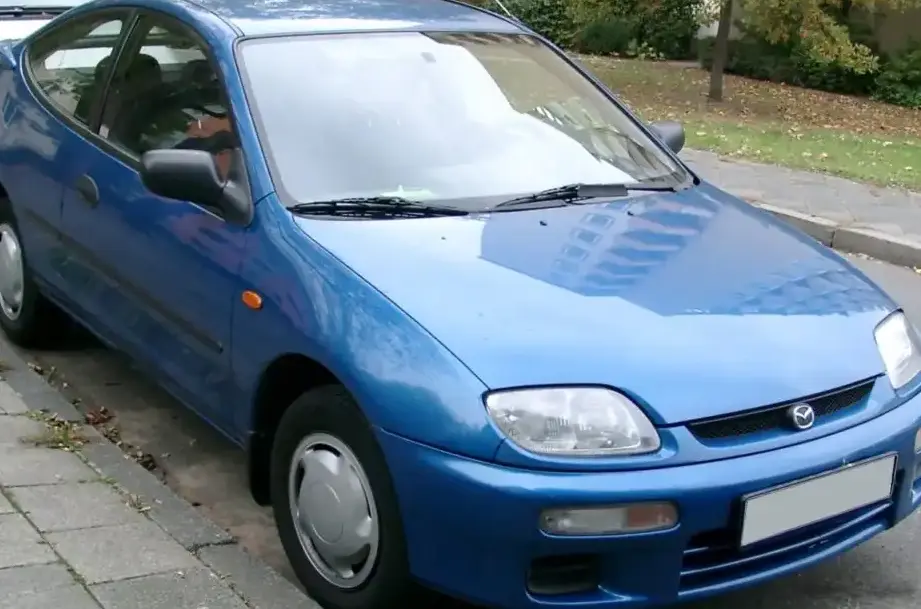
The Mazda 323 III Hatchback, internally designated as the BF series, represented Mazda’s entry into the competitive compact hatchback market of the mid-1980s. Produced between 1985 and 1987, the BF series 323 aimed to offer affordability and practicality. The 1.1-liter (54 horsepower) variant was positioned as the base model, intended for buyers prioritizing economy and basic transportation. It served as the gateway to the 323 range, offering a more accessible price point than the higher-specification engine options. This model was primarily sold in Europe and other international markets, with Mazda focusing on different models for the North American market during this period.
Technical Specifications
| Brand | Mazda |
| Model | 323 |
| Generation | 323 III Hatchback (BF) |
| Type (Engine) | 1.1 (54 Hp) |
| Start of production | 1985 |
| End of production | 1987 |
| Powertrain Architecture | Internal Combustion engine |
| Body type | Hatchback |
| Fuel Type | Petrol (Gasoline) |
| Power | 54 Hp |
| Engine aspiration | Naturally aspirated engine |
Powertrain & Engine Architecture
The heart of the 323 III 1.1 was the Mazda B3 engine, a 1.1-liter (1088cc) inline-four cylinder petrol engine. This engine utilized a single overhead camshaft (SOHC) valvetrain, operating with two valves per cylinder. Fuel delivery was managed by a carburetor, a common feature for entry-level cars of this era, rather than fuel injection. The B3 engine was known for its simplicity and durability, though it wasn’t a powerhouse in terms of performance. The engine’s modest output of 54 horsepower at approximately 6000 rpm and 67 lb-ft of torque at 3500 rpm was geared towards fuel efficiency rather than spirited driving. The engine was typically paired with a four-speed manual transmission, although a three-speed automatic transmission was also available, albeit less common. The automatic transmission was a simple, hydraulically controlled unit, designed for smooth but unhurried gear changes.
Driving Characteristics
The 1.1-liter 323 Hatchback offered a decidedly utilitarian driving experience. Acceleration was slow, with a 0-60 mph time estimated to be well over 15 seconds. The car was best suited for urban driving and shorter journeys, where its nimble handling and compact size were advantages. The four-speed manual transmission allowed drivers to make the most of the limited power, while the automatic version prioritized ease of use over performance. Gear ratios were relatively tall, further emphasizing fuel economy. The suspension, consisting of MacPherson struts at the front and a twist-beam rear axle, provided a comfortable ride, but didn’t offer particularly sporty handling. Compared to the 1.3 and 1.6-liter versions of the 323, the 1.1 felt significantly underpowered, especially when carrying passengers or luggage. The manual transmission offered a more engaging driving experience, but even then, the engine required frequent gear changes to maintain momentum.
Equipment & Trim Levels
The 323 III 1.1 was typically offered in a basic trim level, reflecting its position as the entry point to the range. Standard equipment generally included cloth upholstery, a basic instrument cluster, and manually operated windows and door locks. A simple two-speaker AM/FM radio was often included, though higher-end audio systems were available as optional extras. Interior plastics were durable but lacked the refinement of more expensive models. Optional extras could include a sunroof, upgraded upholstery, and central locking. The exterior trim was minimal, with black plastic bumpers and steel wheels with hubcaps being common features. The overall interior design was functional and straightforward, prioritizing practicality over aesthetics.
Chassis & Braking
The BF series 323 Hatchback utilized a relatively simple chassis design. The front suspension employed MacPherson struts, providing a reasonable level of comfort and handling. The rear suspension featured a twist-beam axle, which was cost-effective but less sophisticated than independent rear suspension systems. Braking was typically accomplished with disc brakes at the front and drum brakes at the rear. The braking system was adequate for the car’s weight and performance, but lacked the stopping power of more advanced systems. Steering was rack-and-pinion, providing reasonably precise control. The car’s relatively light weight (around 1,700 lbs) helped to offset the engine’s limited power, contributing to acceptable handling characteristics.
Market Reception & Comparison
The Mazda 323 III 1.1 was generally well-received as an affordable and reliable small car. Critics praised its fuel economy and practicality, but noted its lack of performance. Compared to rivals such as the Ford Fiesta, Volkswagen Polo, and Opel Corsa, the 323 1.1 offered a competitive package in terms of price and features. However, the higher-powered versions of the 323, such as the 1.3 and 1.6-liter models, were often preferred by buyers seeking a more engaging driving experience. The 1.1-liter engine’s carburetor-based fuel system was considered less efficient and environmentally friendly than the fuel injection systems used in some competing models. Fuel economy was a key selling point, with the 1.1-liter engine achieving around 45-50 mpg in mixed driving conditions.
Legacy
The Mazda 323 III 1.1, while not a performance icon, played an important role in establishing Mazda as a reputable manufacturer of affordable and reliable cars in Europe and other international markets. The B3 engine proved to be a durable and long-lasting unit, and many examples of the 323 1.1 are still on the road today. In the used car market, these models are often sought after by enthusiasts looking for a simple, inexpensive, and easy-to-maintain classic car. Parts availability can be a challenge, but many components are still available through specialist suppliers. The 323 III 1.1 represents a snapshot of the automotive landscape of the mid-1980s, a time when affordability and practicality were often prioritized over performance and luxury. Its enduring appeal lies in its simplicity, reliability, and nostalgic charm.