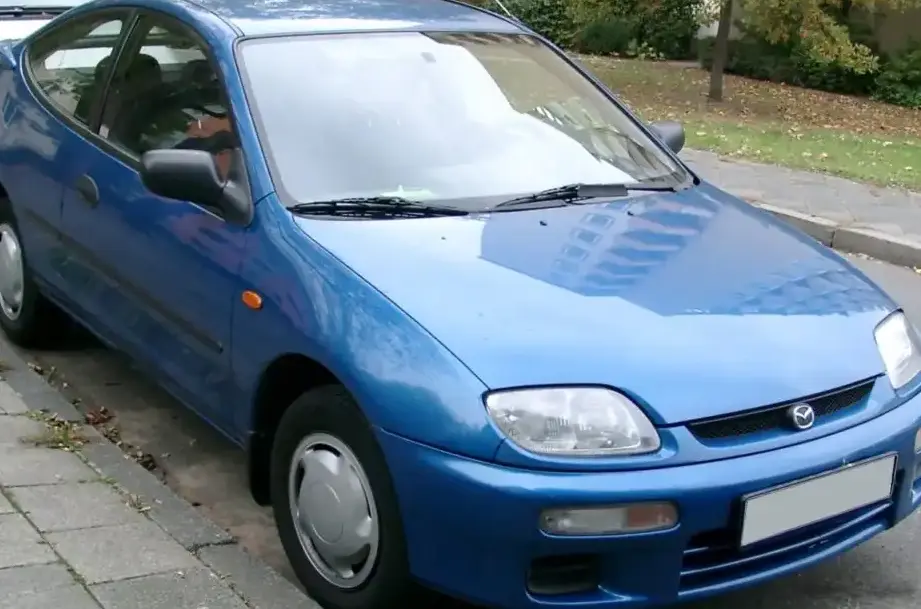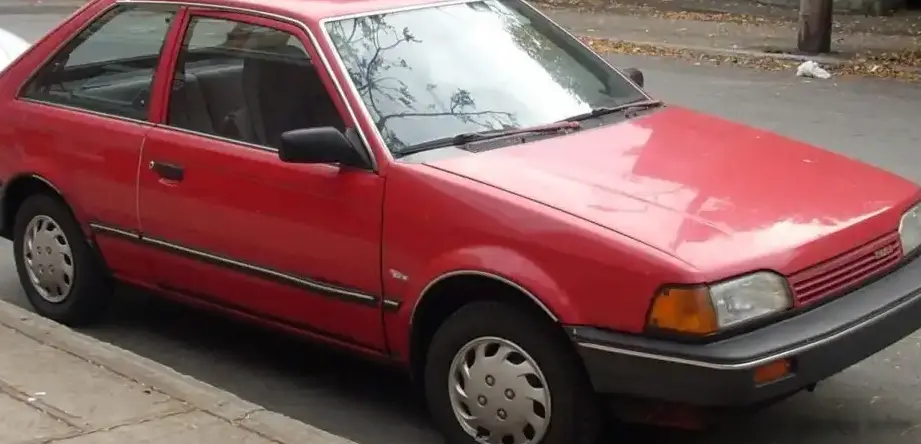
The Mazda 323 III Hatchback, internally designated as the BF platform, represented Mazda’s entry into the competitive compact hatchback segment during the late 1980s. Produced from 1987 to 1989, the BF series aimed to offer a blend of practicality, affordability, and Mazda’s signature sporty handling. The 1.5-liter, 73 horsepower variant occupied the entry-level position within the 323 III hatchback range, serving as the most accessible option for budget-conscious buyers. This model was primarily targeted at first-time car owners and those seeking economical transportation, particularly in European and Asian markets where smaller, fuel-efficient vehicles were highly valued. While not a performance leader, the 1.5L BF 323 provided a reliable and reasonably equipped package.
Technical Specifications
| Brand | Mazda |
| Model | 323 |
| Generation | 323 III Hatchback (BF) |
| Type (Engine) | 1.5 (73 Hp) |
| Start of production | 1987 |
| End of production | 1989 |
| Powertrain Architecture | Internal Combustion engine |
| Body type | Hatchback |
| Fuel Type | Petrol (Gasoline) |
| Power | 73 Hp |
| Engine aspiration | Naturally aspirated engine |
Powertrain & Engine Architecture
The heart of the 323 III 1.5 was the Mazda B6 engine, a 1.5-liter (1498cc) inline-four cylinder gasoline engine. This engine utilized a single overhead camshaft (SOHC) valvetrain with eight valves (two per cylinder). Fuel delivery was managed by a carburetor, a common feature for vehicles of this era and price point. The B6 engine was known for its simplicity and relative ease of maintenance. While not particularly powerful, it offered adequate performance for everyday driving. The engine’s output of 73 horsepower at approximately 6000 rpm and 98 lb-ft of torque at 3500 rpm was considered sufficient for the vehicle’s weight class.
The 1.5-liter engine was typically paired with a four-speed automatic transmission. This transmission was chosen to provide ease of use, particularly appealing to the target demographic of new drivers and those prioritizing convenience. The automatic transmission featured standard torque converter technology, offering smooth, albeit not particularly quick, gear changes. Manual transmission options were available on other 323 III variants, offering a more engaging driving experience and slightly improved fuel economy.
Driving Characteristics
The 323 III 1.5 automatic offered a comfortable, if uninspiring, driving experience. Acceleration was modest, with 0-60 mph times estimated around 13-15 seconds. The automatic transmission’s gear ratios were optimized for fuel efficiency and smooth cruising rather than outright performance. The engine felt somewhat strained when pushed hard, particularly when attempting to overtake or climb hills. Compared to the more powerful 1.6-liter and 2.0-liter variants of the 323 III, the 1.5L model felt noticeably slower. However, the car’s relatively light weight helped to mitigate the lack of power to some extent.
Handling was generally considered good for a vehicle in its class. The 323 III featured independent front suspension with MacPherson struts and a torsion beam rear suspension. This setup provided a reasonable balance between ride comfort and handling precision. Steering was light and responsive, making the car easy to maneuver in urban environments. The automatic transmission didn’t detract significantly from the handling, although it didn’t offer the same level of control as a manual gearbox.
Equipment & Trim Levels
The 1.5-liter 323 III Hatchback typically came with a fairly basic level of equipment. Standard features generally included cloth upholstery, a basic AM/FM radio, and manual windows and door locks. Air conditioning was often an optional extra, as were power steering and central locking. The interior design was functional and straightforward, prioritizing practicality over luxury. The dashboard layout was simple and easy to use, with clearly labeled controls.
Trim levels varied depending on the market. In some regions, a slightly more upscale trim level was offered, which might include features such as upgraded upholstery, a more sophisticated radio, and additional exterior trim. However, the 1.5-liter model generally remained the most affordable and sparsely equipped variant in the 323 III lineup.
Chassis & Braking
The 323 III Hatchback featured a monocoque body construction, providing a good level of structural rigidity. The front suspension utilized MacPherson struts, coil springs, and an anti-roll bar. The rear suspension employed a torsion beam setup, which was a cost-effective solution for providing adequate ride comfort and handling. The car’s wheelbase was approximately 2385 mm (93.9 inches), contributing to its stable handling characteristics.
Braking on the 1.5-liter model typically consisted of disc brakes on the front wheels and drum brakes on the rear wheels. This configuration was common for vehicles in this price range during the late 1980s. Power assistance was generally not standard, requiring a reasonable amount of pedal effort to achieve effective braking. The braking system was adequate for normal driving conditions, but it lacked the stopping power of more advanced systems found on higher-end vehicles.
Market Reception & Comparison
The Mazda 323 III 1.5 Hatchback was generally well-received as an affordable and reliable compact car. Critics praised its fuel efficiency, ease of driving, and relatively spacious interior. However, it was often criticized for its lack of power and somewhat basic equipment level. Compared to rivals such as the Ford Escort, Volkswagen Golf, and Opel Astra, the 323 III 1.5 offered a competitive package, particularly in terms of handling and overall build quality.
Fuel economy was a key selling point for the 1.5-liter model, with combined fuel consumption figures typically ranging from 35 to 40 mpg. Reliability was also generally good, with the B6 engine proving to be a durable and long-lasting unit. The automatic transmission, while not particularly sophisticated, was also known for its reliability.
Legacy
The Mazda 323 III 1.5 Hatchback, while not a particularly iconic or sought-after model today, remains a testament to Mazda’s commitment to building affordable and reliable vehicles. The B6 engine, while now outdated, was a workhorse that powered many Mazda vehicles during the 1980s and 1990s. In the used car market, these vehicles are now relatively rare and often sought after by enthusiasts looking for a classic 1980s hatchback. The 1.5L automatic variant, while not the most desirable trim, offers a simple and affordable entry point into the world of classic Mazda ownership. Maintenance is generally straightforward due to the engine’s simplicity, and parts availability, while diminishing, is still reasonable. The car’s enduring appeal lies in its honest simplicity and its representation of a bygone era of automotive design.