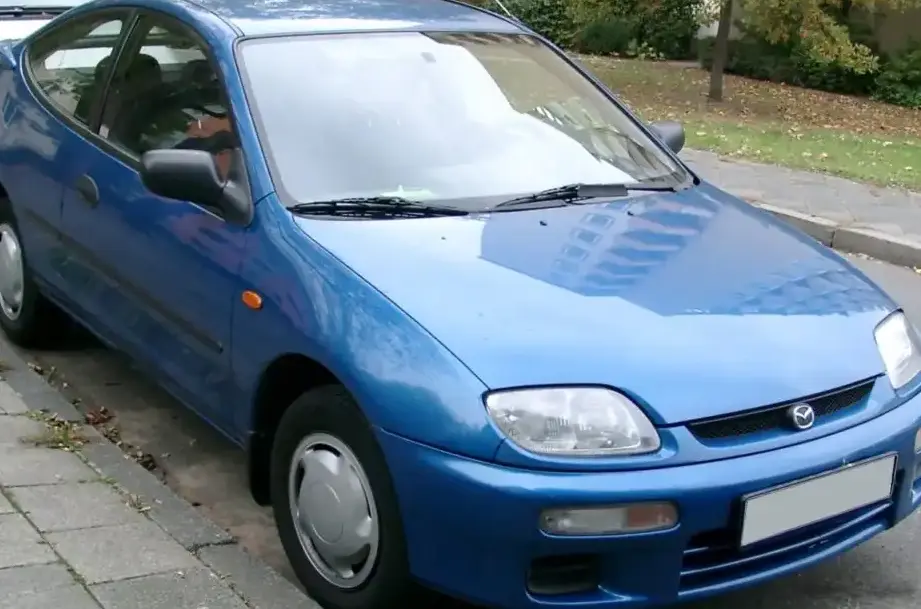
The Mazda 323 III Hatchback, internally designated as the BF series, was produced between 1987 and 1989. The 1.7 D variant, powered by a 57 horsepower diesel engine, represented an economy-focused offering within the 323 range. This model aimed to provide affordable and fuel-efficient transportation, particularly in European markets where diesel engines were gaining popularity. It served as the entry-level diesel option, positioned below the more powerful 2.0-liter diesel available in some regions. The BF series 323 was a significant step forward for Mazda, offering improved styling, handling, and interior space compared to its predecessor.
Technical Specifications
| Brand | Mazda |
| Model | 323 |
| Generation | 323 III Hatchback (BF) |
| Type (Engine) | 1.7 D (57 Hp) |
| Start of production | 1987 |
| End of production | 1989 |
| Powertrain Architecture | Internal Combustion engine |
| Body type | Hatchback |
| Fuel Type | Diesel |
| Power | 57 Hp |
| Engine aspiration | Naturally aspirated engine |
Powertrain & Engine Architecture
The 1.7 D variant of the Mazda 323 III Hatchback utilized a naturally aspirated, inline-four cylinder diesel engine. While specific engine codes varied by market, the engine was a relatively simple, indirect injection diesel. This meant fuel was injected into a pre-chamber before entering the main combustion chamber, promoting more complete combustion and reducing noise compared to direct injection systems of the time. The engine displaced 1686cc (1.7 liters) and produced 57 horsepower at approximately 4,200 rpm, with peak torque of around 88 lb-ft (120 Nm) available from a low 2,200 rpm. This torque characteristic was a key selling point for diesel engines, providing good pulling power at lower engine speeds. The engine featured a cast iron block and an aluminum cylinder head. The fuel injection system was a mechanical, Bosch-supplied unit, known for its durability but relatively limited refinement. The transmission was a five-speed manual, as an automatic transmission was not offered with this engine configuration. The engine’s design prioritized fuel economy and reliability over outright performance.
Driving Characteristics
The 1.7 D-powered 323 III Hatchback offered modest performance. Acceleration was slow, with a 0-60 mph time estimated to be around 15-17 seconds. However, the engine’s torque delivery made it reasonably capable for everyday driving, particularly in urban environments and on winding roads. The five-speed manual transmission allowed drivers to keep the engine in its optimal power band. The gear ratios were relatively long, further emphasizing fuel efficiency. Compared to the gasoline-powered 323 variants, the 1.7 D felt significantly slower, but it offered substantially better fuel economy. The handling was typical of front-wheel-drive hatchbacks of the era – safe and predictable, but not particularly sporty. The suspension was tuned for comfort, absorbing bumps reasonably well, but body roll was noticeable during cornering. The steering was light and easy to use, making it well-suited for city driving.
Equipment & Trim Levels
The 1.7 D trim level of the Mazda 323 III Hatchback was generally considered the base model. Standard equipment typically included cloth upholstery, a basic instrument cluster, and manual windows and door locks. Power steering was often an optional extra, as was a radio. The interior was functional and durable, but lacked the refinement of higher-spec models. The dashboard layout was straightforward, with clearly labeled controls. Optional extras included a sunroof, upgraded stereo systems, and alloy wheels. The overall focus was on providing a practical and affordable vehicle, rather than luxury or advanced features. The exterior styling was relatively simple, with black plastic trim and steel wheels being common features on the 1.7 D.
Chassis & Braking
The Mazda 323 III Hatchback featured a front-wheel-drive layout with an independent MacPherson strut suspension at the front and a semi-independent torsion beam suspension at the rear. The front suspension provided good ride quality and handling, while the rear suspension was more cost-effective and space-efficient. The braking system consisted of disc brakes at the front and drum brakes at the rear. The brakes were adequate for the vehicle’s weight and performance, but lacked the stopping power of more modern systems. The steering was a rack-and-pinion system, providing precise and responsive steering feel. The chassis was relatively lightweight, contributing to the vehicle’s fuel efficiency. Stabilizer bars were typically fitted to the front suspension, helping to reduce body roll during cornering.
Market Reception & Comparison
The 1.7 D variant of the Mazda 323 III Hatchback was well-received in European markets, where diesel engines were becoming increasingly popular due to their fuel efficiency and lower running costs. Critics praised the engine’s torque delivery and fuel economy, but noted its lack of outright performance. Compared to the gasoline-powered 323 variants, the 1.7 D offered significantly better fuel economy – typically around 45-55 mpg – but at the expense of acceleration and refinement. It was often compared to other small diesel hatchbacks of the era, such as the Volkswagen Golf Diesel and the Peugeot 205 Diesel. The Mazda offered a competitive combination of fuel economy, reliability, and affordability. However, some critics found the engine to be noisy and unrefined compared to some of its rivals.
Legacy
The 1.7 D engine in the Mazda 323 III Hatchback proved to be a durable and reliable unit, capable of covering high mileages with proper maintenance. While not known for its performance, it provided affordable and economical transportation for many years. Today, these vehicles are relatively rare, and well-maintained examples are sought after by enthusiasts and collectors. The 1.7 D powertrain is generally considered to be relatively simple to maintain, with parts readily available. However, age-related issues, such as corrosion and wear and tear on rubber components, are common. The 323 III Hatchback, in general, is remembered as a solid and dependable small car that offered good value for money. The 1.7 D variant, while the least powerful in the range, remains a testament to Mazda’s commitment to fuel efficiency and practicality.