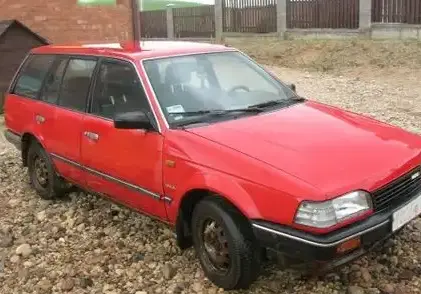
The Mazda 323 III Station Wagon (BF) 1.5, produced between 1986 and 1989, represented Mazda’s entry into the compact estate car market. Part of the broader BF series 323 range, this variant offered a practical and affordable option for families and individuals needing versatile cargo space. Positioned as the base engine and transmission configuration within the wagon lineup, it catered to buyers prioritizing economy and usability over outright performance. The BF series itself was a significant step forward for Mazda, offering improved styling, comfort, and reliability compared to its predecessors. This generation of 323 aimed to compete with established European and Japanese rivals in the increasingly competitive compact segment.
Technical Specifications
| Brand | Mazda |
| Model | 323 |
| Generation | 323 III Station Wagon (BF) |
| Type (Engine) | 1.5 (75 Hp) |
| Start of production | 1986 |
| End of production | 1989 |
| Powertrain Architecture | Internal Combustion engine |
| Body type | Station wagon (estate) |
| Fuel Type | Petrol (Gasoline) |
| Power | 75 Hp |
| Engine aspiration | Naturally aspirated engine |
Powertrain & Engine Architecture
The 323 III Station Wagon 1.5 utilized Mazda’s B5 engine, a 1.5-liter inline-four cylinder gasoline engine. This engine, bearing the code B5-ME (depending on the specific market), was a relatively simple design, featuring a single overhead camshaft (SOHC) and two valves per cylinder. Fuel delivery was managed by a carburetor, a common feature for vehicles of this era, prioritizing simplicity and cost-effectiveness over the more advanced fuel injection systems found in higher-spec models. The B5 engine produced 75 horsepower at approximately 6000 rpm and 98 lb-ft of torque at 3500 rpm. The engine’s design emphasized durability and ease of maintenance.
The transmission paired with the 1.5-liter engine was typically a four-speed automatic gearbox. This automatic transmission was chosen to provide ease of use, particularly appealing to buyers who preferred a less engaging driving experience. While not known for its sporty performance, the transmission offered smooth shifts and adequate responsiveness for everyday driving. The gear ratios were optimized for fuel efficiency and comfortable cruising, rather than rapid acceleration. Manual transmission options were available on other 323 variants, but the automatic was the standard offering for this base-level wagon.
Driving Characteristics
The 1.5-liter engine and four-speed automatic combination in the 323 III Station Wagon delivered modest performance. Acceleration was adequate for merging onto highways and navigating city streets, but it wasn’t particularly brisk. The 0-60 mph time was estimated to be around 13-15 seconds. The automatic transmission, while convenient, did contribute to some power loss compared to the available five-speed manual. The engine felt most comfortable in the mid-range, providing sufficient power for typical driving situations.
Handling was generally considered safe and predictable, but not particularly sporty. The suspension, consisting of MacPherson struts in the front and a torsion beam axle in the rear, provided a comfortable ride, absorbing bumps and imperfections in the road reasonably well. Steering was light and easy, making it maneuverable in urban environments. Compared to the higher-powered 1.6-liter or turbocharged variants, the 1.5-liter wagon exhibited noticeable differences in acceleration and overall responsiveness. The manual transmission versions of the 323 offered a more engaging driving experience and slightly improved fuel economy.
Equipment & Trim Levels
The 323 III Station Wagon 1.5 was typically offered with a relatively basic level of equipment, reflecting its position as the entry-level trim. Standard features generally included cloth upholstery, a basic AM/FM radio, and manual windows and door locks. The dashboard was functional and straightforward, with clearly labeled controls.
Optional extras, depending on the market, could include a cassette player, upgraded interior trim, and power windows. Air conditioning was often an optional extra, adding to the vehicle’s comfort but also increasing its price. The interior space was a key selling point, offering ample room for passengers and cargo. The rear seats could be folded down to create a larger, more versatile cargo area. The overall interior design prioritized practicality and durability over luxury.
Chassis & Braking
The 323 III Station Wagon featured a front-engine, front-wheel-drive layout. The chassis was a monocoque construction, providing a good balance of strength and weight. The front suspension utilized MacPherson struts, while the rear suspension employed a torsion beam axle. This setup provided a comfortable ride and predictable handling.
Braking was typically accomplished with disc brakes in the front and drum brakes in the rear. This configuration was common for vehicles in this price range during the 1980s. Power steering was not always standard, and many models featured manual steering. The braking system was adequate for everyday driving, but it lacked the stopping power of more advanced systems found in higher-performance vehicles. Stabilizer bars were included to reduce body roll during cornering, improving handling stability.
Market Reception & Comparison
The Mazda 323 III Station Wagon 1.5 was generally well-received as a practical and affordable family car. Critics praised its spacious interior, comfortable ride, and reasonable fuel economy. However, the 1.5-liter engine was often criticized for its lack of power, particularly when paired with the automatic transmission.
Compared to other trims in the 323 lineup, such as the 1.6-liter or turbocharged models, the 1.5-liter wagon offered a more economical option, but at the expense of performance. The 1.6-liter engine provided a noticeable improvement in power and responsiveness, while the turbocharged variants offered significantly higher performance levels. In terms of fuel economy, the 1.5-liter wagon typically achieved around 28-32 mpg, depending on driving conditions. Reliability was generally good, with the B5 engine proving to be a durable and long-lasting unit.
Legacy
The Mazda 323 III Station Wagon 1.5, while not a particularly exciting vehicle, played an important role in establishing Mazda as a reputable manufacturer of compact cars. The B5 engine proved to be a reliable and durable powertrain, and many examples are still on the road today.
In the used car market, these wagons are often sought after by enthusiasts looking for a classic and affordable vehicle. Maintenance is relatively straightforward, and parts are generally readily available. However, potential buyers should be aware of the age-related issues common to vehicles of this era, such as rust and wear and tear on rubber components. The 323 III Station Wagon 1.5 remains a testament to Mazda’s commitment to building practical, reliable, and affordable vehicles.