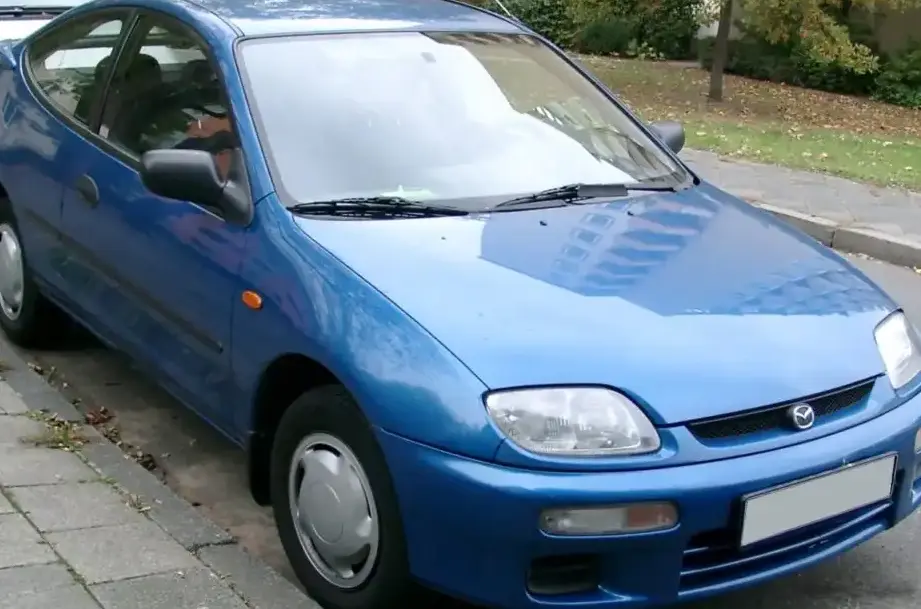
The Mazda 323 III Station Wagon (BF) 1.7 D, produced between 1986 and 1987, represents a practical and economical offering within the third generation of Mazda’s popular compact line. This variant, characterized by its modest 54 horsepower diesel engine and station wagon body style, was primarily aimed at buyers seeking fuel efficiency and cargo capacity. It occupied the entry-level position within the 323 wagon range, offering a more affordable alternative to the gasoline-powered models. The BF series 323, launched in 1985, was a significant step forward for Mazda, incorporating improved styling, a more spacious interior, and enhanced mechanical refinement compared to its predecessors. The station wagon version, in particular, catered to the growing demand for versatile family vehicles in Europe and other markets where Mazda was establishing a stronger presence.
Technical Specifications
| Brand | Mazda |
| Model | 323 |
| Generation | 323 III Station Wagon (BF) |
| Type (Engine) | 1.7 D (54 Hp) |
| Start of production | 1986 |
| End of production | 1987 |
| Powertrain Architecture | Internal Combustion engine |
| Body type | Station wagon (estate) |
| Fuel Type | Diesel |
| Power | 54 Hp |
| Engine aspiration | Naturally aspirated engine |
Powertrain & Engine Architecture
The 1.7 D variant of the Mazda 323 III Station Wagon utilized a naturally aspirated diesel engine, displacing 1686cc. This engine, while not known for its high performance, was valued for its fuel economy and durability. The engine employed indirect injection, a common technology for diesel engines of the era, utilizing a pre-chamber combustion system. This system involved injecting fuel into a small pre-chamber, where it partially combusted, before igniting the main combustion chamber. This design contributed to smoother combustion and reduced engine noise compared to direct injection systems. The engine featured a cast iron block and an aluminum cylinder head, a typical construction for diesel engines of the time. Specific details regarding the engine code are often difficult to pinpoint due to regional variations and limited documentation, but it falls within the family of Mazda diesel engines used during the mid-1980s. The transmission paired with this engine was typically a four- or five-speed manual gearbox, designed to maximize fuel efficiency and provide adequate, though not sporty, performance. An automatic transmission was not generally offered with this specific engine configuration.
Driving Characteristics
The driving experience in the 1.7 D Mazda 323 III Station Wagon was characterized by its practicality rather than excitement. With only 54 horsepower on tap, acceleration was modest, and overtaking required careful planning. The engine produced a relatively low amount of torque, peaking at around 88 lb-ft, which meant that the vehicle needed to be driven in its optimal power band to achieve reasonable performance. The gear ratios were chosen to prioritize fuel economy, resulting in a relatively high final drive ratio. This made the vehicle feel somewhat sluggish at higher speeds, but it contributed to excellent fuel consumption. Compared to the gasoline-powered 323 variants, the diesel model offered significantly better fuel economy, but at the expense of performance. The suspension, while comfortable for everyday driving, was not particularly sporty, focusing on providing a smooth and stable ride, especially when carrying a load. The steering was light and easy to use, making it well-suited for urban driving.
Equipment & Trim Levels
The 1.7 D station wagon typically represented the base trim level within the 323 wagon range. Standard equipment generally included cloth upholstery, basic instrumentation (speedometer, fuel gauge, temperature gauge), and a simple AM/FM radio. Power steering was not always standard, and air conditioning was typically an optional extra. The interior was functional and durable, designed to withstand the rigors of family use. Exterior features included steel wheels with hubcaps, black plastic bumpers, and relatively simple trim. Optional extras could include upgraded audio systems, tinted glass, and a sunroof. The overall focus was on providing a practical and affordable vehicle, rather than luxury or high-end features.
Chassis & Braking
The Mazda 323 III Station Wagon utilized a front-engine, rear-wheel-drive layout. The suspension consisted of independent front suspension with MacPherson struts and a live axle with leaf springs at the rear. This configuration provided a good balance between ride comfort and load-carrying capacity. The braking system typically featured disc brakes at the front and drum brakes at the rear. The brakes were adequate for the vehicle’s weight and performance, but they lacked the stopping power of more modern braking systems. Stabilizer bars were often omitted on the base trim level, further emphasizing the vehicle’s focus on practicality and affordability. The chassis was relatively lightweight, contributing to the vehicle’s fuel efficiency.
Market Reception & Comparison
The 1.7 D Mazda 323 III Station Wagon was generally well-received in markets where diesel-powered vehicles were popular, particularly in Europe. Critics praised its fuel economy and practicality, but noted its lack of performance. Compared to the gasoline-powered 323 variants, the diesel model offered significantly better fuel economy, but it was considerably slower. It also differed from the more powerful gasoline engines in terms of refinement and noise levels. The diesel engine was generally considered to be reliable, but it required regular maintenance to ensure optimal performance. Compared to competitors like the Ford Escort Estate or the Opel Kadett Estate, the Mazda 323 offered a slightly more modern design and a reputation for reliability.
Legacy
The Mazda 323 III Station Wagon 1.7 D, while not a performance icon, holds a place in automotive history as a practical and economical family vehicle. The diesel engine, while relatively simple by modern standards, proved to be durable and long-lasting. Today, these vehicles are relatively rare, and well-maintained examples are sought after by enthusiasts and collectors. The 1.7 D powertrain is known for its simplicity and ease of maintenance, making it a relatively affordable classic car to own and operate. However, finding replacement parts can be challenging, and the vehicle’s age means that regular maintenance is essential to keep it running reliably. The 323 III Station Wagon represents a significant chapter in Mazda’s history, demonstrating the company’s commitment to producing versatile and affordable vehicles for a wide range of customers.