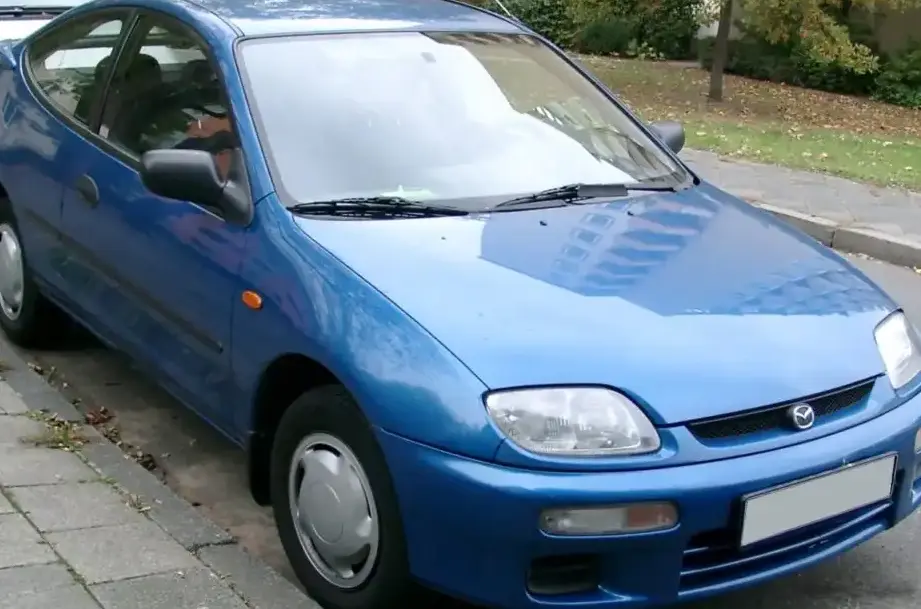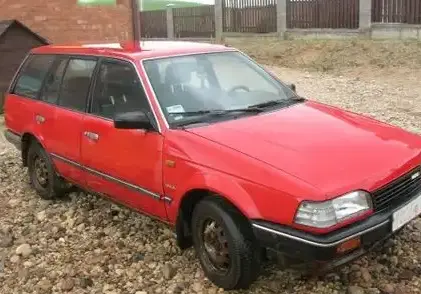
The Mazda 323 III Station Wagon (BF) 1.7 D, produced between 1989 and 1993, represented Mazda’s entry into the compact estate car market, particularly in Europe and Australia. This variant, powered by a naturally aspirated 1.7-liter diesel engine producing 56 horsepower, served as the base model for the BF series wagon, prioritizing fuel economy and practicality over outright performance. It occupied the lower end of the 323 wagon lineup, appealing to buyers seeking an affordable and economical family vehicle. The BF series 323, as a whole, was Mazda’s attempt to modernize its compact offerings and compete with established rivals like the Ford Escort and Opel/Vauxhall Astra.
Technical Specifications
| Brand | Mazda |
| Model | 323 |
| Generation | 323 III Station Wagon (BF) |
| Type (Engine) | 1.7 D (56 Hp) |
| Start of production | 1989 |
| End of production | 1993 |
| Powertrain Architecture | Internal Combustion engine |
| Body type | Station wagon (estate) |
| Fuel Type | Diesel |
| Power | 56 Hp |
| Engine aspiration | Naturally aspirated engine |
Powertrain & Engine Architecture
The heart of the 323 III 1.7 D wagon was the Mazda RF engine, a 1.7-liter inline-four diesel. This engine, while not known for its power, was celebrated for its durability and fuel efficiency. It utilized indirect injection, a common feature for diesel engines of the era, employing a pre-chamber combustion system. This system involved a small auxiliary combustion chamber where fuel was initially injected and ignited, then transferred to the main cylinder for complete combustion. This design helped to improve cold-starting performance and reduce engine noise, although it also limited peak power output. The engine featured a single overhead camshaft (SOHC) operating two valves per cylinder. The 56 horsepower output was achieved at 4,200 rpm, with a modest torque figure of approximately 88 lb-ft (120 Nm) available at 2,600 rpm. The transmission paired with this engine was typically a five-speed manual, although a three-speed automatic transmission was also available, albeit less common. The automatic transmission, while offering convenience, further reduced acceleration performance and increased fuel consumption.
Driving Characteristics
The driving experience in the 323 III 1.7 D wagon was characterized by its practicality and economy rather than excitement. Acceleration was leisurely, with a 0-60 mph time estimated to be around 16-18 seconds. The engine’s torque curve was relatively flat, providing adequate pulling power for everyday driving, but struggling when fully loaded or tackling steep inclines. The five-speed manual transmission allowed drivers to keep the engine in its optimal power band, while the automatic, with its wider gear ratios, prioritized smooth operation over responsiveness. Steering was light and precise, making the wagon easy to maneuver in urban environments. The suspension, tuned for comfort, provided a reasonably compliant ride, although it could feel somewhat wallowy when pushed hard through corners. Compared to the gasoline-powered 323 variants, the 1.7 D offered significantly less power but substantially better fuel economy, making it a popular choice for high-mileage drivers.
Equipment & Trim Levels
The 1.7 D wagon typically represented the base trim level in the 323 III wagon range. Standard equipment generally included cloth upholstery, a basic stereo system, and manual windows and door locks. Power steering was often included, but air conditioning and central locking were usually optional extras. Interior plastics were durable but utilitarian, reflecting the car’s focus on affordability. The dashboard layout was functional and straightforward, with clearly labeled controls. Higher trim levels, such as the 1.6 GLX, offered features like electric windows, upgraded upholstery, and alloy wheels. The 1.7 D was often seen as a blank canvas for buyers who prioritized functionality and were willing to forego luxury features. Optional extras could include a sunroof, upgraded sound system, and metallic paint.
Chassis & Braking
The 323 III wagon utilized a front-engine, front-wheel-drive layout. The suspension consisted of MacPherson struts at the front and a twist-beam axle at the rear. This setup provided a good balance between ride comfort and handling. The braking system typically featured disc brakes at the front and drum brakes at the rear. While adequate for normal driving conditions, the drum brakes at the rear could lack the stopping power of disc brakes, particularly when the vehicle was heavily loaded. Stabilizer bars were fitted to both the front and rear axles to reduce body roll during cornering. The chassis was relatively lightweight, contributing to the wagon’s fuel efficiency. Tire sizes were typically 175/70 R14 or 185/60 R14, depending on the trim level.
Market Reception & Comparison
The Mazda 323 III 1.7 D wagon received generally positive reviews for its fuel economy, practicality, and reliability. Critics praised its spacious interior and large cargo area, making it a suitable vehicle for families. However, the engine’s lack of power was a common criticism, particularly when compared to competitors offering more powerful diesel or gasoline engines. Compared to the 1.6-liter gasoline variants, the 1.7 D offered significantly lower running costs but a noticeably slower driving experience. The 1.6 GLX, with its more powerful engine and additional features, appealed to buyers willing to spend a bit more. In terms of reliability, the 1.7 D engine proved to be exceptionally durable, with many examples exceeding 200,000 miles with proper maintenance. Fuel economy was a key selling point, with owners reporting figures in the range of 45-55 mpg.
Legacy
The Mazda 323 III 1.7 D wagon, while not a performance icon, holds a respected place in the history of affordable family cars. Its robust diesel engine and practical design ensured its longevity, and many examples remain on the road today. In the used car market, these wagons are valued for their simplicity, reliability, and low running costs. They appeal to buyers seeking a classic, economical vehicle for everyday use. While parts availability may be becoming more challenging, the 1.7 D engine is relatively straightforward to maintain, and a dedicated community of enthusiasts continues to support the preservation of these vehicles. The BF series 323 wagon, particularly the 1.7 D variant, represents a practical and dependable choice for those seeking a no-frills, fuel-efficient estate car from the late 1980s and early 1990s.