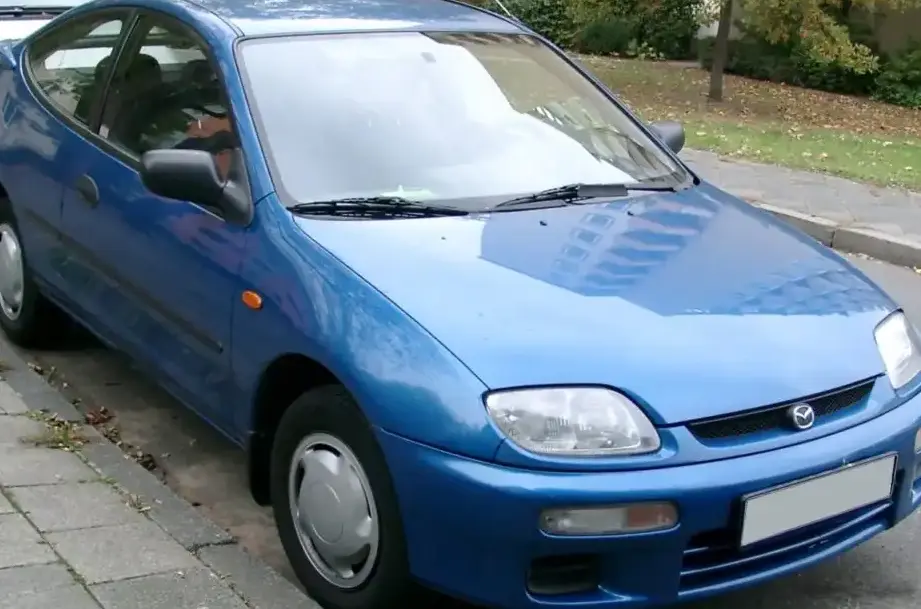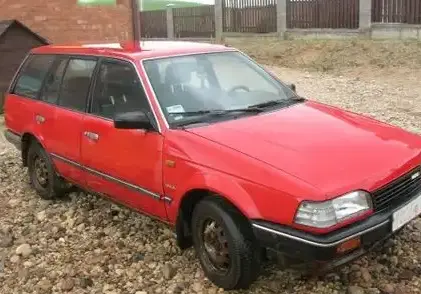
The Mazda 323 III Station Wagon (BF) 1.7 D, produced between 1986 and 1989, represented Mazda’s entry into the compact estate car market, primarily aimed at European and Japanese buyers seeking a practical and economical vehicle. This variant, powered by a naturally aspirated 1.7-liter diesel engine producing 57 horsepower, occupied the base trim level within the BF series 323 wagon lineup. It was designed to appeal to customers prioritizing fuel efficiency and low running costs over outright performance, serving as a workhorse for families and small businesses. The BF series 323, and its wagon derivative, were significant for Mazda as they represented a move towards more modern styling and engineering, competing with established rivals like the Ford Escort Estate and Opel Kadett Estate.
Technical Specifications
| Brand | Mazda |
| Model | 323 |
| Generation | 323 III Station Wagon (BF) |
| Type (Engine) | 1.7 D (57 Hp) |
| Start of production | 1986 |
| End of production | 1989 |
| Powertrain Architecture | Internal Combustion engine |
| Body type | Station wagon (estate) |
| Fuel Type | Diesel |
| Power | 57 Hp |
| Engine aspiration | Naturally aspirated engine |
Powertrain & Engine Architecture
The heart of the 323 III Station Wagon 1.7 D was the Mazda RF diesel engine. This 1.7-liter, four-cylinder engine (engine code often found as RF) was a naturally aspirated, indirect injection diesel. Indirect injection, common for diesels of this era, involved injecting fuel into a pre-chamber where it partially combusted before entering the main cylinder, resulting in quieter operation but generally lower power output compared to direct injection systems. The engine featured a cast iron block and an aluminum cylinder head, a common construction for durability and weight reduction. The valvetrain employed a single overhead camshaft (SOHC) operating two valves per cylinder.
The 57 horsepower output was achieved at a relatively low engine speed, prioritizing torque for everyday driving. While specific transmission details varied by market, the 1.7 D was typically paired with a four-speed manual transmission, though a three-speed automatic transmission was also available, albeit less common. The automatic transmission was designed for smooth, if not particularly quick, shifts, further emphasizing the vehicle’s focus on comfort and ease of use. The engine’s fuel system utilized a mechanical fuel injection pump, a standard feature for diesel engines of the time, and lacked the electronic control found in later diesel designs.
Driving Characteristics
The driving experience in the 323 III Station Wagon 1.7 D was characterized by its modest performance. With only 57 horsepower on tap, acceleration was slow, particularly when fully loaded. The engine produced a usable amount of torque at low RPMs, making it adequate for city driving and cruising on relatively flat roads. However, overtaking maneuvers required careful planning, and hill climbs demanded downshifting to maintain speed. The four-speed manual transmission offered a reasonable spread of gears, allowing the driver to keep the engine within its optimal operating range. The optional three-speed automatic further dulled acceleration but provided a more relaxed driving experience.
The suspension, a conventional setup with MacPherson struts at the front and a twist-beam axle at the rear, provided a comfortable ride, absorbing bumps and imperfections in the road surface reasonably well. Steering was light and easy, making the car maneuverable in urban environments. However, the car wasn’t designed for spirited driving; body roll was noticeable in corners, and the steering lacked feedback. Compared to the gasoline-powered 323 variants, the 1.7 D felt significantly slower, but it offered substantially better fuel economy.
Equipment & Trim Levels
The 1.7 D trim level of the 323 III Station Wagon was considered the base model. Standard equipment typically included cloth upholstery, basic instrumentation (speedometer, fuel gauge, temperature gauge), and a simple two-speaker audio system. Power steering was not standard and often an optional extra. The interior was functional and durable, prioritizing practicality over luxury. Dashboard design was straightforward, with clearly labeled controls.
Optional extras included a sunroof, upgraded audio systems, and central locking. Higher trim levels, such as those equipped with the 1.6-liter gasoline engine, offered more luxurious features like electric windows, upgraded upholstery, and alloy wheels. The 1.7 D was deliberately positioned as the most affordable option, appealing to budget-conscious buyers who prioritized functionality and reliability.
Chassis & Braking
The 323 III Station Wagon featured a unibody construction, providing a good balance of strength and weight. The front suspension utilized MacPherson struts, coil springs, and an anti-roll bar, while the rear suspension employed a twist-beam axle with coil springs. This setup provided a comfortable ride and predictable handling.
Braking systems varied depending on the market and specific configuration. The base 1.7 D models typically featured drum brakes on the rear wheels and disc brakes on the front. Higher trim levels often included disc brakes all around. Power assistance was not standard on all models. The braking performance was adequate for the car’s weight and power output, but it wasn’t particularly strong. Stabilizer bar thickness was relatively modest, contributing to the car’s comfortable but not sporty handling characteristics.
Market Reception & Comparison
The Mazda 323 III Station Wagon 1.7 D received mixed reviews. Critics praised its fuel economy and practicality, but its lack of performance was a common complaint. It was generally seen as a sensible and reliable vehicle, ideal for those who needed a spacious and economical estate car. Compared to the gasoline-powered 323 variants, the 1.7 D offered significantly better fuel economy but considerably less performance. The 1.6-liter gasoline engine provided a more engaging driving experience, while the more powerful 2.0-liter engine offered even greater performance. However, these higher-output engines came at a higher price and with increased fuel consumption. Against competitors like the Ford Escort Estate and Opel Kadett Estate, the 323 III Station Wagon 1.7 D offered a competitive package in terms of price, fuel economy, and practicality.
Legacy
The Mazda 323 III Station Wagon 1.7 D, while not a performance icon, has proven to be a surprisingly durable and reliable vehicle. The RF diesel engine, though simple in design, is known for its longevity when properly maintained. Today, these wagons are relatively rare, but those that remain are often sought after by enthusiasts looking for a classic, economical, and practical vehicle. Parts availability can be a challenge, but many components are still available through specialist suppliers. The 1.7 D powertrain, while slow by modern standards, continues to offer impressive fuel economy, making it a viable option for those seeking a classic car with low running costs. Its enduring appeal lies in its simplicity, reliability, and practicality – qualities that continue to resonate with car enthusiasts today.