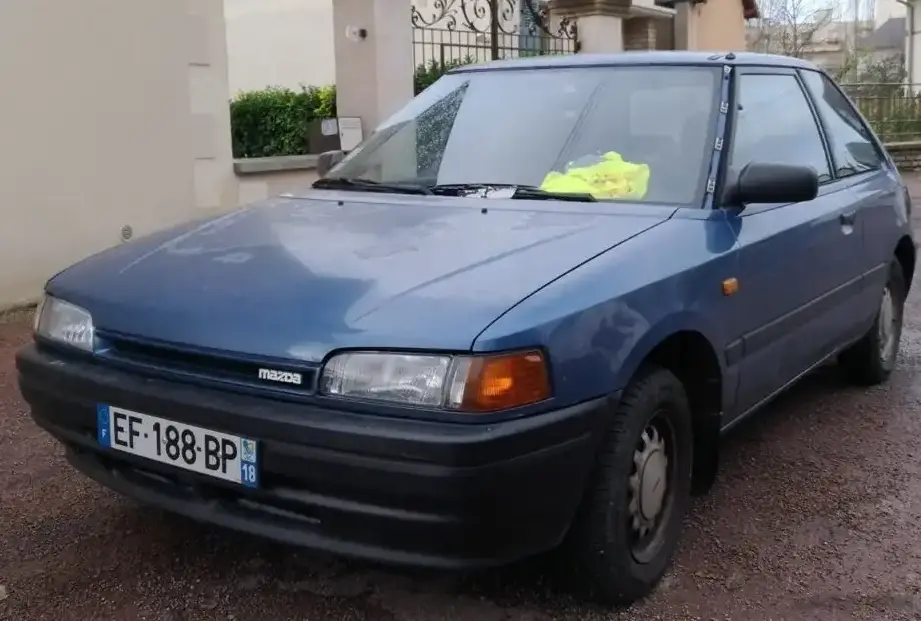
The Mazda 323 S IV (BG) 1.3, produced between 1989 and 1991, represented the entry point into Mazda’s compact hatchback lineup during that period. Part of the BG generation of the 323, this variant was primarily aimed at budget-conscious buyers seeking economical transportation. It served as a practical and affordable option within a broader range that included more powerful and feature-rich trims. The BG series 323 was a significant model for Mazda, representing a move towards more contemporary styling and improved build quality compared to its predecessors. This 1.3-liter version, while not known for its performance, played a crucial role in establishing the 323 as a popular choice in the European and Asian markets, where fuel efficiency and affordability were key considerations.
Technical Specifications
| Brand | Mazda |
| Model | 323 |
| Generation | 323 S IV (BG) |
| Type (Engine) | 1.3 (67 Hp) |
| Start of production | 1989 |
| End of production | 1991 |
| Powertrain Architecture | Internal Combustion Engine |
| Body type | Hatchback |
| Fuel Type | Petrol (Gasoline) |
| Power | 67 Hp |
| Engine aspiration | Naturally Aspirated |
Powertrain & Engine Architecture
The heart of the 323 S IV 1.3 was the Mazda B6 engine, a 1.3-liter, inline-four cylinder gasoline engine. This engine, typically producing around 67 horsepower, was known for its simplicity and reliability. It featured a single overhead camshaft (SOHC) valvetrain operating two valves per cylinder. Fuel delivery was managed by a carburetor in many markets, though some later versions incorporated multi-point fuel injection, enhancing efficiency and reducing emissions. The B6 engine wasn’t a powerhouse; its design prioritized fuel economy and durability over outright performance. The engine block was cast iron, contributing to its robustness, while the cylinder head was aluminum. The transmission paired with this engine was typically a four-speed automatic, though a five-speed manual was also available. The automatic transmission was designed for smooth, comfortable shifts, prioritizing ease of use over sporty responsiveness. It was a relatively conventional three-speed unit with torque converter lockup for improved highway fuel economy.
Driving Characteristics
The driving experience in the 323 S IV 1.3 with the automatic transmission was characterized by its relaxed and unhurried nature. Acceleration was modest, with 0 to 60 mph times likely exceeding 14 seconds. The four-speed automatic transmission, while providing convenience, did contribute to a noticeable lack of urgency. Gear ratios were optimized for fuel efficiency rather than spirited driving. The engine felt strained when pushed hard, and overtaking maneuvers required careful planning. However, in typical urban driving conditions, the 1.3-liter engine provided sufficient power for everyday tasks. The automatic transmission’s shift points were calibrated to keep the engine within its optimal operating range, maximizing fuel economy. Compared to the more powerful 1.6-liter and 1.8-liter versions of the 323, the 1.3 felt significantly slower and less refined. The manual transmission offered a more engaging driving experience, allowing drivers to better utilize the engine’s limited power band.
Equipment & Trim Levels
The 323 S IV 1.3 typically represented the base trim level. Standard equipment was relatively sparse, focusing on essential features. This generally included cloth upholstery, basic instrumentation (speedometer, fuel gauge, temperature gauge), and a simple two-speaker audio system. Power steering was often optional, and air conditioning was typically reserved for higher trim levels. The interior design was functional and straightforward, with durable plastics and a focus on practicality. Optional extras included upgraded audio systems, central locking, and electric windows. The exterior styling was also basic, with steel wheels, black plastic trim, and limited chrome accents. The overall impression was one of affordability and practicality, rather than luxury or sophistication.
Chassis & Braking
The 323 S IV 1.3 utilized a relatively simple chassis design. It featured independent front suspension with MacPherson struts and a torsion beam rear suspension. This setup provided a reasonable balance between ride comfort and handling. The torsion beam rear suspension was a cost-effective solution that minimized complexity. Braking was typically accomplished with disc brakes on the front wheels and drum brakes on the rear. This configuration was common for vehicles in this price range during the late 1980s and early 1990s. The braking system was adequate for normal driving conditions, but lacked the stopping power of more advanced systems with disc brakes all around. Stabilizer bars were often omitted from the base 1.3 trim, further contributing to a less sporty handling experience. The steering was typically unassisted or offered with optional power assistance, providing a direct but somewhat heavy feel.
Market Reception & Comparison
The Mazda 323 S IV 1.3 was generally well-received as an affordable and reliable compact hatchback. Critics praised its fuel efficiency and practicality, but noted its lack of performance. Compared to its siblings, such as the 1.6-liter and 1.8-liter versions, the 1.3 offered significantly less power and refinement. However, it also came with a lower price tag, making it an attractive option for budget-conscious buyers. Fuel economy was a key selling point, with the 1.3-liter engine achieving respectable mileage figures for its time. Reliability was also a strong suit, with the B6 engine proving to be durable and long-lasting. In terms of competition, the 323 S IV 1.3 faced rivals such as the Ford Escort, Opel/Vauxhall Astra, and Nissan Sunny. It generally offered a more engaging driving experience than the Sunny, but lacked the refinement of the Escort and Astra.
Legacy
The Mazda 323 S IV 1.3, while not a performance icon, has earned a reputation for reliability and affordability. The B6 engine, despite its modest power output, is known for its durability and relatively simple maintenance requirements. Today, these cars are relatively rare, but well-maintained examples can still be found. They are often sought after by enthusiasts looking for a classic, affordable, and reliable hatchback. Parts availability can be a challenge, but many components are still available through specialist suppliers. The 323 S IV 1.3 represents a snapshot of automotive engineering from the late 1980s and early 1990s, a time when practicality and affordability were often prioritized over performance and luxury. Its enduring appeal lies in its simplicity, reliability, and the nostalgic charm of a bygone era.