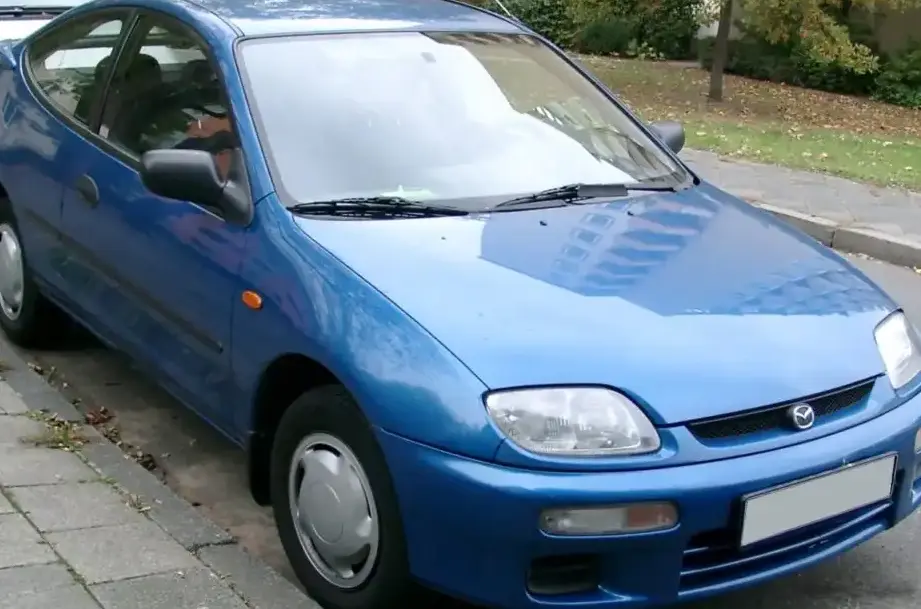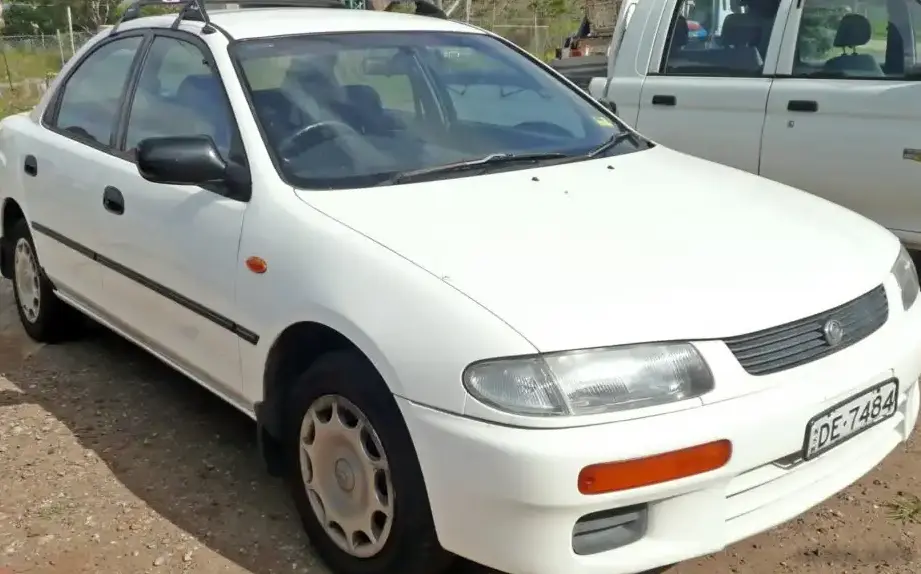
The Mazda 323 S V (BA) 1.3 i 16V, manufactured between 1994 and 1998, was an entry-level trim within the broader BA series of the Mazda 323. Positioned as a sensible and economical sedan, it played a crucial role for Mazda in European and Asian markets, where demand for compact, fuel-efficient vehicles was strong. This variant, equipped with a 1.3-liter engine and a five-speed manual transmission, aimed to deliver affordable transportation for families and individuals needing a dependable daily driver. It occupied the lower end of the 323 range, sitting below the more powerful 1.6 and 1.8-liter models, and appealed to buyers who prioritized fuel economy over high performance.
Technical Specifications
| Brand | Mazda |
| Model | 323 |
| Generation | 323 S V (BA) |
| Type (Engine) | 1.3 i 16V (73 Hp) |
| Start of production | 1994 |
| End of production | 1998 |
| Powertrain Architecture | Internal Combustion engine |
| Body type | Sedan |
| Seats | 5 |
| Doors | 4 |
| Fuel consumption (combined) | 7.3 l/100 km (32.2 US mpg, 38.7 UK mpg, 13.7 km/l) |
| Fuel Type | Petrol (Gasoline) |
| Acceleration 0 – 100 km/h | 13.4 sec |
| Acceleration 0 – 62 mph | 13.4 sec |
| Acceleration 0 – 60 mph | 12.7 sec |
| Maximum speed | 167 km/h (103.77 mph) |
| Weight-to-power ratio | 14.2 kg/Hp, 70.2 Hp/tonne |
| Weight-to-torque ratio | 9.6 kg/Nm, 103.8 Nm/tonne |
| Power | 73 Hp @ 5500 rpm |
| Power per litre | 55.1 Hp/l |
| Torque | 108 Nm @ 4000 rpm (79.66 lb.-ft. @ 4000 rpm) |
| Engine layout | Front, Transverse |
| Engine Model/Code | B32A |
| Engine displacement | 1324 cm3 (80.8 cu. in.) |
| Number of cylinders | 4 |
| Engine configuration | Inline |
| Cylinder Bore | 71 mm (2.8 in.) |
| Piston Stroke | 83.6 mm (3.29 in.) |
| Compression ratio | 9.4:1 |
| Number of valves per cylinder | 4 |
| Fuel injection system | Multi-port manifold injection |
| Engine aspiration | Naturally aspirated engine |
| Valvetrain | OHC |
| Engine oil capacity | 3.3 l (3.49 US qt | 2.9 UK qt) |
| Coolant | 6 l (6.34 US qt | 5.28 UK qt) |
| Kerb Weight | 1040 kg (2292.81 lbs.) |
| Max. weight | 1515 kg (3340 lbs.) |
| Max load | 475 kg (1047.2 lbs.) |
| Trunk (boot) space – minimum | 427 l (15.08 cu. ft.) |
| Fuel tank capacity | 55 l (14.53 US gal | 12.1 UK gal) |
| Length | 4340 mm (170.87 in.) |
| Width | 1710 mm (67.32 in.) |
| Height | 1420 mm (55.91 in.) |
| Wheelbase | 2605 mm (102.56 in.) |
| Front track | 1460 mm (57.48 in.) |
| Rear (Back) track | 1460 mm (57.48 in.) |
| Drivetrain Architecture | The Internal combustion engine (ICE) drives the front wheels of the vehicle. |
| Drive wheel | Front wheel drive |
| Number of gears and type of gearbox | 5 gears, manual transmission |
| Front suspension | Spring Strut |
| Rear suspension | Spring Strut |
| Front brakes | Ventilated discs |
| Rear brakes | Drum |
| Assisting systems | ABS (Anti-lock braking system) |
| Steering type | Steering rack and pinion |
| Power steering | Hydraulic Steering |
| Tires size | 175/70 R13 S |
| Wheel rims size | 13 |
Powertrain & Engine Architecture
The 323 S V 1.3 i 16V’s engine is the B32A, a 1.3-liter inline-four cylinder gasoline engine. This engine employed a single overhead camshaft (OHC) design with 16 valves – four valves per cylinder – to improve airflow and contribute to a reasonable power output for its size. The B32A utilized a multi-port fuel injection system, injecting fuel directly into the intake ports for enhanced combustion efficiency. The engine’s 9.4:1 compression ratio represented a balance between performance and compatibility with commonly available fuel grades. A five-speed manual transmission was standard, offering a gear ratio spread designed to maximize fuel economy and provide adequate acceleration. The transmission was a conventional design, prioritizing durability and ease of maintenance.
Driving Characteristics
The 1.3-liter engine, producing 73 horsepower, delivered modest performance. Acceleration from 0 to 60 mph took around 12.7 seconds, and the top speed was approximately 103.77 mph. While not particularly fast, the engine was responsive enough for typical daily driving. The five-speed manual transmission allowed drivers to keep the engine within its optimal power range, though frequent downshifting was often needed for overtaking or climbing hills. Compared to the 1.6 and 1.8-liter 323 models, this variant felt noticeably less powerful, but it offered a more engaging driving experience than the available automatic transmission options. The gear ratios were geared towards economy, which meant the engine could feel strained at higher speeds.
Equipment & Trim Levels
The 323 S V 1.3 i 16V generally came with a fairly basic equipment level, reflecting its position as an entry-level model. Standard features typically included power steering, central locking, and an AM/FM radio. Interior upholstery was usually cloth, and the dashboard had a functional, though somewhat simple, design. Optional extras included air conditioning, power windows, and upgraded audio systems. Trim levels varied slightly by market, but generally focused on adding convenience features rather than significantly altering the car’s performance.
Chassis & Braking
The 323 S V used a relatively simple suspension setup, featuring MacPherson strut front suspension and a torsion beam rear axle. This configuration provided a comfortable ride, though it wasn’t particularly sporty. The braking system consisted of ventilated discs on the front wheels and drum brakes on the rear. Anti-lock braking system (ABS) was available as an option, improving safety by preventing wheel lockup during hard braking. The relatively light weight of the 1.3-liter model – around 2293 lbs – helped to offset the less powerful engine and the basic braking system.
Market Reception & Comparison
The 323 S V 1.3 i 16V was generally well-received as a practical and affordable family car. Critics praised its fuel efficiency and reliability, but noted its lack of outright performance. Compared to the higher-spec 323 models, the 1.3-liter version offered significantly lower running costs but lacked the refinement and driving enjoyment of its more powerful counterparts. For example, the 1.6-liter version provided a noticeable performance boost without a substantial increase in fuel consumption. The 1.3L was often favored by first-time car buyers and those seeking a dependable and economical vehicle for commuting.
Legacy
The Mazda 323 S V 1.3 i 16V has proven to be a relatively durable and reliable vehicle. The B32A engine, while not overly complex, is known for its longevity with proper maintenance. Today, these cars are becoming increasingly rare, but well-maintained examples can still be found. They are often sought after by enthusiasts looking for a simple, affordable, and reliable classic car. Parts availability can be challenging, but many components are still available through aftermarket suppliers. The 323 S V 1.3 i 16V represents a significant example of Mazda’s commitment to producing practical and dependable vehicles during the 1990s.