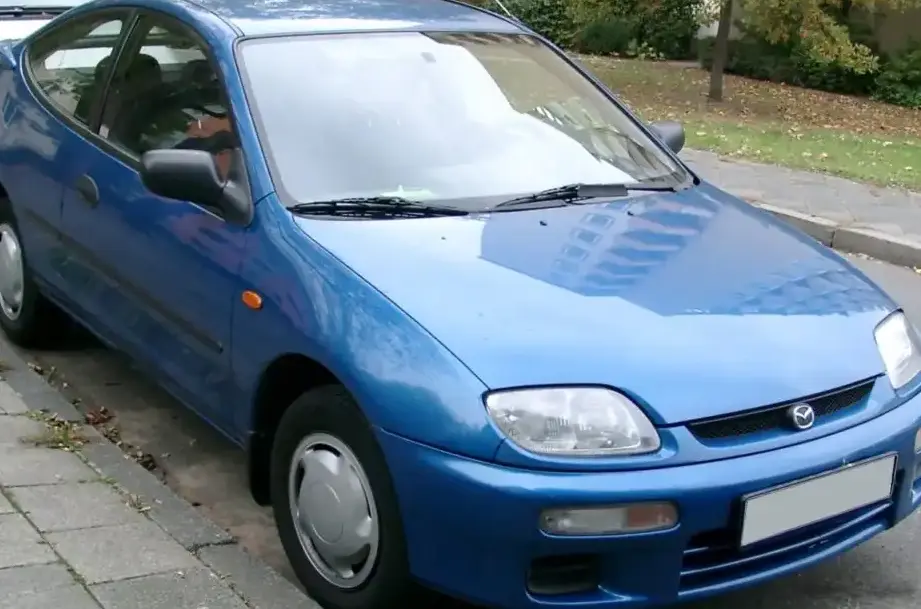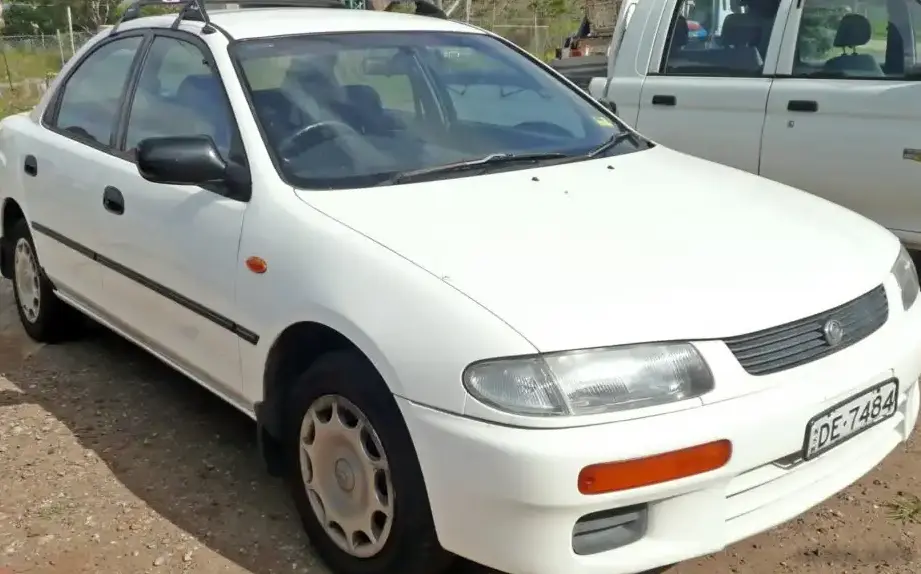
The Mazda 323 S V (BA) 1.5i 16V, produced between 1994 and 1998, represented a significant step forward for Mazda’s compact offering. Part of the BA series, this variant occupied a crucial position in the lineup, aiming to provide a balance of affordability, fuel efficiency, and reasonable performance. It was primarily marketed in Europe and other international markets, serving as a practical and reliable family sedan. The 323 S V (BA) was built on Mazda’s BG platform, a chassis known for its relatively lightweight construction and responsive handling. This specific 1.5-liter, 88 horsepower configuration was often considered an entry-level option, appealing to buyers prioritizing economy over outright speed.
Technical Specifications
| Brand | Mazda |
| Model | 323 |
| Generation | 323 S V (BA) |
| Type (Engine) | 1.5i 16V (88 Hp) |
| Start of production | 1994 |
| End of production | 1998 |
| Powertrain Architecture | Internal Combustion engine |
| Body type | Sedan |
| Seats | 5 |
| Doors | 4 |
| Fuel consumption (combined) | 7.2 l/100 km |
| Fuel consumption (US mpg) | 32.7 US mpg |
| Fuel consumption (UK mpg) | 39.2 UK mpg |
| Fuel consumption (km/l) | 13.9 km/l |
| Fuel Type | Petrol (Gasoline) |
| Acceleration 0 – 100 km/h | 12 sec |
| Acceleration 0 – 62 mph | 12 sec |
| Acceleration 0 – 60 mph | 11.4 sec |
| Maximum speed | 177 km/h (109.98 mph) |
| Weight-to-power ratio | 12.2 kg/Hp |
| Power | 88 Hp @ 5500 rpm |
| Power per litre | 59.1 Hp/l |
| Torque | 132 Nm @ 4000 rpm (97.36 lb.-ft. @ 4000 rpm) |
| Engine layout | Front, Transverse |
| Engine Model/Code | Z5-DE |
| Engine displacement | 1489 cm3 (90.86 cu. in.) |
| Number of cylinders | 4 |
| Engine configuration | Inline |
| Cylinder Bore | 75.3 mm (2.96 in.) |
| Piston Stroke | 83.6 mm (3.29 in.) |
| Compression ratio | 9.4:1 |
| Number of valves per cylinder | 4 |
| Fuel injection system | Multi-port manifold injection |
| Engine aspiration | Naturally aspirated engine |
| Valvetrain | DOHC |
| Engine oil capacity | 3.5 l (3.7 US qt | 3.08 UK qt) |
| Coolant capacity | 5 l (5.28 US qt | 4.4 UK qt) |
| Kerb Weight | 1070 kg (2358.95 lbs.) |
| Max. weight | 1575 kg (3472.28 lbs.) |
| Max load | 505 kg (1113.33 lbs.) |
| Trunk (boot) space – minimum | 427 l (15.08 cu. ft.) |
| Fuel tank capacity | 55 l (14.53 US gal | 12.1 UK gal) |
| Length | 4340 mm (170.87 in.) |
| Width | 1710 mm (67.32 in.) |
| Height | 1420 mm (55.91 in.) |
| Wheelbase | 2605 mm (102.56 in.) |
| Front track | 1460 mm (57.48 in.) |
| Rear (Back) track | 1460 mm (57.48 in.) |
| Drivetrain Architecture | Front wheel drive |
| Drive wheel | Front wheel drive |
| Number of gears | 5 gears, manual transmission |
| Front suspension | Spring Strut |
| Rear suspension | Spring Strut |
| Front brakes | Ventilated discs |
| Rear brakes | Drum |
| Assisting systems | ABS (Anti-lock braking system) |
| Steering type | Steering rack and pinion |
| Power steering | Hydraulic Steering |
| Tires size | 175/70 R13 T |
| Wheel rims size | 13 |
Powertrain & Engine Architecture
The heart of the 323 S V 1.5i 16V is the Z5-DE engine, a 1.5-liter inline-four cylinder powerplant. This engine featured a double overhead camshaft (DOHC) valvetrain operating 16 valves, contributing to improved breathing and higher-end power delivery. The Z5-DE utilized a multi-port fuel injection system, a common setup for the time, providing precise fuel metering for optimal combustion. The engine’s 9.4:1 compression ratio was a compromise between efficiency and performance. While not particularly high, it allowed the engine to run on readily available gasoline grades. The engine was transversely mounted in the front of the vehicle, driving the front wheels. The five-speed manual transmission was the standard offering for this trim, providing a relatively direct connection between the engine and the wheels. The gear ratios were tuned for fuel economy and everyday drivability rather than outright acceleration.
Driving Characteristics
The 323 S V 1.5i 16V offered a predictable and comfortable driving experience. With 88 horsepower and 97 lb-ft of torque, acceleration was adequate for typical commuting and highway merging, but it wasn’t a particularly quick car. Zero to 60 mph took around 11.4 seconds, and top speed was approximately 110 mph. The five-speed manual transmission allowed drivers to keep the engine in its optimal power band, but the engine lacked the low-end grunt of larger displacement engines. Compared to the higher-spec 1.8-liter versions, the 1.5i felt noticeably less powerful, especially when fully loaded with passengers and cargo. However, the lighter weight of the 1.5-liter engine contributed to slightly better handling and fuel economy. The steering was light and precise, making it easy to maneuver in urban environments.
Equipment & Trim Levels
The 323 S V 1.5i 16V typically came with a fairly basic level of equipment, reflecting its position as an entry-level model. Standard features generally included power steering, central locking, and a basic audio system. Interior upholstery was typically cloth, and the dashboard featured a functional but somewhat spartan design. Optional extras included air conditioning, power windows, and upgraded audio systems. Higher trim levels within the 323 S V range offered features like alloy wheels, a sunroof, and more luxurious interior appointments. The 1.5i trim was often chosen by buyers who prioritized value and practicality over luxury features.
Chassis & Braking
The 323 S V (BA) utilized a relatively simple suspension setup, consisting of MacPherson strut front suspension and a torsion beam rear suspension. This configuration provided a good balance of ride comfort and handling. The front brakes were ventilated discs, offering adequate stopping power, while the rear brakes were drums, a cost-saving measure common in this class of vehicle. Anti-lock braking system (ABS) was available as an option, enhancing safety in emergency braking situations. The chassis was relatively lightweight, contributing to the car’s nimble handling characteristics. Stabilizer bars were fitted to both the front and rear axles to reduce body roll during cornering.
Market Reception & Comparison
The Mazda 323 S V 1.5i 16V was generally well-received by automotive critics as a practical and reliable family car. It was praised for its fuel efficiency, comfortable ride, and affordable price. However, it was also criticized for its lack of power and somewhat basic interior. Compared to other compact sedans of the time, such as the Ford Escort and the Volkswagen Golf, the 323 S V offered a competitive package, particularly in terms of value for money. The 1.8-liter versions of the 323 S V offered significantly more performance but came at a higher price point. The 1.5i was often seen as a sensible choice for buyers who didn’t require a lot of power or luxury.
Legacy
The Mazda 323 S V (BA) 1.5i 16V has proven to be a relatively reliable vehicle over the long term. The Z5-DE engine is known for its durability, and the car’s simple mechanical design makes it relatively easy to maintain. Today, these cars are becoming increasingly rare, but well-maintained examples can still be found on the used car market. They are often sought after by enthusiasts looking for a classic Japanese car that is affordable and easy to work on. While not a particularly collectible model, the 323 S V 1.5i 16V represents a significant chapter in Mazda’s history and remains a testament to the brand’s commitment to building practical and reliable vehicles.