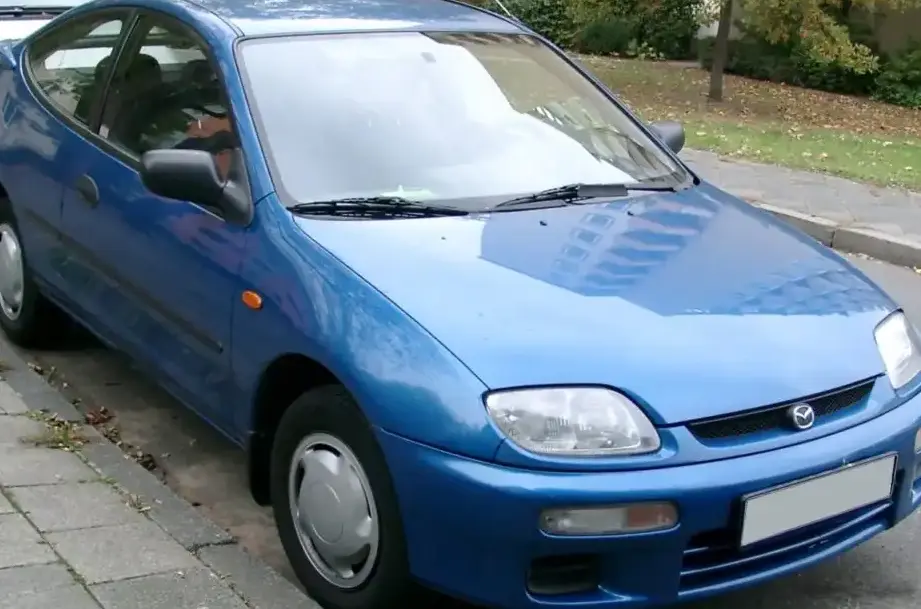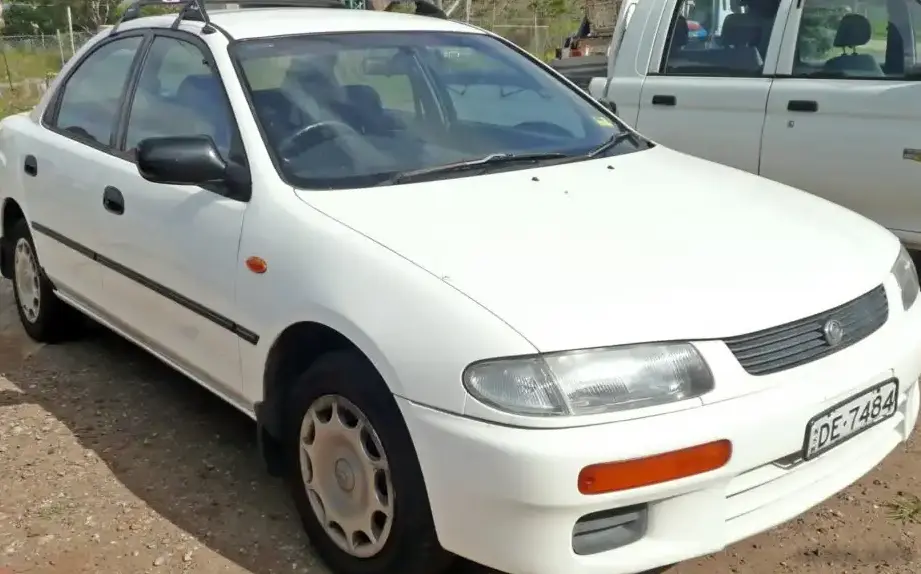
The Mazda 323 S V (BA) 1.8i 16V, produced between 1994 and 1998, represented a significant step forward for Mazda’s compact offering. Part of the BA series, this variant occupied a mid-range position within the 323 lineup, offering a balance between performance and affordability. The 323 S V, sold primarily in Europe and other international markets, aimed to provide a practical and reliable family sedan with a touch of sporty character. It was built on the BG platform, a chassis shared with other Ford and Mazda models of the era, and served as a key competitor to vehicles like the Volkswagen Golf, Ford Escort, and Opel Astra.
Technical Specifications
| Brand | Mazda |
| Model | 323 |
| Generation | 323 S V (BA) |
| Type (Engine) | 1.8i 16V (114 Hp) |
| Start of production | 1994 |
| End of production | 1998 |
| Powertrain Architecture | Internal Combustion engine |
| Body type | Sedan |
| Seats | 5 |
| Doors | 4 |
| Fuel consumption (combined) | 7.9 l/100 km |
| Fuel consumption (US mpg) | 29.8 US mpg |
| Fuel consumption (UK mpg) | 35.8 UK mpg |
| Fuel consumption (km/l) | 12.7 km/l |
| Fuel Type | Petrol (Gasoline) |
| Acceleration 0 – 100 km/h | 9.8 sec |
| Acceleration 0 – 62 mph | 9.8 sec |
| Acceleration 0 – 60 mph | 9.3 sec |
| Maximum speed | 194 km/h (120.55 mph) |
| Weight-to-power ratio | 9.9 kg/Hp |
| Power | 114 Hp @ 6000 rpm |
| Power per litre | 62 Hp/l |
| Torque | 157 Nm @ 4000 rpm (115.8 lb.-ft. @ 4000 rpm) |
| Engine layout | Front, Transverse |
| Engine displacement | 1840 cm3 (112.28 cu. in.) |
| Number of cylinders | 4 |
| Engine configuration | Inline |
| Cylinder Bore | 83 mm (3.27 in.) |
| Piston Stroke | 85 mm (3.35 in.) |
| Compression ratio | 9:1 |
| Number of valves per cylinder | 4 |
| Fuel injection system | Multi-port manifold injection |
| Engine aspiration | Naturally aspirated engine |
| Valvetrain | DOHC |
| Kerb Weight | 1125 kg (2480.2 lbs.) |
| Max. weight | 1645 kg (3626.6 lbs.) |
| Max load | 520 kg (1146.4 lbs.) |
| Trunk (boot) space – minimum | 427 l (15.08 cu. ft.) |
| Fuel tank capacity | 55 l (14.53 US gal | 12.1 UK gal) |
| Length | 4340 mm (170.87 in.) |
| Width | 1710 mm (67.32 in.) |
| Height | 1420 mm (55.91 in.) |
| Wheelbase | 2605 mm (102.56 in.) |
| Front track | 1460 mm (57.48 in.) |
| Rear (Back) track | 1460 mm (57.48 in.) |
| Drivetrain Architecture | The Internal combustion engine (ICE) drives the front wheels of the vehicle. |
| Drive wheel | Front wheel drive |
| Number of gears and type of gearbox | 5 gears, manual transmission |
| Front suspension | Spring Strut |
| Rear suspension | Spring Strut |
| Front brakes | Ventilated discs |
| Rear brakes | Drum |
| Assisting systems | ABS (Anti-lock braking system) |
| Steering type | Steering rack and pinion |
| Power steering | Hydraulic Steering |
| Tires size | 185/65 R14 H |
| Wheel rims size | 14 |
Powertrain & Engine Architecture
The heart of the 323 S V 1.8i 16V was the Mazda F8 engine, a 1.8-liter inline-four cylinder powerplant. This engine, often referred to by its internal code BP, featured a double overhead camshaft (DOHC) valvetrain and multi-port fuel injection. The 16 valves (four per cylinder) contributed to improved breathing and higher-end power delivery. The engine produced 114 horsepower at 6000 rpm and 157 Nm (115.8 lb-ft) of torque at 4000 rpm. The compression ratio was set at 9:1. The engine’s design prioritized reliability and fuel efficiency over outright performance. The 5-speed manual transmission was the standard offering, providing a reasonably direct connection between the engine and the front wheels.
Driving Characteristics
The 1.8i 16V offered a balanced driving experience. While not particularly quick, with a 0-60 mph time of around 9.3 seconds, it provided adequate power for everyday driving and highway cruising. The 5-speed manual transmission allowed drivers to keep the engine in its optimal power band. The gear ratios were fairly closely spaced, promoting responsive acceleration. Compared to the lower-powered 1.5-liter versions, the 1.8i offered noticeably more punch, especially when overtaking. However, it lacked the more aggressive character of higher-performance variants, such as those equipped with the larger 2.0-liter engine. The steering was light and precise, making the car easy to maneuver in urban environments.
Equipment & Trim Levels
The 323 S V 1.8i 16V typically came equipped with features considered standard for a compact family sedan in the mid-1990s. These included power steering, central locking, electric windows, and an AM/FM radio. Higher trim levels offered options such as air conditioning, alloy wheels, and a sunroof. Interior upholstery was typically cloth, with a relatively simple and functional dashboard layout. The overall interior design prioritized practicality and durability over luxury. Safety features included ABS (Anti-lock Braking System) as standard equipment, a notable addition for the time.
Chassis & Braking
The 323 S V utilized a relatively conventional chassis design, featuring a MacPherson strut front suspension and a torsion beam rear suspension. This setup provided a comfortable ride quality, although it wasn’t particularly sporty. The front brakes were ventilated discs, offering good stopping power, while the rear brakes were drums, a cost-saving measure common in this class of vehicle. The suspension was tuned for comfort and stability, rather than aggressive handling. The car’s relatively light weight (around 1125 kg or 2480 lbs) helped to offset the modest engine output.
Market Reception & Comparison
The Mazda 323 S V 1.8i 16V was generally well-received by automotive critics as a practical and reliable family car. It was praised for its fuel efficiency (around 29.8 US mpg combined) and comfortable ride. However, some reviewers noted that the engine lacked the refinement and power of some of its competitors. Compared to the base 1.5-liter models, the 1.8i offered a significant improvement in performance, making it a more appealing option for drivers who frequently traveled on highways or carried passengers. It offered a compelling alternative to rivals like the Volkswagen Golf and Ford Escort, often at a more competitive price point.
Legacy
The Mazda 323 S V 1.8i 16V has proven to be a relatively durable and reliable vehicle. The BP engine is known for its longevity, provided it receives regular maintenance. Today, these cars are increasingly sought after by enthusiasts and collectors, particularly those looking for a classic 1990s Japanese sedan. Parts availability is generally good, although some trim-specific components may be difficult to find. The 323 S V 1.8i 16V represents a solid and dependable example of Mazda’s engineering prowess during the 1990s, and continues to offer affordable transportation for those seeking a classic and practical vehicle.