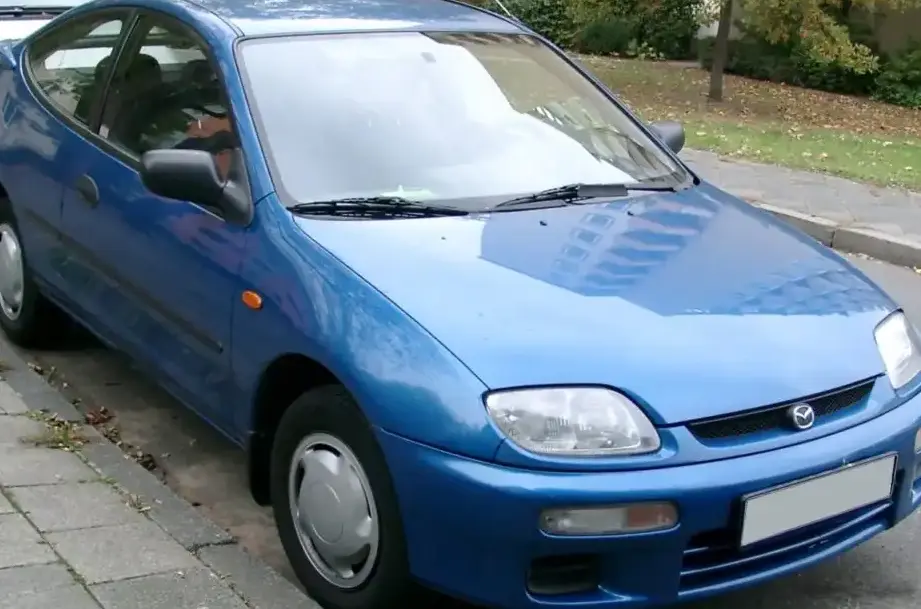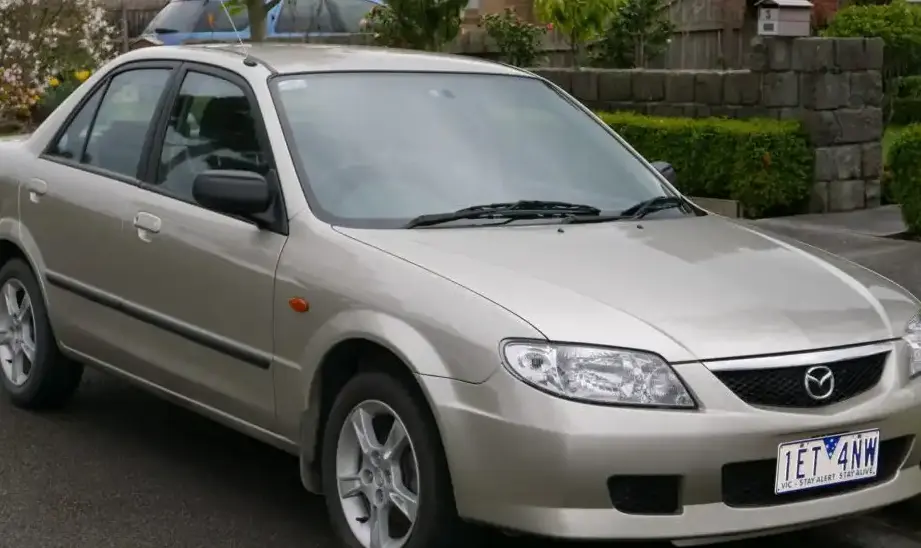
The Mazda 323 S VI (BJ) 1.3i 16V, produced between 1998 and 2003, represented the entry point into Mazda’s compact sedan lineup during that period. Part of the sixth generation of the 323 series (known internally as the BJ platform), this variant was primarily aimed at buyers seeking affordable, reliable transportation with reasonable fuel economy. It served as a crucial volume seller for Mazda in many European and Asian markets, where compact sedans were highly popular. While not known for blistering performance, the 1.3i 16V offered a practical and economical option within the broader 323 range, sitting below the more powerful 1.6 and 1.8 liter models.
Technical Specifications
| Brand | Mazda |
| Model | 323 |
| Generation | 323 S VI (BJ) |
| Type (Engine) | 1.3 i 16V (73 Hp) |
| Start of production | 1998 |
| End of production | 2003 |
| Powertrain Architecture | Internal Combustion engine |
| Body type | Sedan |
| Seats | 5 |
| Doors | 4 |
| Fuel consumption (urban) | 9.3 l/100 km (25.3 US mpg) |
| Fuel consumption (extra urban) | 6.2 l/100 km (37.9 US mpg) |
| Fuel consumption (combined) | 7.4 l/100 km (31.8 US mpg) |
| Fuel Type | Petrol (Gasoline) |
| Acceleration 0 – 100 km/h | 14.2 sec |
| Acceleration 0 – 62 mph | 14.2 sec |
| Acceleration 0 – 60 mph | 13.5 sec |
| Maximum speed | 167 km/h (103.77 mph) |
| Weight-to-power ratio | 14.5 kg/Hp |
| Weight-to-torque ratio | 9.8 kg/Nm |
| Power | 73 Hp @ 5500 rpm |
| Torque | 108 Nm @ 4000 rpm (79.66 lb.-ft. @ 4000 rpm) |
| Engine layout | Front, Transverse |
| Engine Model/Code | B33G |
| Engine displacement | 1324 cm3 (80.8 cu. in.) |
| Number of cylinders | 4 |
| Engine configuration | Inline |
| Cylinder Bore | 71 mm (2.8 in.) |
| Piston Stroke | 83.6 mm (3.29 in.) |
| Compression ratio | 9.4:1 |
| Number of valves per cylinder | 4 |
| Fuel injection system | Multi-port manifold injection |
| Engine aspiration | Naturally aspirated |
| Valvetrain | OHC |
| Engine oil capacity | 2.9 l (3.06 US qt | 2.55 UK qt) |
| Coolant capacity | 6 l (6.34 US qt | 5.28 UK qt) |
| Kerb Weight | 1055 kg (2325.88 lbs.) |
| Max. weight | 1585 kg (3494.33 lbs.) |
| Max load | 530 kg (1168.45 lbs.) |
| Trunk (boot) space – minimum | 416 l (14.69 cu. ft.) |
| Fuel tank capacity | 55 l (14.53 US gal | 12.1 UK gal) |
| Length | 4315 mm (169.88 in.) |
| Width | 1705 mm (67.13 in.) |
| Height | 1410 mm (55.51 in.) |
| Wheelbase | 2610 mm (102.76 in.) |
| Front track | 1470 mm (57.87 in.) |
| Rear (Back) track | 1470 mm (57.87 in.) |
| Drivetrain Architecture | Front wheel drive |
| Number of gears | 5 gears, manual transmission |
| Front suspension | Coil spring |
| Rear suspension | Coil spring |
| Front brakes | Ventilated discs |
| Rear brakes | Drum |
| Assisting systems | ABS (Anti-lock braking system) |
| Steering type | Steering rack and pinion |
| Power steering | Hydraulic Steering |
| Tires size | 175/65 R14 |
| Wheel rims size | 14 |
Powertrain & Engine Architecture
The heart of the 323 S VI 1.3i 16V is the B33G engine, a 1.3-liter inline-four cylinder gasoline engine. This engine featured a single overhead camshaft (SOHC) valvetrain operating four valves per cylinder, hence the “16V” designation. Fuel delivery was handled by a multi-point fuel injection system, providing a balance between efficiency and responsiveness. The B33G engine was known for its relatively simple design, contributing to its reliability. The engine produced 73 horsepower at 5500 rpm and 108 Nm (79.66 lb-ft) of torque at 4000 rpm. The engine’s transverse mounting and front-wheel-drive configuration were standard for compact cars of this era. The standard transmission was a five-speed manual, although a four-speed automatic was also offered, impacting performance and fuel economy.
Driving Characteristics
The 1.3i 16V version of the 323 S VI offered modest performance. Acceleration from 0 to 60 mph took around 13.5 to 14.2 seconds, and the top speed was approximately 103.77 mph. Compared to the 1.6 and 1.8 liter variants, the 1.3i felt noticeably slower, particularly when accelerating for overtaking or climbing hills. The five-speed manual transmission helped to keep the engine in its optimal power band, but the automatic version further diminished acceleration. The suspension provided a comfortable ride, prioritizing everyday usability over sporty handling. Steering was light and easy, making it well-suited for urban driving.
Equipment & Trim Levels
The 1.3i 16V typically served as the base trim level for the 323 S VI. Standard equipment generally included power steering, central locking, electric front windows, and an AM/FM radio. Air conditioning was often an optional extra. Interior upholstery was typically cloth, and the dashboard featured a functional, if somewhat basic, design. Higher trim levels, such as the 1.6 and 1.8 models, offered features like alloy wheels, upgraded audio systems, and more luxurious interior appointments.
Chassis & Braking
The 323 S VI utilized a relatively conventional chassis design with coil spring suspension at all four wheels. The front suspension employed MacPherson struts, while the rear used a torsion beam setup. Braking was accomplished with ventilated discs at the front and drum brakes at the rear. Anti-lock Braking System (ABS) was standard, enhancing safety. The relatively lightweight nature of the 1.3i model (around 1055 kg or 2325.88 lbs) helped to mitigate the impact of the less powerful engine.
Market Reception & Comparison
The 1.3i 16V 323 S VI was generally well-received as an affordable and reliable compact car. Critics acknowledged its fuel efficiency and practicality, but often noted its lack of outright performance. Compared to the higher-spec models, the 1.3i offered a more economical entry point into the 323 range, appealing to budget-conscious buyers. The 1.6 and 1.8 liter versions provided significantly more power and a more engaging driving experience, but at a higher price point. Fuel economy was a strong point for the 1.3i, achieving around 31.8 US mpg in combined driving.
Legacy
The Mazda 323 S VI 1.3i 16V has proven to be a reasonably durable and reliable vehicle. The B33G engine, while not particularly powerful, is known for its longevity when properly maintained. Today, these cars are relatively rare sights on the road, but those that remain are often cherished by owners for their simplicity and affordability. Parts availability can be a challenge, but many components are still obtainable. The 1.3i 16V represents a practical and economical choice from Mazda’s past, offering a glimpse into the compact car market of the late 1990s and early 2000s.