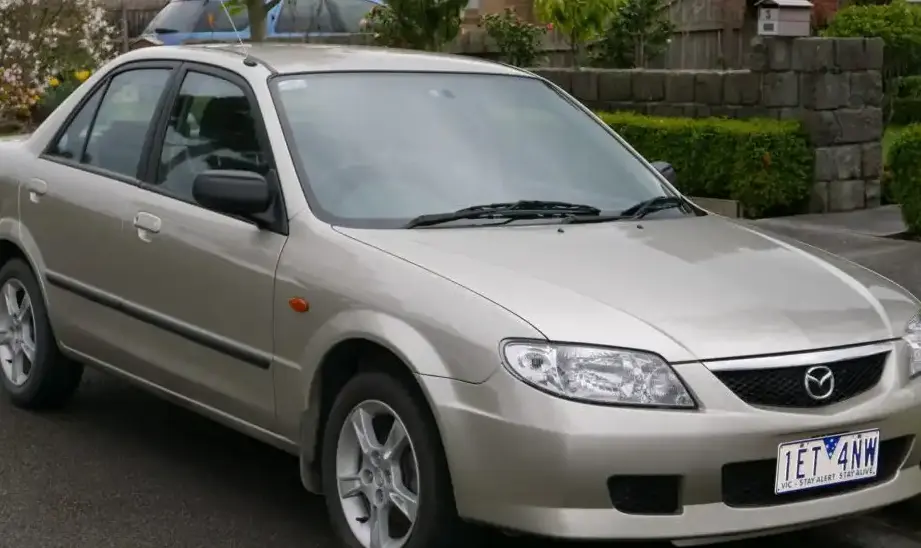
The Mazda 323 S VI (BJ) 2.0 DiTD, produced between 2000 and 2003, represented a significant offering in Mazda’s compact car lineup. This variant, powered by a 2.0-liter direct injection diesel engine, was primarily aimed at the European market where diesel engines enjoyed considerable popularity due to fuel efficiency and tax incentives. The 323 S VI, known as the Familia in Japan, was the sixth generation of this long-running Mazda model, built on the BJ platform. The 2.0 DiTD trim occupied a middle ground in the range, offering a balance between performance and economy, positioned above the lower-powered petrol variants and below the more expensive and performance-focused models.
Technical Specifications
| Brand | Mazda |
| Model | 323 |
| Generation | 323 S VI (BJ) |
| Type (Engine) | 2.0 DiTD (101 Hp) |
| Start of production | 2000 year |
| End of production | 2003 year |
| Powertrain Architecture | Internal Combustion engine |
| Body type | Sedan |
| Seats | 5 |
| Doors | 4 |
| Fuel consumption (urban) | 7.4 l/100 km (31.8 US mpg, 38.2 UK mpg, 13.5 km/l) |
| Fuel consumption (extra urban) | 4.9 l/100 km (48 US mpg, 57.6 UK mpg, 20.4 km/l) |
| Fuel consumption (combined) | 5.8 l/100 km (40.6 US mpg, 48.7 UK mpg, 17.2 km/l) |
| Fuel Type | Diesel |
| Acceleration 0 – 100 km/h | 12.2 sec |
| Acceleration 0 – 62 mph | 12.2 sec |
| Acceleration 0 – 60 mph | 11.6 sec |
| Maximum speed | 187 km/h (116.2 mph) |
| Weight-to-power ratio | 11.7 kg/Hp, 85.6 Hp/tonne |
| Weight-to-torque ratio | 5.1 kg/Nm, 194.9 Nm/tonne |
| Power | 101 Hp @ 4000 rpm |
| Power per litre | 50.6 Hp/l |
| Torque | 230 Nm @ 2000 rpm (169.64 lb.-ft. @ 2000 rpm) |
| Engine layout | Front, Transverse |
| Engine Model/Code | RF4F |
| Engine displacement | 1998 cm3 (121.93 cu. in.) |
| Number of cylinders | 4 |
| Engine configuration | Inline |
| Cylinder Bore | 86 mm (3.39 in.) |
| Piston Stroke | 86 mm (3.39 in.) |
| Compression ratio | 18.8:1 |
| Number of valves per cylinder | 4 |
| Fuel injection system | Direct injection |
| Engine aspiration | Turbocharger, Intercooler |
| Valvetrain | DOHC |
| Engine oil capacity | 4.7 l (4.97 US qt | 4.14 UK qt) |
| Coolant | 9 l (9.51 US qt | 7.92 UK qt) |
| Kerb Weight | 1180 kg (2601.45 lbs.) |
| Max. weight | 1650 kg (3637.63 lbs.) |
| Max load | 470 kg (1036.17 lbs.) |
| Trunk (boot) space – minimum | 415 l (14.66 cu. ft.) |
| Fuel tank capacity | 55 l (14.53 US gal | 12.1 UK gal) |
| Length | 4390 mm (172.83 in.) |
| Width | 1705 mm (67.13 in.) |
| Height | 1410 mm (55.51 in.) |
| Wheelbase | 2610 mm (102.76 in.) |
| Front track | 1470 mm (57.87 in.) |
| Rear (Back) track | 1470 mm (57.87 in.) |
| Drivetrain Architecture | The Internal combustion engine (ICE) drives the front wheels of the vehicle. |
| Drive wheel | Front wheel drive |
| Number of gears and type of gearbox | 5 gears, manual transmission |
| Front suspension | Coil spring |
| Rear suspension | Coil spring |
| Front brakes | Ventilated discs |
| Rear brakes | Disc |
| Assisting systems | ABS (Anti-lock braking system) |
| Steering type | Steering rack and pinion |
| Power steering | Hydraulic Steering |
| Tires size | 195/55 R15 |
| Wheel rims size | 15 |
Powertrain & Engine Architecture
The heart of the 323 S VI 2.0 DiTD is the RF4F engine, a 1.998-liter inline-four cylinder diesel. This engine utilized direct fuel injection, a technology becoming increasingly common in diesel engines during this period, to improve efficiency and reduce emissions. The RF4F was turbocharged and intercooled, boosting power output to 101 horsepower at 4000 rpm and 230 Nm (169.64 lb-ft) of torque at 2000 rpm. The engine featured a double overhead camshaft (DOHC) valvetrain with four valves per cylinder, contributing to its relatively high specific output for a diesel engine of its time. The engine’s high compression ratio of 18.8:1 was typical for direct injection diesels, maximizing combustion efficiency. The 5-speed manual transmission was the standard offering, providing a balance between fuel economy and driver control.
Driving Characteristics
The 2.0 DiTD variant of the Mazda 323 S VI offered a distinctly different driving experience compared to the petrol-powered models. While not a performance-oriented trim, the diesel engine’s ample torque provided good low-end responsiveness, making it suitable for everyday driving and overtaking maneuvers. Acceleration to 60 mph took around 11.6 seconds, and top speed was approximately 116 mph. The 5-speed manual transmission allowed drivers to effectively utilize the engine’s torque band. Compared to the higher-output petrol engines, the 2.0 DiTD prioritized fuel economy over outright speed. The gear ratios were tuned for maximizing efficiency, resulting in a more relaxed driving experience on the highway.
Equipment & Trim Levels
The 2.0 DiTD trim typically included features such as power steering, central locking, electric front windows, and an anti-lock braking system (ABS). Interior upholstery was generally cloth, with a functional and durable design. Optional extras could include air conditioning, alloy wheels, and a radio/cassette player. The dashboard layout was straightforward and driver-focused, with clearly marked gauges and controls. The trim level aimed for practicality and value, offering a comfortable and well-equipped vehicle without the premium features found in higher-spec models.
Chassis & Braking
The Mazda 323 S VI featured a conventional front-engine, front-wheel-drive layout. Suspension consisted of coil springs all around, providing a comfortable ride quality. The front brakes were ventilated discs, offering good stopping power, while the rear brakes were solid discs. The steering system was a rack and pinion setup with hydraulic power assistance, providing precise and responsive steering feel. The chassis was designed to balance handling and ride comfort, making it suitable for a wide range of driving conditions. Tire size was typically 195/55 R15.
Market Reception & Comparison
The 2.0 DiTD variant of the Mazda 323 S VI was well-received in European markets, particularly by drivers seeking a fuel-efficient and reliable compact car. Critics praised the engine’s torque and economy, but noted that it lacked the refinement and performance of some of its competitors. Compared to the petrol-powered 323 models, the 2.0 DiTD offered significantly better fuel economy, but at the expense of some performance. Against rivals like the Volkswagen Golf TDI and Ford Focus TDCi, the Mazda 323 S VI 2.0 DiTD offered a competitive package in terms of price, features, and fuel efficiency.
Legacy
The Mazda 323 S VI 2.0 DiTD, while not a particularly rare or collectible vehicle today, remains a reasonably reliable and affordable option in the used car market. The RF4F diesel engine, when properly maintained, is known for its durability. Common issues include wear and tear on turbocharger components and potential problems with the fuel injection system. However, parts availability is generally good, and the relatively simple mechanical design makes it accessible for DIY repairs. The 323 S VI 2.0 DiTD represents a significant step in Mazda’s development of diesel engine technology and remains a testament to the brand’s commitment to fuel efficiency and practicality.