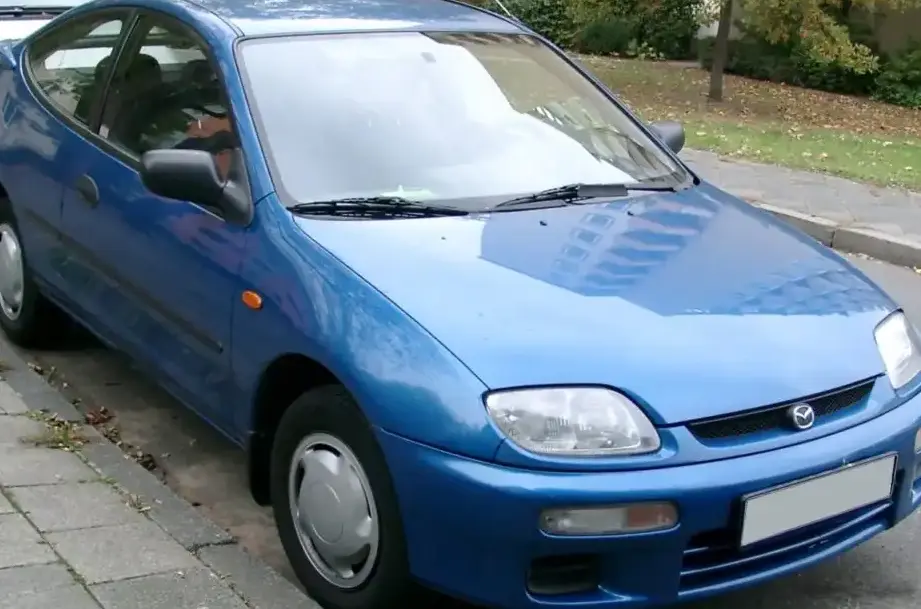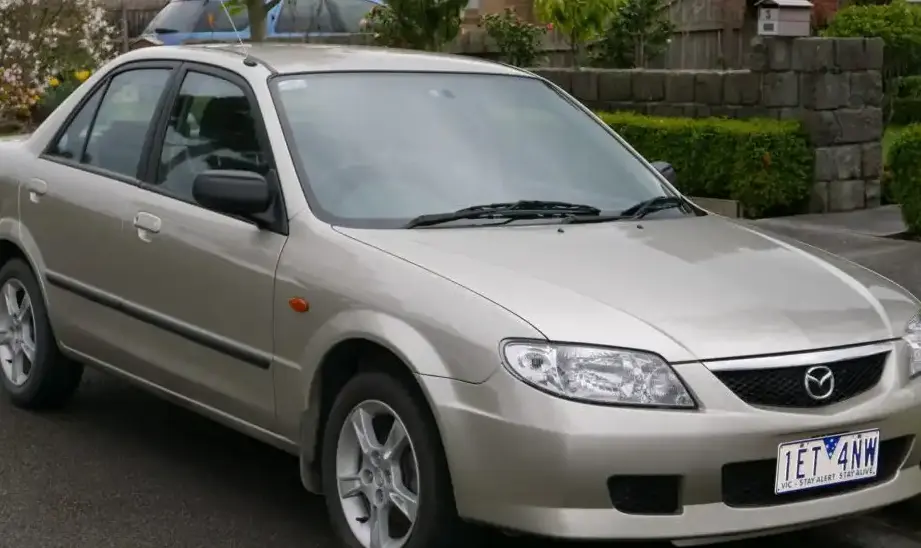
The Mazda 323 S VI (BJ) 2.0 DiTD, produced between 1998 and 2003, represented a significant offering in Mazda’s compact car lineup. This variant, powered by a 2.0-liter turbocharged diesel engine producing 90 horsepower, was primarily aimed at the European market where diesel engines enjoyed considerable popularity due to fuel efficiency and tax incentives. Positioned as a mid-range option within the 323 S VI series, it offered a balance between performance and economy, appealing to drivers seeking a practical and reasonably efficient vehicle for daily commuting and longer journeys. The BJ series 323 was a crucial model for Mazda, building upon the success of its predecessors and incorporating contemporary design and technology.
Technical Specifications
| Brand | Mazda |
| Model | 323 |
| Generation | 323 S VI (BJ) |
| Type (Engine) | 2.0 DiTD (90 Hp) |
| Start of production | 1998 |
| End of production | 2003 |
| Powertrain Architecture | Internal Combustion engine |
| Body type | Sedan |
| Seats | 5 |
| Doors | 4 |
| Fuel consumption (urban) | 6.4 l/100 km (36.8 US mpg) |
| Fuel consumption (extra urban) | 4.4 l/100 km (53.5 US mpg) |
| Fuel Type | Diesel |
| Acceleration 0 – 100 km/h | 12.2 sec |
| Acceleration 0 – 62 mph | 12.2 sec |
| Acceleration 0 – 60 mph | 11.6 sec |
| Maximum speed | 178 km/h (110.6 mph) |
| Weight-to-power ratio | 12.9 kg/Hp |
| Weight-to-torque ratio | 5.3 kg/Nm |
| Power | 90 Hp @ 4000 rpm |
| Power per litre | 45 Hp/l |
| Torque | 220 Nm @ 1800 rpm (162.26 lb.-ft. @ 1800 rpm) |
| Engine layout | Front, Transverse |
| Engine Model/Code | RF2A |
| Engine displacement | 1998 cm3 (121.93 cu. in.) |
| Number of cylinders | 4 |
| Engine configuration | Inline |
| Cylinder Bore | 86 mm (3.39 in.) |
| Piston Stroke | 86 mm (3.39 in.) |
| Compression ratio | 18:1 |
| Number of valves per cylinder | 2 |
| Fuel injection system | Diesel Commonrail |
| Engine aspiration | Turbocharger |
| Valvetrain | OHC |
| Engine oil capacity | 4.7 l (4.97 US qt | 4.14 UK qt) |
| Coolant | 9 l (9.51 US qt | 7.92 UK qt) |
| Kerb Weight | 1160 kg (2557.36 lbs.) |
| Max. weight | 1705 kg (3758.88 lbs.) |
| Max load | 545 kg (1201.52 lbs.) |
| Trunk (boot) space – minimum | 416 l (14.69 cu. ft.) |
| Fuel tank capacity | 55 l (14.53 US gal | 12.1 UK gal) |
| Length | 4315 mm (169.88 in.) |
| Width | 1705 mm (67.13 in.) |
| Height | 1410 mm (55.51 in.) |
| Wheelbase | 2610 mm (102.76 in.) |
| Front track | 1470 mm (57.87 in.) |
| Rear (Back) track | 1470 mm (57.87 in.) |
| Drivetrain Architecture | The Internal combustion engine (ICE) drives the front wheels of the vehicle. |
| Drive wheel | Front wheel drive |
| Number of gears and type of gearbox | 5 gears, manual transmission |
| Front suspension | Coil spring |
| Rear suspension | Coil spring |
| Front brakes | Ventilated discs |
| Rear brakes | Disc |
| Assisting systems | ABS (Anti-lock braking system) |
| Steering type | Steering rack and pinion |
| Power steering | Hydraulic Steering |
| Tires size | 185/65 R14 |
| Wheel rims size | 14 |
Powertrain & Engine Architecture
The heart of the 323 S VI 2.0 DiTD is the RF2A engine, a 1.998-liter inline-four cylinder diesel. This engine utilized a turbocharger and a common rail direct injection system, a relatively advanced technology for the time, allowing for precise fuel delivery and improved combustion efficiency. The common rail system, operating at extremely high pressures, contributed to reduced noise and emissions compared to older diesel injection methods. The engine featured an overhead camshaft (OHC) valvetrain with two valves per cylinder. The high 18:1 compression ratio was typical for diesel engines, maximizing thermal efficiency. The 5-speed manual transmission was the standard offering, chosen for its efficiency and driver engagement. While an automatic transmission was available on other 323 variants, it wasn’t offered with the 2.0 DiTD engine.
Driving Characteristics
The 90 horsepower output of the 2.0 DiTD, while not exceptionally powerful, provided adequate performance for everyday driving. Acceleration from 0-60 mph took around 11.6 seconds, and the car could reach a top speed of 110.6 mph. The engine’s 220 Nm (162 lb-ft) of torque, available from just 1800 rpm, was the key to its usability. This low-end torque made it easy to navigate city streets and provided sufficient pulling power for highway overtaking. Compared to the gasoline-powered 323 variants, the DiTD offered significantly better fuel economy, but at the expense of outright acceleration. The manual transmission’s gear ratios were well-matched to the engine’s torque curve, providing a reasonably responsive driving experience. It wasn’t a sporty car, but it was a practical and efficient one.
Equipment & Trim Levels
The 323 S VI 2.0 DiTD typically came with a reasonable level of standard equipment. This included power steering, central locking, electric front windows, and an anti-lock braking system (ABS). Interior upholstery was generally cloth, with a functional and durable design. Optional extras included air conditioning, alloy wheels, and a radio/cassette player. The trim level was generally considered a step up from the base models, offering a more comfortable and refined interior. However, it lacked some of the luxury features found in the higher-spec 323 variants.
Chassis & Braking
The 323 S VI featured a relatively simple chassis design. Front suspension utilized coil springs and MacPherson struts, while the rear suspension employed a coil spring and trailing arm setup. The front brakes were ventilated discs, providing good stopping power, while the rear brakes were solid discs. The steering was a rack and pinion system with hydraulic power assistance, offering a reasonably precise and responsive feel. The car’s weight of around 1160 kg (2557 lbs) was relatively light for its class, contributing to its decent handling characteristics.
Market Reception & Comparison
The Mazda 323 S VI 2.0 DiTD was generally well-received in European markets. Critics praised its fuel efficiency, comfortable ride, and practical interior. However, some noted that the engine was somewhat noisy compared to gasoline alternatives. Compared to other diesel-powered compact cars of the time, such as the Volkswagen Golf TDI and the Ford Focus TDCi, the 323 DiTD offered a competitive combination of performance, economy, and price. The Golf TDI was often considered the benchmark in the segment, offering a more refined driving experience, while the Focus TDCi provided a more modern interior design.
Legacy
The RF2A engine, while not known for being exceptionally durable, proved to be reasonably reliable with proper maintenance. Common issues included turbocharger wear and potential problems with the fuel injection system. Today, the Mazda 323 S VI 2.0 DiTD is a relatively affordable used car, appealing to buyers seeking a practical and economical vehicle. Parts availability is generally good, and the car’s simple mechanical design makes it relatively easy to maintain. While it may not be a collector’s item, it remains a capable and dependable vehicle for everyday transportation, representing a significant chapter in Mazda’s history.