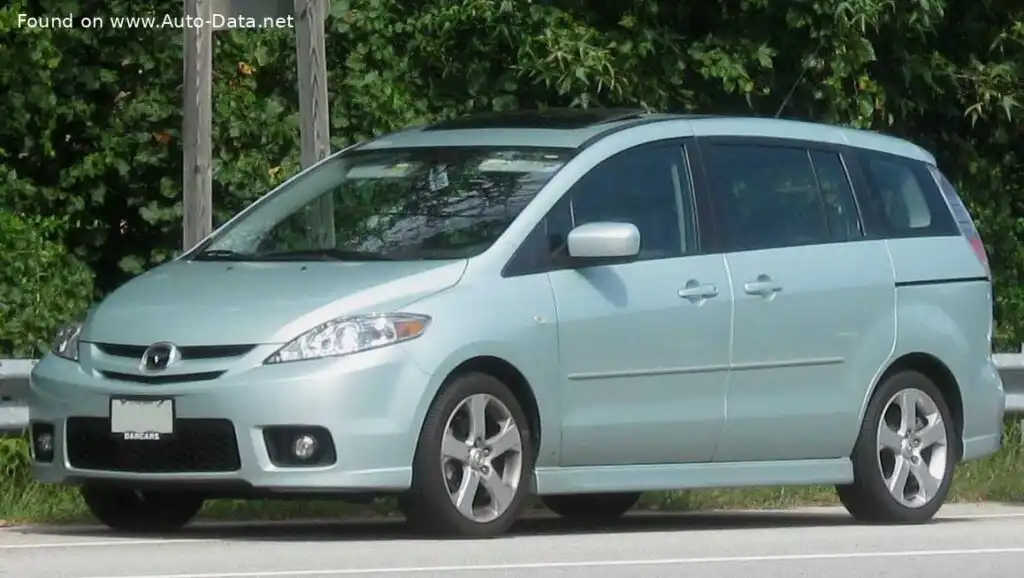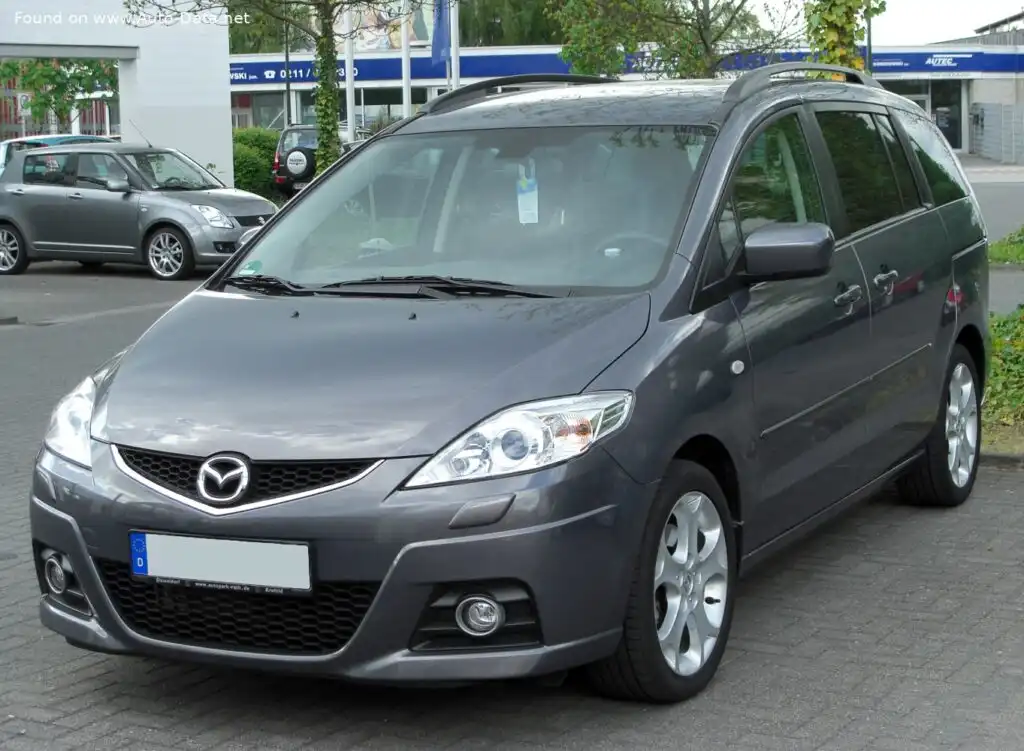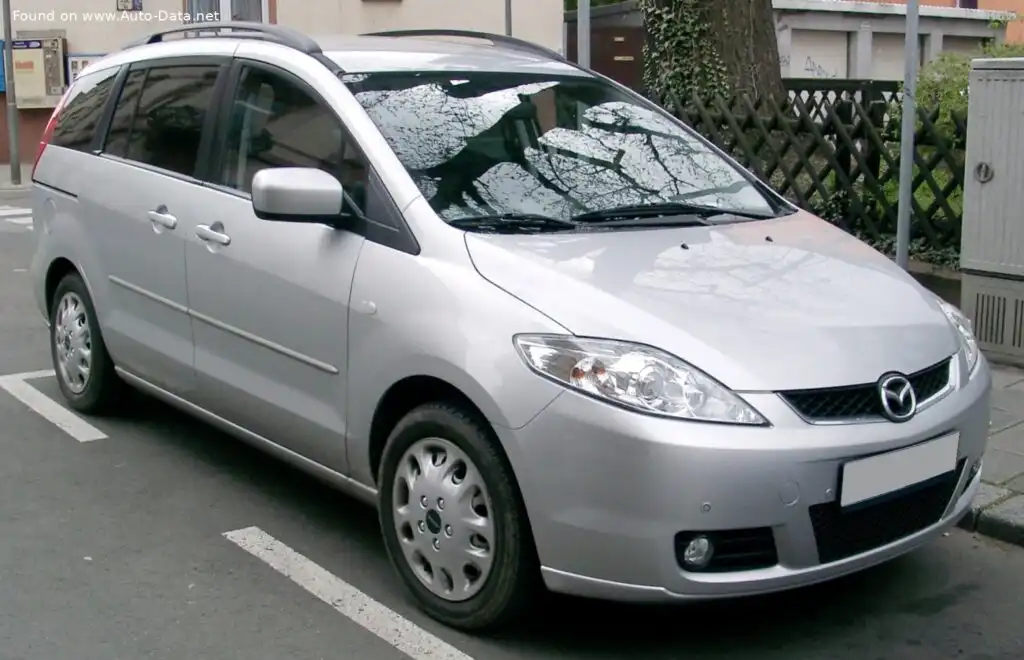
The Mazda5, known as the Premacy in some markets, represented Mazda’s entry into the compact minivan segment. Introduced in 2005 and continuing through 2010 (with a significant refresh in 2008), the first generation (CW) Mazda5 aimed to provide a more engaging driving experience than traditional minivans, while still offering the practicality of seating for up to seven passengers. The 2.0 CD variant, producing 110 horsepower, was a key offering in European and Asian markets, particularly where diesel engines were favored for their fuel efficiency. This specific configuration was available from 2005 to 2007. It occupied a mid-range position within the Mazda5 lineup, offering a balance between performance and economy, appealing to families seeking a versatile vehicle without the higher cost of the petrol engine options.
Technical Specifications
| Brand | Mazda |
| Model | 5 |
| Generation | 5 I |
| Type (Engine) | 2.0 CD (110 Hp) |
| Start of production | 2005 year |
| End of production | 2007 year |
| Powertrain Architecture | Internal Combustion engine |
| Body type | Minivan |
| Seats | 7 |
| Doors | 5 |
| Fuel consumption (urban) | 7.3 l/100 km (32.2 US mpg, 38.7 UK mpg, 13.7 km/l) |
| Fuel consumption (extra urban) | 5.7 l/100 km (41.3 US mpg, 49.6 UK mpg, 17.5 km/l) |
| Fuel consumption (combined) | 6.3 l/100 km (37.3 US mpg, 44.8 UK mpg, 15.9 km/l) |
| CO2 emissions | 173 g/km |
| Fuel Type | Diesel |
| Acceleration 0 – 100 km/h | 12.9 sec |
| Acceleration 0 – 62 mph | 12.9 sec |
| Acceleration 0 – 60 mph | 12.3 sec |
| Maximum speed | 179 km/h (111.23 mph) |
| Emission standard | Euro 4 |
| Weight-to-power ratio | 14 kg/Hp, 71.7 Hp/tonne |
| Weight-to-torque ratio | 5 kg/Nm, 202 Nm/tonne |
| Power | 110 Hp @ 3500 rpm |
| Power per litre | 55.1 Hp/l |
| Torque | 310 Nm @ 2000 rpm (228.64 lb.-ft. @ 2000 rpm) |
| Engine layout | Front, Transverse |
| Engine Model/Code | RF7J |
| Engine displacement | 1998 cm3 (121.93 cu. in.) |
| Number of cylinders | 4 |
| Engine configuration | Inline |
| Cylinder Bore | 86 mm (3.39 in.) |
| Piston Stroke | 86 mm (3.39 in.) |
| Compression ratio | 16.7:1 |
| Number of valves per cylinder | 4 |
| Fuel injection system | Diesel Commonrail |
| Engine aspiration | Turbocharger, Intercooler |
| Valvetrain | SOHC |
| Engine oil capacity | 4.1 l (4.33 US qt | 3.61 UK qt) |
| Kerb Weight | 1535 kg (3384.1 lbs.) |
| Max. weight | 2225 kg (4905.29 lbs.) |
| Max load | 690 kg (1521.19 lbs.) |
| Trunk (boot) space – minimum | 112 l (3.96 cu. ft.) |
| Trunk (boot) space – maximum | 1566 l (55.3 cu. ft.) |
| Fuel tank capacity | 60 l (15.85 US gal | 13.2 UK gal) |
| Permitted trailer load with brakes (12%) | 1400 kg (3086.47 lbs.) |
| Permitted trailer load without brakes | 600 kg (1322.77 lbs.) |
| Length | 4505 mm (177.36 in.) |
| Width | 1755 mm (69.09 in.) |
| Height | 1615 mm (63.58 in.) |
| Wheelbase | 2750 mm (108.27 in.) |
| Front track | 1530 mm (60.24 in.) |
| Rear (Back) track | 1520 mm (59.84 in.) |
| Ride height (ground clearance) | 140 mm (5.51 in.) |
| Drag coefficient (Cd) | 0.29 |
| Minimum turning circle (turning diameter) | 10.6 m (34.78 ft.) |
| Drivetrain Architecture | The Internal combustion engine (ICE) drives the front wheels of the vehicle. |
| Drive wheel | Front wheel drive |
| Number of gears and type of gearbox | 6 gears, manual transmission |
| Front suspension | Spring Strut |
| Rear suspension | Coil spring |
| Front brakes | Ventilated discs |
| Rear brakes | Disc |
| Assisting systems | ABS (Anti-lock braking system) |
| Steering type | Steering rack and pinion |
| Tires size | 205/55 R16 |
| Wheel rims size | 6.5J x 16 |
Powertrain & Engine Architecture
The heart of the Mazda5 2.0 CD was the RF7J engine, a 1.998-liter inline-four cylinder diesel. This engine utilized a common-rail direct injection system, delivering fuel at extremely high pressure for improved combustion efficiency and reduced emissions. The RF7J featured a single overhead camshaft (SOHC) valvetrain operating four valves per cylinder. A turbocharger with an intercooler was employed to boost power output and improve torque across the engine’s rev range. The 110 horsepower peak was achieved at 3500 rpm, while the substantial 310 Nm (228.64 lb-ft) of torque was available from just 2000 rpm. This torque curve proved particularly useful for everyday driving and hauling passengers. The engine was transversely mounted in the front of the vehicle. The 2.0 CD was typically paired with a six-speed manual transmission, although an automatic transmission was also available, albeit less common.
Driving Characteristics
The Mazda5 2.0 CD with the manual transmission offered a reasonably engaging driving experience for a minivan. While not particularly quick – 0-60 mph took around 12.3 seconds – the ample low-end torque made it feel responsive in everyday traffic. The six-speed gearbox allowed for efficient cruising on the highway. The automatic transmission, while providing convenience, did slightly diminish performance and fuel economy. Gear ratios were tuned for a balance between acceleration and fuel efficiency. Compared to the 1.8-liter petrol versions, the 2.0 CD offered significantly more torque, making it easier to carry a full load of passengers and luggage. However, the petrol engines generally provided quicker acceleration.
Equipment & Trim Levels
The 2.0 CD trim typically included features such as air conditioning, power windows, power mirrors, and a basic audio system. Higher trim levels added features like alloy wheels, fog lights, a multi-function steering wheel, and upgraded interior upholstery. The interior was generally functional and well-built, with a focus on practicality. The flexible seating configuration, with its ability to fold and tumble the second and third-row seats, was a key selling point. Optional extras included a sunroof, navigation system, and leather seats.
Chassis & Braking
The Mazda5 utilized a front-wheel-drive layout with a MacPherson strut front suspension and a coil spring rear suspension. This setup provided a comfortable ride, although it wasn’t particularly sporty. The front brakes were ventilated discs, while the rear brakes were solid discs. Anti-lock Braking System (ABS) was standard. The chassis was designed to provide a good balance between handling and ride comfort, considering the vehicle’s size and weight. Stabilizer bars were fitted to both the front and rear axles to reduce body roll.
Market Reception & Comparison
The Mazda5 2.0 CD was generally well-received by automotive critics, who praised its practicality, fuel efficiency, and engaging driving dynamics. It was often compared favorably to other compact minivans, such as the Renault Scenic and the Opel Zafira. The diesel engine offered superior fuel economy compared to the petrol alternatives, making it a popular choice for drivers who covered long distances. However, some critics noted that the interior could feel a bit cramped with all seven seats in use. Reliability was generally good, although diesel engines can be more prone to certain issues, such as injector problems, with age.
Legacy
The Mazda5 2.0 CD remains a relatively common sight on European roads today. The RF7J engine, while not without its potential issues, is generally considered to be a durable and reliable unit when properly maintained. The Mazda5’s unique combination of minivan practicality and engaging driving dynamics has earned it a loyal following. In the used car market, the 2.0 CD models tend to command a slightly higher price than the petrol versions, reflecting their superior fuel economy and torque. The first-generation Mazda5 paved the way for subsequent iterations, continuing Mazda’s commitment to offering versatile and enjoyable vehicles.