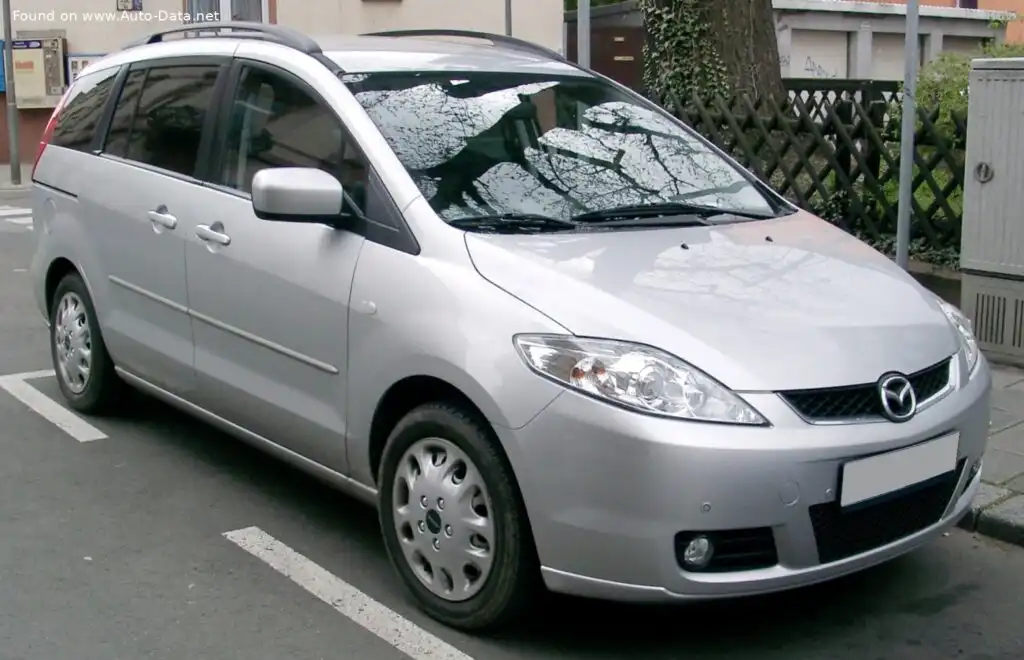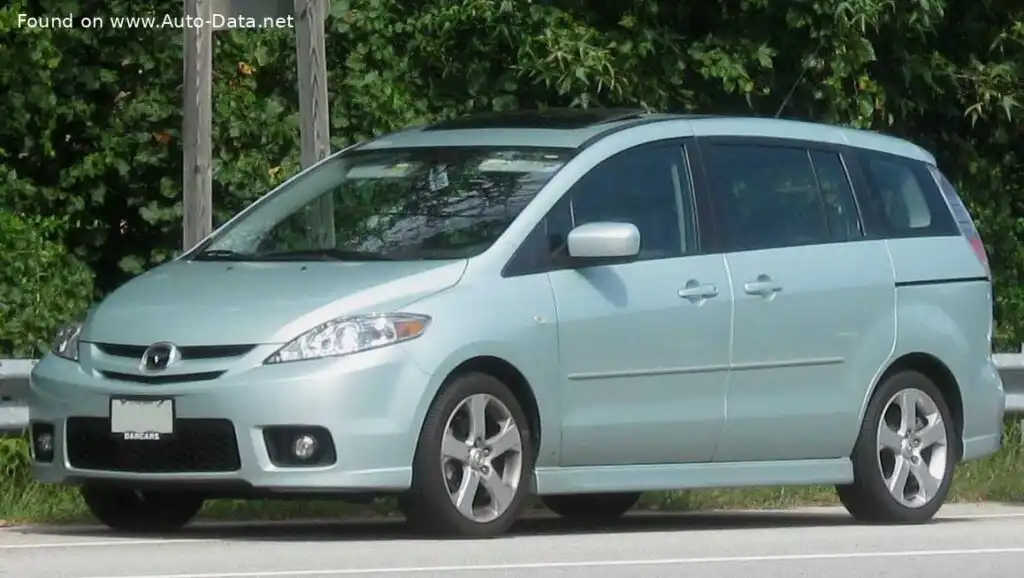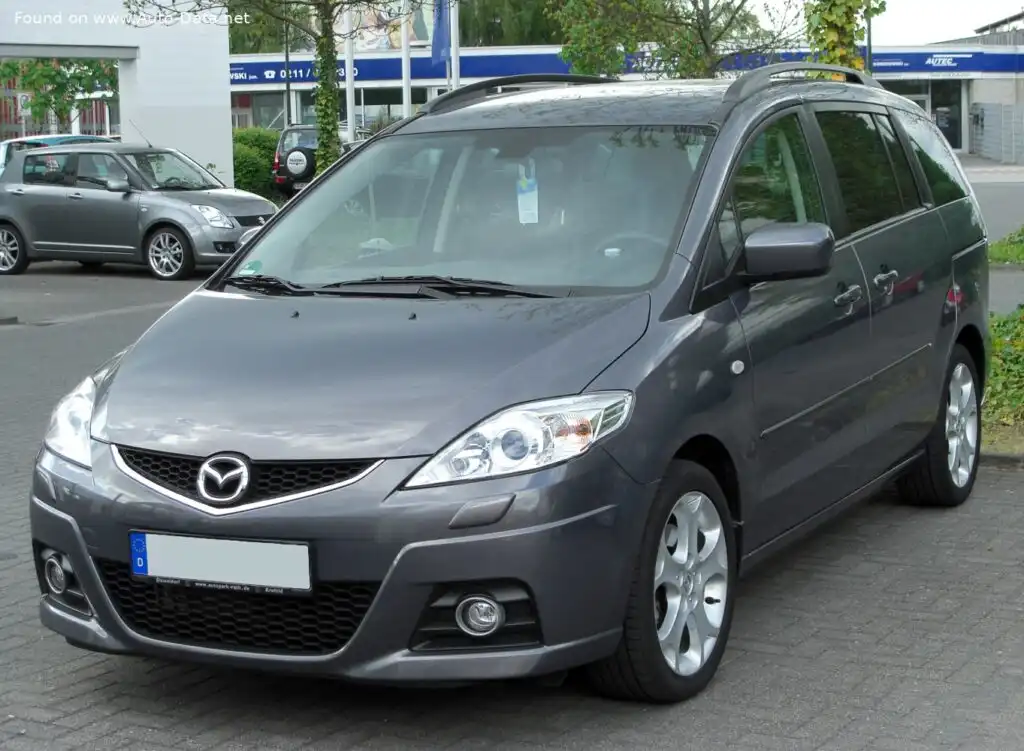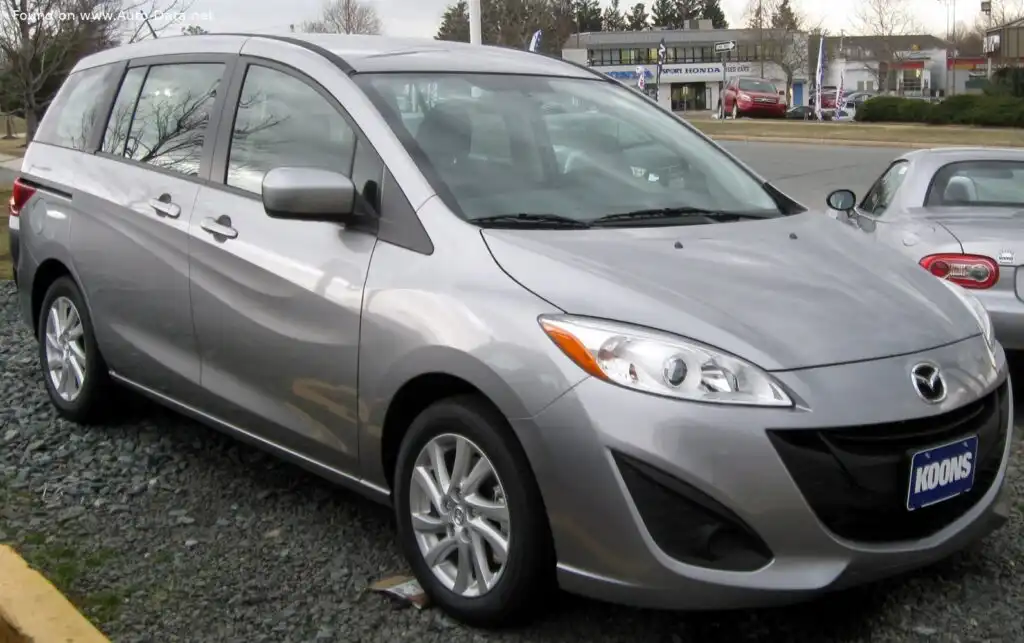
The Mazda 5 II 2.5, produced from 2011 to 2017, represents the second generation of Mazda’s compact minivan, known as the Premacy in some markets. This variant, equipped with the 2.5-liter L5-VE engine producing 157 horsepower, was primarily aimed at the North American and European markets where a practical, fuel-efficient, and relatively affordable six- or seven-passenger vehicle was in demand. It sat as a mid-range offering within the Mazda 5 II lineup, positioned above the smaller displacement engines and below any potential higher-performance trims. The second generation Mazda 5, built on the BL platform, offered improvements in interior space, fuel economy, and overall refinement compared to its predecessor.
Technical Specifications
| Brand | Mazda |
| Model | 5 |
| Generation | 5 II |
| Type (Engine) | 2.5 (157 Hp) |
| Start of production | 2011 |
| End of production | 2017 |
| Powertrain Architecture | Internal Combustion engine |
| Body type | Minivan |
| Seats | 6 |
| Doors | 5 |
| Fuel consumption (economy) – urban (EPA) | 11.2 l/100 km (21 US mpg) |
| Fuel consumption (economy) – extra urban (EPA) | 8.4 l/100 km (28 US mpg) |
| Fuel Type | Petrol (Gasoline) |
| Weight-to-power ratio | 9.9 kg/Hp |
| Weight-to-torque ratio | 7 kg/Nm |
| Power | 157 Hp @ 6000 rpm |
| Power per litre | 63.1 Hp/l |
| Torque | 221 Nm @ 4000 rpm (163 lb.-ft. @ 4000 rpm) |
| Maximum engine speed | 6200 rpm |
| Engine layout | Front, Transverse |
| Engine Model/Code | L5-VE |
| Engine displacement | 2489 cm3 (151.89 cu. in.) |
| Number of cylinders | 4 |
| Engine configuration | Inline |
| Cylinder Bore | 89 mm (3.5 in.) |
| Piston Stroke | 100 mm (3.94 in.) |
| Compression ratio | 9.7:1 |
| Number of valves per cylinder | 4 |
| Fuel injection system | Multi-port manifold injection |
| Engine aspiration | Naturally aspirated engine |
| Valvetrain | DOHC, VVT |
| Engine oil capacity | 5 l (5.28 US qt | 4.4 UK qt) |
| Coolant | 6.7 l (7.08 US qt | 5.9 UK qt) |
| Kerb Weight | 1550-1560 kg (3417.17 – 3439.21 lbs.) |
| Max. weight | 2091 kg (4609.87 lbs.) |
| Max load | 531-541 kg (1170.65 – 1192.7 lbs.) |
| Trunk (boot) space – minimum | 1257 l (44.39 cu. ft.) |
| Fuel tank capacity | 60 l (15.85 US gal | 13.2 UK gal) |
| Length | 4585 mm (180.51 in.) |
| Width | 1750 mm (68.9 in.) |
| Height | 1615 mm (63.58 in.) |
| Wheelbase | 2750 mm (108.27 in.) |
| Front track | 1530 mm (60.24 in.) |
| Rear (Back) track | 1520 mm (59.84 in.) |
| Ride height (ground clearance) | 140 mm (5.51 in.) |
| Minimum turning circle (turning diameter) | 11.2 m (36.75 ft.) |
| Drivetrain Architecture | The Internal combustion engine (ICE) drives the front wheels of the vehicle. |
| Drive wheel | Front wheel drive |
| Number of gears and type of gearbox | 6 gears, manual transmission |
| Front suspension | Independent, type McPherson with coil spring and anti-roll bar |
| Rear suspension | Independent multi-link spring suspension with stabilizer |
| Front brakes | Ventilated discs, 300 mm |
| Rear brakes | Disc, 302 mm |
| Assisting systems | ABS (Anti-lock braking system) |
| Steering type | Steering rack and pinion |
| Power steering | Electric Steering |
| Tires size | 205/55 R16; 205/50 R17 |
| Wheel rims size | 6.5J x 16; 6.5J x 17 |
Powertrain & Engine Architecture
The heart of this Mazda 5 II variant is the L5-VE 2.5-liter inline-four cylinder engine. This engine is a naturally aspirated powerplant featuring multi-port fuel injection and a double overhead camshaft (DOHC) valvetrain with variable valve timing (VVT). The L5-VE is known for its relatively smooth operation and decent power output for its displacement. The engine’s architecture prioritizes reliability and fuel efficiency over outright performance. The 6-speed manual transmission was standard, offering precise shifts and a direct connection to the engine. The engine’s design focused on balancing power delivery with fuel economy, making it suitable for everyday driving.
Driving Characteristics
The 157 hp and 163 lb-ft of torque provided by the 2.5-liter engine, coupled with the 6-speed manual transmission, delivered adequate performance for a compact minivan. Acceleration was respectable, though not sporty, and the vehicle felt capable of handling highway speeds and moderate loads. The gear ratios in the manual transmission were well-spaced, allowing the engine to remain in its optimal power band during typical driving situations. Compared to the lower-displacement engines offered in the Mazda 5 II, this variant provided noticeably more power and responsiveness, especially when fully loaded with passengers and cargo. The manual transmission offered a more engaging driving experience than an automatic, providing the driver with greater control over the engine’s power delivery.
Equipment & Trim Levels
The 2.5-liter Mazda 5 II typically came with a reasonable level of standard equipment. This included air conditioning, power windows and locks, a basic audio system with auxiliary input, and standard safety features like ABS and airbags. Higher trim levels added features such as alloy wheels, a sunroof, upgraded audio systems, and leather upholstery. Interior upholstery was typically cloth, with optional leather available on higher trims. The dashboard layout was functional and straightforward, prioritizing ease of use over elaborate styling. Optional extras included navigation systems and rear-seat entertainment systems.
Chassis & Braking
The Mazda 5 II utilized an independent suspension system, with McPherson struts at the front and a multi-link setup at the rear. This suspension configuration provided a comfortable ride quality and decent handling characteristics. Front brakes were ventilated discs, while rear brakes were solid discs, providing adequate stopping power for the vehicle’s weight. A stabilizer bar was included at both the front and rear to reduce body roll during cornering. The chassis was designed to balance ride comfort with handling stability, making it suitable for both city driving and highway cruising.
Market Reception & Comparison
The Mazda 5 II 2.5 received generally positive reviews from automotive critics. It was praised for its spacious interior, comfortable ride, and relatively fuel-efficient engine. However, some critics noted that the engine could feel strained when fully loaded or when climbing steep hills. Compared to other compact minivans on the market, the Mazda 5 II offered a more engaging driving experience and a more upscale interior. Fuel economy was competitive with other vehicles in its class, and reliability was generally considered to be good. The 2.5-liter engine offered a significant improvement in performance over the smaller displacement options, making it a popular choice for buyers who needed extra power.
Legacy
The Mazda 5 II 2.5 has proven to be a relatively reliable vehicle in the used car market. The L5-VE engine is known for its durability, and the 6-speed manual transmission is also generally considered to be robust. Common maintenance items include routine oil changes, spark plug replacements, and occasional sensor replacements. The Mazda 5 II remains a practical and affordable option for buyers looking for a compact minivan with decent fuel economy and a comfortable ride. Its relatively simple mechanical design makes it easier and less expensive to maintain compared to some of its more technologically advanced competitors.