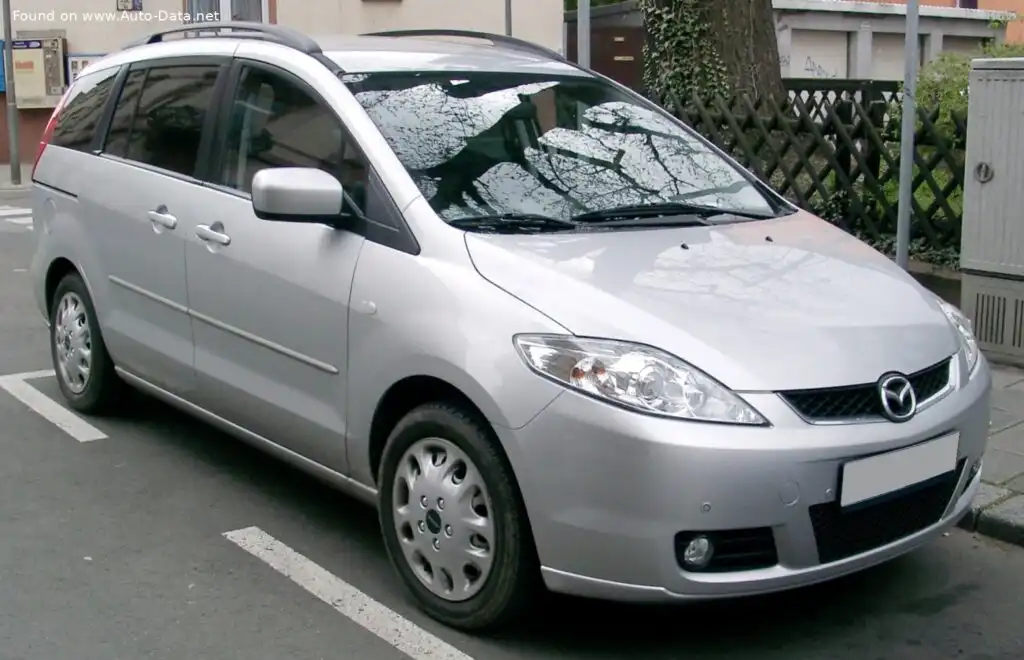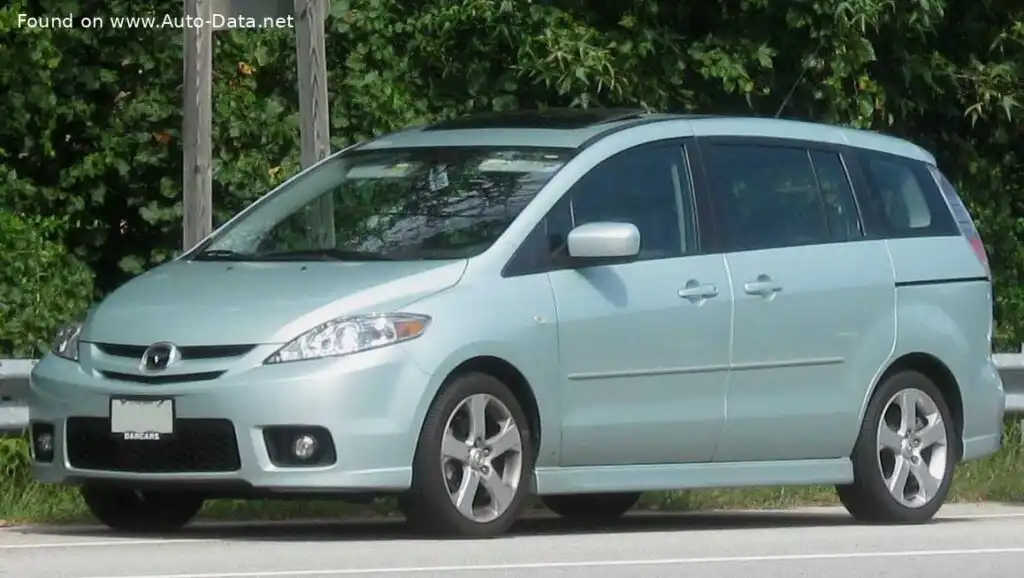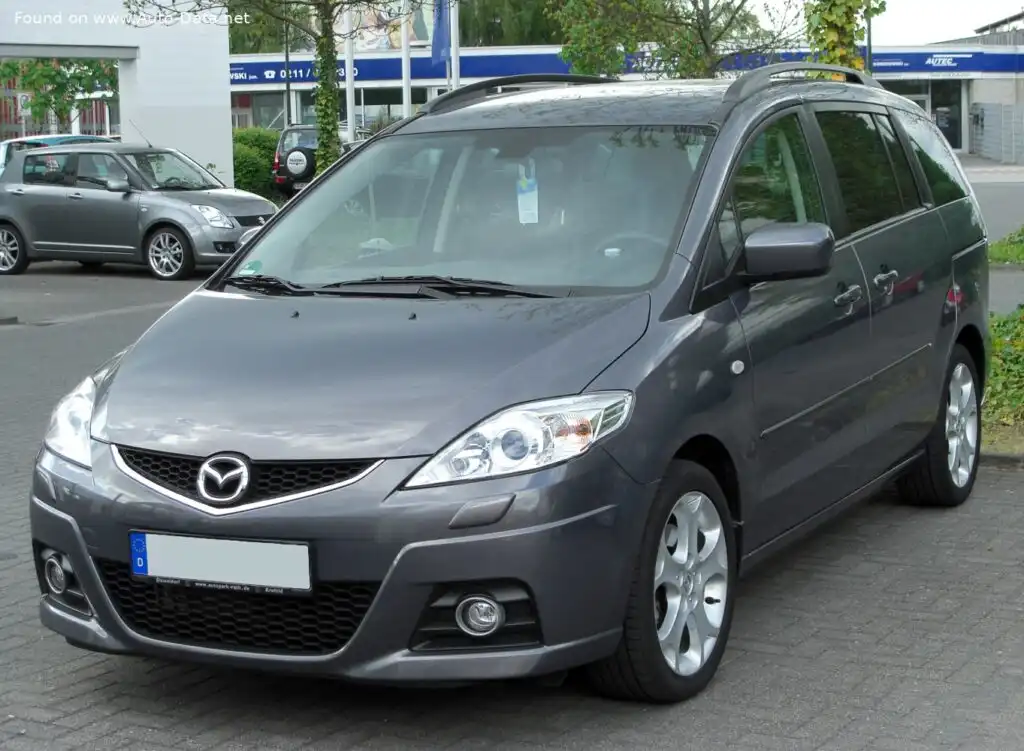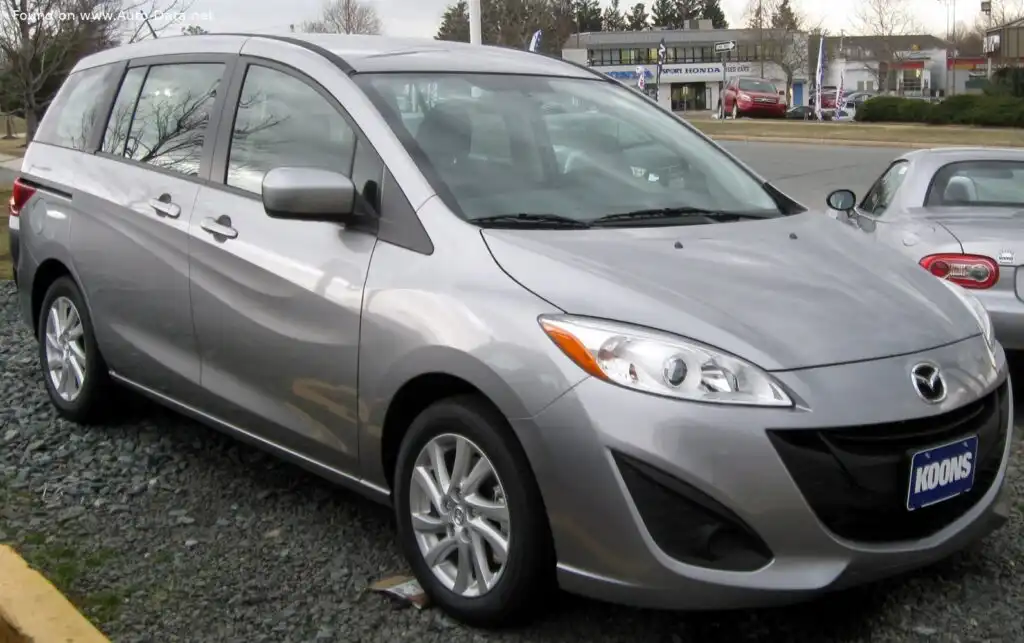
The Mazda 5 II 2.5, produced from 2011 to 2017, represented the second generation of Mazda’s compact minivan, known as the Premacy in some markets. This variant, equipped with the 2.5-liter L5-VE engine paired with a five-speed automatic transmission, was primarily aimed at the North American market, where Mazda sought to offer a practical and fuel-efficient family vehicle that didn’t compromise on driving dynamics. It occupied a mid-range position within the Mazda 5 II lineup, offering a step up in performance from the lower-displacement engine options while remaining more accessible than potential future performance trims. The second generation Mazda 5, built on the BL platform, focused on improving interior space, refinement, and overall driving experience compared to its predecessor.
Technical Specifications
| Brand | Mazda |
| Model | 5 |
| Generation | 5 II |
| Type (Engine) | 2.5 (157 Hp) Automatic |
| Start of production | 2011 |
| End of production | 2017 |
| Powertrain Architecture | Internal Combustion engine |
| Body type | Minivan |
| Seats | 6 |
| Doors | 5 |
| Fuel consumption (economy) – urban (EPA) | 11.2 l/100 km (21 US mpg) |
| Fuel consumption (economy) – extra urban (EPA) | 8.4 l/100 km (28 US mpg) |
| Fuel Type | Petrol (Gasoline) |
| Weight-to-power ratio | 10 kg/Hp |
| Weight-to-torque ratio | 7.1 kg/Nm |
| Power | 157 Hp @ 6000 rpm |
| Power per litre | 63.1 Hp/l |
| Torque | 221 Nm @ 4000 rpm (163 lb.-ft. @ 4000 rpm) |
| Maximum engine speed | 6200 rpm |
| Engine layout | Front, Transverse |
| Engine Model/Code | L5-VE |
| Engine displacement | 2489 cm3 (151.89 cu. in.) |
| Number of cylinders | 4 |
| Engine configuration | Inline |
| Cylinder Bore | 89 mm (3.5 in.) |
| Piston Stroke | 100 mm (3.94 in.) |
| Compression ratio | 9.7:1 |
| Number of valves per cylinder | 4 |
| Fuel injection system | Multi-port manifold injection |
| Engine aspiration | Naturally aspirated engine |
| Valvetrain | DOHC, VVT |
| Engine oil capacity | 5 l (5.28 US qt | 4.4 UK qt) |
| Coolant | 6.6 l (6.97 US qt | 5.81 UK qt) |
| Kerb Weight | 1568-1578 kg (3456.85 – 3478.89 lbs.) |
| Max. weight | 2125 kg (4684.82 lbs.) |
| Max load | 547-557 kg (1205.93 – 1227.97 lbs.) |
| Trunk (boot) space – minimum | 1257 l (44.39 cu. ft.) |
| Fuel tank capacity | 60 l (15.85 US gal | 13.2 UK gal) |
| Length | 4585 mm (180.51 in.) |
| Width | 1750 mm (68.9 in.) |
| Height | 1615 mm (63.58 in.) |
| Wheelbase | 2750 mm (108.27 in.) |
| Front track | 1530 mm (60.24 in.) |
| Rear (Back) track | 1520 mm (59.84 in.) |
| Ride height (ground clearance) | 140 mm (5.51 in.) |
| Minimum turning circle (turning diameter) | 11.2 m (36.75 ft.) |
| Drive wheel | Front wheel drive |
| Number of gears and type of gearbox | 5 gears, automatic transmission |
| Front brakes | Ventilated discs, 300 mm |
| Rear brakes | Disc, 302 mm |
| Tires size | 205/55 R16; 205/50 R17 |
| Wheel rims size | 6.5J x 16; 6.5J x 17 |
Powertrain & Engine Architecture
The heart of this Mazda 5 II variant is the L5-VE 2.5-liter inline-four cylinder engine. This engine is a naturally aspirated powerplant featuring multi-port fuel injection and a double overhead camshaft (DOHC) valvetrain with variable valve timing (VVT) on both intake and exhaust camshafts. The L5-VE engine was designed to balance performance and fuel efficiency, offering a noticeable improvement over the smaller 2.0-liter engine available in other trims. The five-speed automatic transmission, while not the most modern unit, was chosen for its reliability and smooth operation. It featured a conventional torque converter and offered a relatively conservative gear ratio spread, prioritizing fuel economy and comfortable cruising over outright acceleration. The transmission was designed to work seamlessly with the engine’s torque curve, providing adequate power for everyday driving situations.
Driving Characteristics
The 2.5-liter engine and automatic transmission combination in the Mazda 5 II delivered a comfortable and predictable driving experience. While not particularly sporty, the 157 horsepower provided sufficient power for highway merging and overtaking maneuvers. The automatic transmission, while smooth, wasn’t known for its quick shifts, and lacked a manual shift mode. The gear ratios were tuned for fuel efficiency, meaning the engine could feel somewhat strained when accelerating hard. Compared to the manual transmission versions of the Mazda 5, the automatic offered less driver engagement but greater convenience. Against the lower-powered 2.0-liter engine, the 2.5-liter provided a significant boost in performance, making it a more suitable choice for families frequently carrying passengers or cargo.
Equipment & Trim Levels
The 2.5-liter automatic Mazda 5 II typically came with a fairly comprehensive list of standard features. These included air conditioning, power windows and locks, a basic audio system with auxiliary input, and keyless entry. Higher trim levels, such as the Grand Touring, added features like leather upholstery, a sunroof, upgraded audio system with Bluetooth connectivity, and automatic climate control. Interior upholstery was typically cloth on the base models, with leather available as an option. Dashboard configuration was relatively straightforward, prioritizing functionality and ease of use. Optional extras included a navigation system and rear-seat entertainment system.
Chassis & Braking
The Mazda 5 II utilized an independent suspension setup at all four wheels. The front suspension employed a McPherson strut design with coil springs and an anti-roll bar, while the rear featured an independent multi-link suspension, also with a stabilizer bar. This suspension setup provided a comfortable ride quality and decent handling characteristics for a minivan. Braking duties were handled by ventilated discs at the front and solid discs at the rear. The braking system was equipped with ABS (Anti-lock Braking System) as standard. The chassis was designed to provide a good balance between rigidity and weight, contributing to the vehicle’s overall stability.
Market Reception & Comparison
The Mazda 5 II 2.5 Automatic was generally well-received by automotive critics. It was praised for its spacious interior, comfortable ride, and relatively fuel-efficient engine. However, some critics noted that the automatic transmission felt somewhat dated and lacked the responsiveness of more modern units. Compared to other minivans on the market, such as the Honda Odyssey and Toyota Sienna, the Mazda 5 II was smaller and more affordable, but offered less overall space and fewer features. Against its own siblings, the 2.5-liter engine offered a significant performance advantage over the 2.0-liter option, making it a popular choice for buyers who prioritized power and responsiveness. Fuel economy was comparable to other vehicles in its class.
Legacy
The Mazda 5 II 2.5 Automatic has proven to be a relatively reliable vehicle in the used car market. The L5-VE engine is known for its durability, and the automatic transmission, while not particularly sophisticated, is generally dependable. Common maintenance items include regular oil changes, timing belt replacement (typically around 100,000 miles), and inspection of the cooling system. While not as popular as some of its larger minivan competitors, the Mazda 5 II 2.5 Automatic remains a viable option for buyers seeking a practical, fuel-efficient, and relatively affordable family vehicle. Its compact size and nimble handling make it a more enjoyable driving experience than many other minivans.